














A family of four foundation models designed to meet diverse enterprise needs across reasoning, multimodal processing, and real-time conversational AI.

How agentic systems work under the hood — and how AWS’s new AgentCore framework implements their essential components.

Reasoning models can generate seven to 10 times as many tokens as necessary on simple tasks, creating unsustainable costs at scale. Amazon's vision for metacognitive AI could fundamentally shift how models allocate computational resources.

Amazon's competitive-agent architecture creates a continuous improvement cycle that develops security protections at machine speed, reducing what typically takes weeks down to hours.


A new approach to reducing carbon emissions reveals previously hidden emission “hotspots” within value chains, helping organizations make more detailed and dynamic decisions about their future carbon footprints.
Customer-obsessed science


Research areas


-
 December 1, 20258 min read“Network language models” will coordinate complex interactions among intelligent components, computational infrastructure, access points, data centers, and more.
 -

-
November 20, 20254 min read
-
October 20, 20254 min read
-
October 14, 20257 min read


Featured news
Initiative will fund over 100 doctoral students researching machine learning, computer vision, and natural-language processing at nine universities.
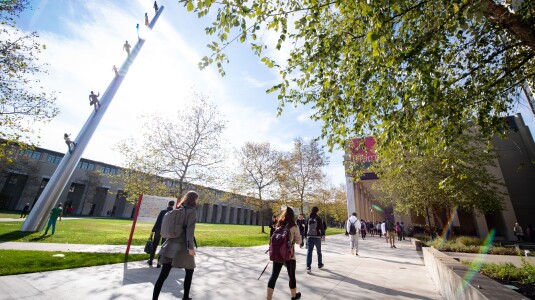
The collaboration will advance research in generative AI, robotics, natural language processing and cloud computing while fostering innovation in foundational and emerging technologies.
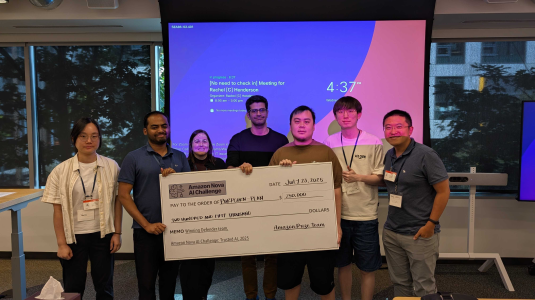
University teams battle to harden and hack AI coding assistants in head-to-head tournament

David Chang/Getty Images/iStockphoto
Led by David Luan and Pieter Abbeel, the lab will focus on developing new foundational capabilities for enabling useful AI agents.

The company's new state-of-the-art foundation models deliver frontier intelligence and industry-leading price performance.
-
CVPR 20222022We propose a memory efficient method, named Stochastic Backpropagation (SBP), for training deep neural networks on videos. It is based on the finding that gradients from incomplete execution for backpropagation can still effectively train the models with minimal accuracy loss, which attributes to the high redundancy of video. SBP keeps all forward paths but randomly and independently removes the backward
-
ACL Findings 20222022Accurate automatic evaluation metrics for open-domain dialogs are in high demand. Existing model-based metrics for system response evaluation are trained on human annotated data, which is cumbersome to collect. In this work, we propose to use information that can be automatically extracted from the next user utterance, such as its sentiment or whether the user explicitly ends the conversation, as a proxy
-
CVPR 20222022The learning objective of vision-language approach of CLIP [63] does not effectively account for the noisy many-to-many correspondences found in web-harvested image captioning datasets, which contributes to its compute and data inefficiency. To address this challenge, we introduce a novel training framework based on cross-modal contrastive learning that uses progressive self-distillation and soft image-text
-
Molecular Informatics2022In this work, we benchmark a variety of single- and multi-task graph neural network (GNN) models against lower-bar and higher-bar traditional machine learning approaches employing human engineered molecular features. We consider four GNN variants – Graph Convolutional Network (GCN), Graph Attention Network (GAT), Message Passing Neural Network (MPNN), and Attentive Fingerprint (AttentiveFP). So far deep
-
VLDB 20222022Many real world graphs contain time domain information. Temporal Graph Neural Networks capture temporal information as well as structural and contextual information in the generated dynamic node embeddings. Researchers have shown that these embeddings achieve state-of-the-art performance in many different tasks. In this work, we propose TGL, a unified framework for large-scale offline Temporal Graph Neural
Collaborations
View allWhether you're a faculty member or student, there are number of ways you can engage with Amazon.
View all

Gretchen Ertl
The program offers unrestricted funds and other resources to support research at academic institutions and non-profit organizations in areas that align with our mission.
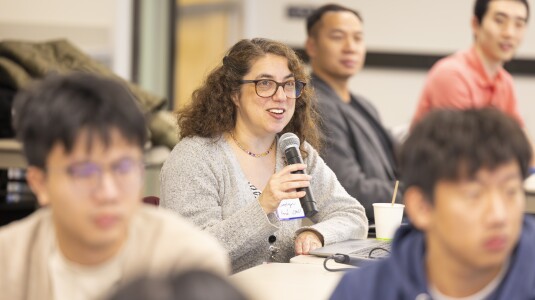
A global university competition to drive secure innovation in generative AI technology, which focuses on responsible AI and large language model coding security.
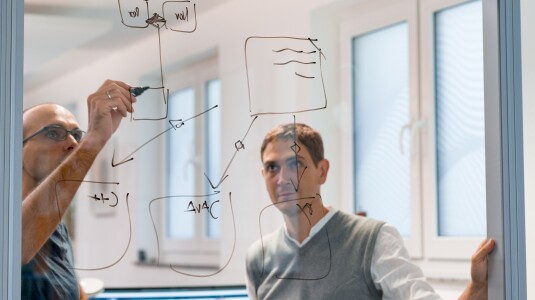
Credit: Wolfram Scheible
We partner with particular academic organizations across the world for deep and sustained collaborations in multiple research areas of mutual interest.
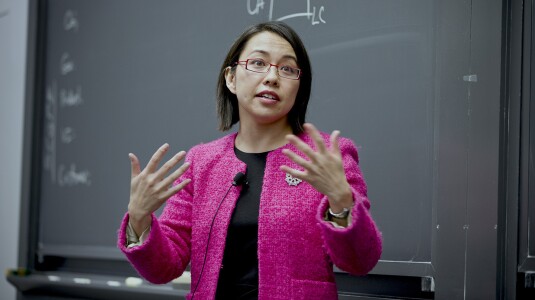
Courtesy of Pai-Ling Yin
We hire world-class academics to work on large-scale technical challenges, while they continue to teach and conduct research at their universities.

