












Jeff Wilke, who was then Amazon's consumer worldwide CEO, delivering a keynote presentation at re:MARS 2019

The history of Amazon's recommendation algorithm

Collaborative filtering and beyond.

In 2017, when the journal IEEE Internet Computing was celebrating its 20th anniversary, its editorial board decided to identify the single paper from its publication history that had best withstood the “test of time”. The honor went to a 2003 paper called “Amazon.com Recommendations: Item-to-Item Collaborative Filtering”, by then Amazon researchers Greg Linden, Brent Smith, and Jeremy York.

Collaborative filtering is the most common way to do product recommendation online. It’s “collaborative” because it predicts a given customer’s preferences on the basis of other customers’.

“There was already a lot of interest and work in it,” says Smith, now the leader of Amazon’s Weblab, which does A/B testing (structured testing of variant offerings) at scale to enable data-driven business decisions. “The world was focused on user-based collaborative filtering. A user comes to the website: What other users are like them? We sort of turned it on its head and found a different way of doing it that had a lot better scaling and quality characteristics for online recommendations.”

Related content
The story of a decade-plus long journey toward a unified forecasting model.

The better way was to base product recommendations not on similarities between customers but on correlations between products. With user-based collaborative filtering, a visitor to Amazon.com would be matched with other customers who had similar purchase histories, and those purchase histories would suggest recommendations for the visitor.

With item-to-item collaborative filtering, on the other hand, the recommendation algorithm would review the visitor’s recent purchase history and, for each purchase, pull up a list of related items. Items that showed up repeatedly across all the lists were candidates for recommendation to the visitor. But those candidates were given greater or lesser weight depending on how related they were to the visitor's prior purchases.

Related content
How Amazon’s scientists developed a first-of-its-kind multi-echelon system for inventory buying and placement.

That notion of relatedness is still derived from customers’ purchase histories: item B is related to item A if customers who buy A are unusually likely to buy B as well. But Amazon’s Personalization team found, empirically, that analyzing purchase histories at the item level yielded better recommendations than analyzing them at the customer level.

Family ties

Beyond improving recommendations, item-to-item collaborative filtering also offered significant computational advantages. Finding the group of customers whose purchase histories most closely resemble a given visitor’s would require comparing purchase histories across Amazon’s entire customer database. That would be prohibitively time consuming during a single site visit.

The history of Amazon's recommendation algorithm | Amazon Science

The alternatives are either to randomly sample other customers in real time and settle for the best matches found or to build a huge offline similarity index by comparing every customer to every other. Because Amazon customers’ purchase histories can change dramatically in the course of a single day, that index would have to be updated regularly. Even offline indexing presents a huge computational burden.

On average, however, a given product sold on the Amazom Store purchased by only a tiny subset of the site’s customers. That means that inspecting the recent-purchase histories of everyone who bought a given item requires far fewer lookups than identifying the customers who most resemble a given site visitor. Smith and his colleagues found that even with early-2000s technology, it was computationally feasible to produce an updated list of related items for every product on the Amazon site on a daily basis.

Related content
Dual embeddings of each node, as both source and target, and a novel loss function enable 30% to 160% improvements over predecessors.

The crucial question: how to measure relatedness. Simply counting how often purchasers of item A also bought item B wouldn’t do; that would make a few bestsellers like Harry Potter books and trash bags the top recommendations for every customer on every purchase.

Instead, the Amazon researchers used a relatedness metric based on differential probabilities: item B is related to item A if purchasers of A are more likely to buy B than the average Amazon customer is. The greater the difference in probability, the greater the items’ relatedness.

When Linden, Smith, and York published their paper in IEEE Internet Computing, their item-based recommendation algorithm had already been in use for six years. But it took several more years to identify and correct a fundamental flaw in the relatedness measure.

Getting the math right

The problem: the algorithm was systematically underestimating the baseline likelihood that someone who bought A would also buy B. Since a customer who buys a lot of products is more likely to buy A than a customer who buys few products, A buyers are, on average, heavier buyers than the typical Amazon customer. But because they’re heavy buyers, they’re also unusually likely to buy B.

Smith and his colleagues realized that it wasn’t enough to assess the increased likelihood of buying product B given the purchase of product A; they had to assess the increased likelihood of buying product B with any given purchase. That is, they discounted heavy buyers’ increased likelihood of buying B according to the heaviness of their buying.

“That was a large improvement to recommendations quality, when we got the math right,” Smith says.

Related content
Danielle Maddix Robinson's mathematics background helps inform robust models that can predict everything from retail demand to epidemiology.

That was more than a decade ago. Since then, Amazon researchers have been investigating a wide variety of ways to make customer recommendations more useful: moving beyond collaborative filtering to factor in personal preferences such as brands or fashion styles; learning to time recommendations (you may want to order more diapers!); and learning to target recommendations to different users of the same account, among many other things.

In June 2019, during a keynote address at Amazon’s first re:MARS conference, Jeff Wilke, then the CEO of Amazon’s consumer division, highlighted one particular advance, in the algorithm for recommending movies to Amazon’s Prime Video customers. Amazon researchers’ innovations led to a twofold improvement in that algorithm’s performance, which Wilke described as a “once-in-a-decade leap”.

Entering the matrix

Recommendation is often modeled as a matrix completion problem. Imagine a huge grid, whose rows represent Prime Video customers and whose columns represent the movies in the Prime Video catalogue. If a customer has seen a particular movie, the corresponding cell in the grid contains a one; if not, it’s blank. The goal of matrix completion is to fill in the grid with the probabilities that any given customer will watch any given movie.

In 2014, Vijai Mohan’s team in the Personalization group — Avishkar Misra, Jane You, Rejith Joseph, Scott Le Grand, and Eric Nalisnick — was asked to design a new recommendation algorithm for Prime Video. At the time, the standard technique for generating personalized recommendations was matrix factorization, which identifies relatively small matrices that, multiplied together, will approximate a much larger matrix.

Related content
The switch to WebAssembly increases stability, speed.

Inspired by work done by Ruslan Salakhutdinov — then an assistant professor of computer science at the University of Toronto — Mohan’s team instead decided to apply deep neural networks to the problem of matrix completion.

The typical deep neural network contains thousands or even millions of simple processing nodes, arranged into layers. Data is fed into the nodes of the bottom layer, which process it and pass their results to the next layer, and so on; the output of the top layer represents the result of some computation.

Training the network consists of feeding it lots of sample inputs and outputs. During training, the network’s settings are constantly adjusted, until they minimize the average discrepancy between the top layer’s output and the target outputs in the training examples.

Reconstruction

Matrix completion methods commonly use a type of neural network called an autoencoder. The autoencoder is trained simply to output the same data it takes as input. But in-between the input and output layers is a bottleneck, a layer with relatively few nodes — in this case, only 100, versus tens of thousands of input and output nodes.

We had to go and doublecheck and re-run the experiments multiple times, I was giving a hard time to the scientists. I was saying, ‘You probably made a mistake.’
Vijai Mohan

As a consequence, the network can’t just copy inputs directly to outputs; it must learn a general procedure for compressing and then re-expanding every example in the training set. The re-expansion will be imperfect: in the movie recommendation setting, the network will guess that customers have seen movies they haven’t. But when, for a given customer-movie pair, it guesses wrong with high confidence, that’s a good sign that the customer would be interested in that movie.

To benchmark the autoencoder’s performance, the researchers compared it to two baseline systems. One was the latest version of Smith and his colleagues’ collaborative-filtering algorithm. The other was a simple listing of the most popular movie rentals of the previous two weeks. “In the recommendations world, there’s a cardinal rule,” Mohan says. “If I know nothing about you, then the best things to recommend to you are the most popular things in the world.”

To their mild surprise, the item-to-item collaborative-filtering algorithm outperformed the autoencoder. But to their much greater surprise, so did the simple bestseller list. The autoencoder’s performance was “so bad that we had to go and doublecheck and re-run the experiments multiple times,” Mohan says. “I was giving a hard time to the scientists. I was saying, ‘You probably made a mistake.’”

Once they were sure the results were valid, however, they were quick to see why. In a vacuum, matrix completion may give the best overview of a particular customer’s tastes. But at any given time, most movie watchers will probably opt for recent releases over neglected classics in their preferred genres.

Neural network classifiers with time considerations
Amazon researchers found that using neural networks to generate movie recommendations worked much better when they sorted the input data chronologically and used it to predict future movie preferences over a short (one- to two-week) period.

So Mohan’s team re-framed the problem. They still used an autoencoder, but they trained it on movie-viewing data that had been sorted chronologically. During training, the autoencoder saw data on movies that customers had watched before some cutoff time. But it was evaluated on how well it predicted the movies they had watched in the two-week period after the cutoff time.

Because Prime Video’s Web interface displays six movie recommendations on the page associated with each title in its catalogue, the researchers evaluated their system on whether at least one of its top six recommendations for a given customer was in fact a movie that that customer watched in the two-week period after the cutoff date. By that measure, not only did the autoencoder outperform the bestseller list, but it also outperformed item-to-item collaborative filtering, two to one. As Wilke put it at re:MARS, “We had a winner.”

Whether any of the work that Amazon researchers are doing now will win test-of-time awards two decades hence remains to be seen. But Smith, Mohan, and their colleagues will continue to pursue new approaches to designing recommendation algorithms, in the hope of making Amazon.com that much more useful for customers.
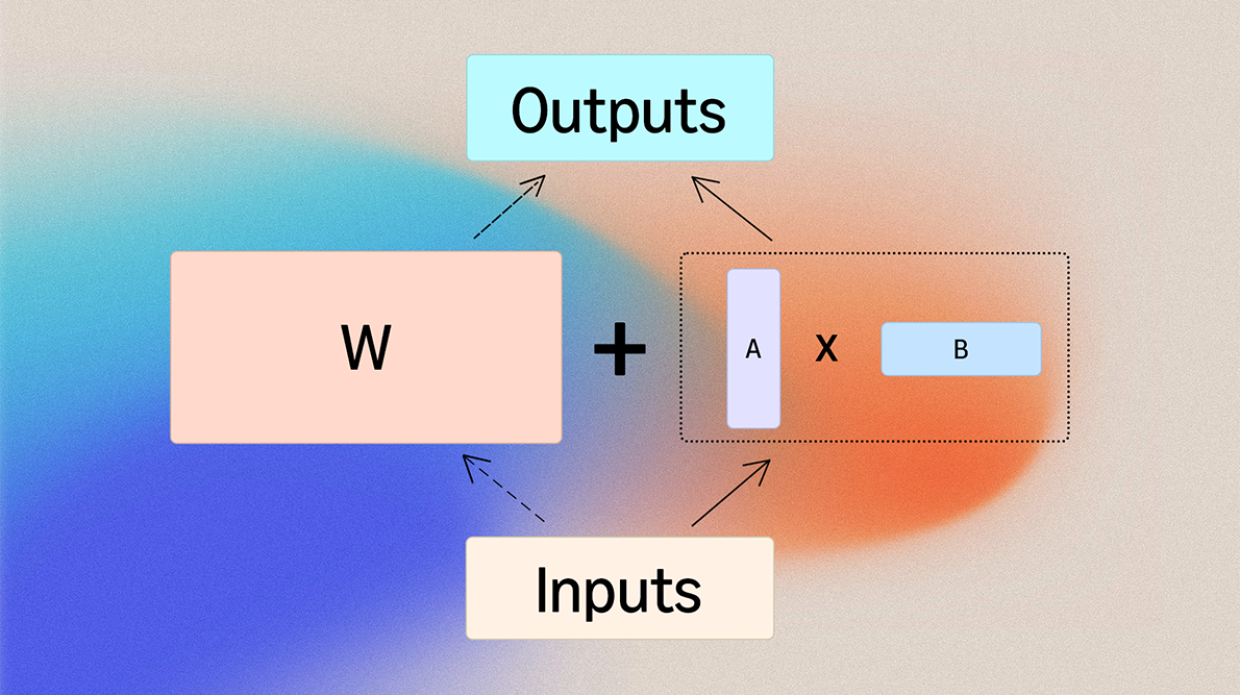
Related content

US, NY, New York
We are seeking a Robotics/AI Motor Control Scientist to develop cutting-edge machine learning algorithms for motor control systems in robots. In this role, you will focus on creating and optimizing intelligent motor control strategies to enable robots to perform complex, whole-body tasks. Your contributions will be essential in advancing robotics by enabling fluid, reliable, and safe interactions between robots and their environments. Key job responsibilities - Develop controllers that leverage reinforcement learning, imitation learning, or other advanced AI techniques to achieve natural, robust, and adaptive motor behaviors - Collaborate with multi-disciplinary teams to integrate motor control systems with robotic hardware, ensuring alignment with real-world constraints such as actuator dynamics and energy efficiency - Use simulation and real-world testing to refine and validate control algorithms - Stay updated on advancements in robotics, AI, and control systems to apply advanced techniques to robotic motion challenges - Lead technical projects from conception through production deployment - Mentor junior scientists and engineers - Bridge research initiatives with practical engineering implementation About the team Fauna Robotics, an Amazon company, is building capable, safe, and genuinely delightful robots for everyday life. Our goal is simple: make robots people actually want to live and interact with in everyday human spaces. We believe that future won’t arrive until building for robotics becomes far more accessible. Today, too much effort is spent reinventing the fundamentals. We’re changing that by developing tightly integrated hardware and software systems that make it faster, safer, and more intuitive to create real-world robotic products. Our work spans the full stack: mechanical design, control systems, dynamic modeling, and intelligent software. The focus is not just functionality, but experience. We’re building robots that feel responsive, expressive, and genuinely useful. At Fauna, you’ll work at the frontier of this space, helping define how robots move, manipulate, and interact with people in natural environments. It’s an opportunity to solve hard problems across hardware and software with a team focused on making robotics accessible and joyful to build. If you care about making robotics real for everyone and building systems that are as delightful as they are capable, we’re interested in hearing from you. an opportunity to solve hard problems across hardware and software with a team focused on making robotics accessible and joyful to build. If you care about making robotics real for everyone and building systems that are as delightful as they are capable, we’re interested in hearing from you.
US, CA, San Francisco
Join our Frontier AI & Robotics team to support the hardware integration of next-generation robotic systems that will transform how robots perceive and interact with the world. You'll take ownership of hands-on hardware assembly, software integration, and system validation tasks across advanced actuators, precision sensors, and robotic subsystems — ensuring they work seamlessly together to support breakthrough AI research and real-world deployment. Key job responsibilities - Assembly, Integration & DFx — Assemble and integrate robotic hardware (actuators, sensors, vision systems, machined components). Execute assembly processes and test protocols developed with engineering. Provide DFM/DFA feedback and perform simple mechanical/electrical/software design tasks; support integration/debug and partner with engineers to optimize manufacturability and testability. - R&D Prototype Test & Validation — Validate hardware revisions, verify mechanical assemblies, power sequencing, communication interfaces, and peripherals during bring-up. - Debugging & Failure Analysis — Troubleshoot and root-cause issues across the robotic platform (power, compute, comms, actuators, sensors). Conduct failure analysis from component to system level. Reproduce critical failures, interpret schematics, and bridge communication between the lab and engineering teams. - Technical Documentation — Author and maintain runbooks, failure analysis reports, assembly guides, and troubleshooting guides; uphold consistent documentation standards across the lab. - Mechanical Design Support — Perform simple R&D design tasks and test fixture design in CAD, ensuring quality and alignment with engineering priorities. - Lab Operations Support — Support machine shop capabilities, equipment maintenance, inventory management, vendor coordination, and safety/regulatory compliance. - Test Capability Development — Develop test methodologies, design jigs/fixtures, support hardware-in-the-loop (HIL) testing, and streamline failure-to-resolution workflows. A day in the life Your focus centers on the hardware and software that powers our advanced robotic platforms. You'll execute high degree-of-freedom (DoF) robotic prototype assembly and validation, working alongside engineers and fellow technicians. Your responsibilities include building, debugging, validating prototype, performing critical component and assembly quality assessments, providing DFM/DFA feedback to engineers, and designing test jigs and fixtures. Throughout the day, you balance complex assemblies and integration testing while handling urgent prototyping requests, documentation updates, and preparation for upcoming milestones. You're switching between working at the bench, collaborating in design reviews with engineers, and ensuring lab safety and equipment maintenance. About the team At Frontier AI & Robotics, we're not just advancing robotics – we're reimagining it from the ground up. Our team is building the future of intelligent robotics through frontier foundation models and end-to-end learned systems. We tackle some of the most challenging problems in AI and robotics, from developing sophisticated perception systems to creating adaptive manipulation strategies that work in complex, real-world scenarios. What sets us apart is our unique combination of ambitious research vision and practical impact. We leverage Amazon's computational infrastructure and rich real-world datasets to train and deploy state-of-the-art foundation models. Our work spans the full spectrum of robotics intelligence – from multimodal perception using images, videos, and sensor data, to sophisticated manipulation strategies that can handle diverse real-world scenarios. We're building systems that don't just work in the lab, but scale to meet the demands of Amazon's global operations. Join us if you're excited about pushing the boundaries of what's possible in robotics, working with world-class researchers, and seeing your innovations deployed at unprecedented scale.
US, CA, San Francisco
Join Amazon's Frontier AI & Robotics team as a Member of Technical Staff, this Technical Program Manager will become the driving force behind breakthrough robotics innovation. You'll orchestrate complex, cross-functional programs that bridge AI research, software, hardware, and production deployment—managing the technical workstreams that enable robots to see, reason, and act in Amazon's warehouse environments. Your program leadership will directly accelerate our mission to build the next generation of embodied intelligence. Key job responsibilities · Establish and drive program management mechanisms and cadence for complex robotics and AI development initiatives spanning research, software engineering, hardware, and operations · Manage end-to-end program execution across the full robotics stack—including AI models, software engineering, and hardware deployment · Drive decision-making velocity by facilitating tradeoff discussions when there are conflicting priorities; determine whether decisions are one-way or two-way doors · Own program-level risk management, proactively identifying technical, schedule, and resource risks; escalate where necessary and drive mitigation strategies · Manage dependencies and scope changes across internal teams and partner organizations, ensuring alignment on commitments, timelines, and technical requirements · Create transparency through clear RACI frameworks, program dashboards, and communication mechanisms that keep stakeholders aligned on status, risks, and decisions · Exercise strong technical judgment to influence program-level decisions on deployment methodology, scalability requirements, and technical feasibility—acting as the voice back to research and engineering teams · Build sustainable program management processes that scale as our organization grows, adapting agile frameworks to the unique challenges of AI robotics A day in the life Your focus centers on driving velocity and alignment across our robotics programs. You might start your morning facilitating tradeoff decisions between AI researchers and software engineers on a critical prototype milestone, then transition to managing dependencies across hardware and operations teams to keep timelines on track. In the afternoon, you could be conducting risk assessments on supply chain constraints that impact our development roadmap, updating program dashboards to provide leadership visibility, or working with partner teams to align on deployment strategies. You'll establish the mechanisms and cadence that keep our fast-moving organization synchronized—from sprint planning rituals to cross-functional design reviews. Throughout the day, you balance hands-on program execution with strategic escalation, ensuring technical decisions align with our long-term vision while removing obstacles that slow teams down. You're the connective tissue that enables researchers, engineers, and operations specialists to move fast together. About the team At Frontier AI & Robotics, we're not just advancing robotics – we're reimagining it from the ground up. Our team is building the future of intelligent robotics through frontier foundation models and end-to-end learned systems. We tackle some of the most challenging problems in AI and robotics, from developing sophisticated perception systems to creating adaptive manipulation strategies that work in complex, real-world scenarios. What sets us apart is our unique combination of ambitious research vision and practical impact. We leverage Amazon's computational infrastructure and rich real-world datasets to train and deploy state-of-the-art foundation models. Our work spans the full spectrum of robotics intelligence – from multimodal perception using images, videos, and sensor data, to sophisticated manipulation strategies that can handle diverse real-world scenarios. We're building systems that don't just work in the lab, but scale to meet the demands of Amazon's global operations. Join us if you're excited about pushing the boundaries of what's possible in robotics, working with world-class researchers, and seeing your innovations deployed at unprecedented scale.
US, CA, San Francisco
About the Role: We are looking for a Member of Technical Staff - Mechanical Engineer with a passion for building complex robotic systems from the ground up. This role is ideal for someone with a deep understanding of structural and electromechanical design, who thrives in hands-on environments and has experience taking high-performance robots from concept to production. You will work on the mechanical and system architecture of advanced robotics platforms, including high degree-of-freedom systems, where considerations such as actuator selection, thermal constraints, cabling, sensing integration, and manufacturability are critical. This is a cross-disciplinary role requiring close collaboration with electrical, software, and AI research teams. Beyond day-to-day hardware development, this role also provides exciting avenues to contribute to innovative research projects. Whether you’re interested in mechatronics, sensor integration, or novel actuation methods, you’ll find opportunities to explore your research interests while building real-world systems that advance in the field of high degree-of-freedom robotics. What You Bring: * A systems-thinking mindset with a strong grasp of cross-domain engineering tradeoffs. * A bias toward action: comfortable building, testing, and iterating rapidly. * A collaborative and communicative working style — especially in multi-disciplinary research environments. * A passion for robotics and advancing the state of the art in intelligent, capable machines. Key job responsibilities * Lead mechanical design of robotic subsystems and full platforms, including structures, joints, enclosures, and mechanisms for a research environment. * Own kinematic, dynamic, and structural analyses to guide the design and optimization of full systems and subsystems of high-DoF robots * Specify and integrate actuators and motors for high-torque density applications in high-degree-of-freedom systems. * Contribute to thermal management strategies for motors, sensors, and embedded compute hardware. * Integrate sensors such as lidar, stereo cameras, IMUs, tactile sensors, and compute modules into compact, functional assemblies. * Design and route cabling and wire harnesses, ensuring reliability, serviceability, and thermal/electrical integrity. * Prototype and test mechanical systems; support hands-on builds, debug sessions, and field testing. * Conduct root cause analysis on system-level failures or performance issues and implement design improvements. * Apply Design for Manufacturing (DFM) and Design for Assembly (DFA) principles to transition prototypes into scalable builds (10s–100s of units). * Collaborate with cross-functional teams in electrical engineering, controls, perception, and research to meet research and product goals. About the team Frontier AI & Robotics (FAR) is the team at Amazon building the next generation of embodied intelligence. FAR drives the development and implementation of advanced AI models within Amazon’s operations that enable robots to see, reason, and act on the world around them, supporting a number of different warehouse automation tasks.
US, CA, San Francisco
Join Amazon's Frontier AI & Robotics team and help shape the future of intelligent robotic systems from the inside out. As a Member of Technical Staff - Firmware Engineer, Electronics, you will develop the low-level firmware that brings our in-house robotic actuators to life—writing the embedded code that bridges sophisticated hardware and the high-level AI control systems that power our next-generation robots. Your work will directly enable our robots to see, reason, and act in real-world warehouse environments, making you a critical contributor to one of the most ambitious robotics programs in the world. Key job responsibilities • Develop, test, and optimize embedded firmware for custom in-house robotic actuators, including motor control algorithms (FOC, commutation, current/torque/speed/position loops) running on microcontrollers and DSPs • Design and implement real-time firmware for actuator state estimation, fault detection, and protection logic, ensuring robust and safe operation across all actuator variants deployed in FAR's robotic systems • Collaborate with electronics engineers and motor design engineers to define firmware requirements, hardware interfaces (SPI, I2C, CAN, EtherCAT, RS-485), and actuator bring-up procedures for new hardware revisions • Develop and maintain firmware for field-oriented control (FOC) and sensored/sensorless motor commutation, including tuning current regulators, velocity controllers, and position controllers for high-performance robots • Build and maintain firmware test frameworks and hardware-in-the-loop (HIL) test environments to validate firmware behavior across actuator operating conditions, edge cases, and failure modes • Partner with controls engineers and AI researchers to ensure firmware-level interfaces support high-bandwidth, low-latency communication required by whole-body control and motion planning algorithms • Contribute to actuator firmware architecture decisions, define software-hardware interface standards, and maintain firmware documentation and version control practices to enable scalable multi-actuator development • Support rapid hardware bring-up and debugging of new actuator prototypes, leveraging oscilloscopes, logic analyzers, and custom diagnostic tools to characterize and validate firmware behavior on novel hardware A day in the life Your day is rooted in the intersection of hardware and software where you’ll be wiring firmware from scratch to control custom motors. You might start your morning reviewing firmware behavior logs from the previous night's actuator characterization runs, then spend time working alongside motor design and electronics engineers to debug a torque ripple issue in the motor control loop. In the afternoon, you could be writing and validating embedded firmware for a new actuator variant, tuning (field-oriented control) FOC algorithms, and collaborating with the controls team to ensure firmware interfaces align with high-level motion planning requirements. Beyond the bench, you'll participate in architecture reviews with hardware and software engineers, contribute to code reviews, and document firmware specifications that enable smooth hardware handoffs. You'll be working on actuator variants—each with unique power, torque, and speed requirements—and you'll be the firmware voice in cross-functional design discussions that shape how our actuators are built and controlled. The pace is fast, the problems are novel, and the impact is direct. About the team Frontier AI & Robotics (FAR) is the team at Amazon building the next generation of embodied intelligence. FAR drives the development and implementation of advanced AI models within Amazon’s operations that enable robots to see, reason, and act on the world around them, supporting a number of different warehouse automation tasks.
US, WA, Seattle
Amazon.com strives to be Earth's most customer-centric company where customers can shop in our stores to find and discover anything they want to buy. We hire the world's brightest minds, offering them a fast paced, technologically sophisticated and friendly work environment. Economists in the Forecasting, Macroeconomics & Finance field document, interpret and forecast Amazon business dynamics. This track is well suited for economists adept at combining times-series statistical methods with strong economic analysis and intuition. This track could be a good fit for candidates with research experience in: macroeconometrics and/or empirical macroeconomics; international macroeconomics; time-series econometrics; forecasting; financial econometrics and/or empirical finance; and the use of micro and panel data to improve and validate traditional aggregate models. Economists at Amazon are expected to work directly with our senior management and scientists from other fields on key business problems faced across Amazon, including retail, cloud computing, third party merchants, search, Kindle, streaming video, and operations. The Forecasting, Macroeconomics & Finance field utilizes methods at the frontier of economics to develop formal models to understand the past and the present, predict the future, and identify relevant risks and opportunities. For example, we analyze the internal and external drivers of growth and profitability and how these drivers interact with the customer experience in the short, medium and long-term. We build econometric models of dynamic systems, using our world class data tools, formalizing problems using rigorous science to solve business issues and further delight customers.
US, WA, Seattle
Amazon.com strives to be Earth's most customer-centric company where customers can shop in our stores to find and discover anything they want to buy. We hire the world's brightest minds, offering them a fast paced, technologically sophisticated and friendly work environment. Economists at Amazon partner closely with senior management, business stakeholders, scientist and engineers, and economist leadership to solve key business problems ranging from Amazon Web Services, Kindle, Prime, inventory planning, international retail, third party merchants, search, pricing, labor and employment planning, effective benefits (health, retirement, etc.) and beyond. Amazon Economists build econometric models using our world class data systems and apply approaches from a variety of skillsets – applied macro/time series, applied micro, econometric theory, empirical IO, empirical health, labor, public economics and related fields are all highly valued skillsets at Amazon. You will work in a fast moving environment to solve business problems as a member of either a cross-functional team embedded within a business unit or a central science and economics organization. You will be expected to develop techniques that apply econometrics to large data sets, address quantitative problems, and contribute to the design of automated systems around the company.
US, WA, Seattle
Amazon.com strives to be Earth's most customer-centric company where customers can shop in our stores to find and discover anything they want to buy. We hire the world's brightest minds, offering them a fast paced, technologically sophisticated and friendly work environment. Economists at Amazon partner closely with senior management, business stakeholders, scientist and engineers, and economist leadership to solve key business problems ranging from Amazon Web Services, Kindle, Prime, inventory planning, international retail, third party merchants, search, pricing, labor and employment planning, effective benefits (health, retirement, etc.) and beyond. Amazon Economists build econometric models using our world class data systems and apply approaches from a variety of skillsets – applied macro/time series, applied micro, econometric theory, empirical IO, empirical health, labor, public economics and related fields are all highly valued skillsets at Amazon. You will work in a fast moving environment to solve business problems as a member of either a cross-functional team embedded within a business unit or a central science and economics organization. You will be expected to develop techniques that apply econometrics to large data sets, address quantitative problems, and contribute to the design of automated systems around the company.
US, WA, Seattle
Amazon.com strives to be Earth's most customer-centric company where customers can shop in our stores to find and discover anything they want to buy. We hire the world's brightest minds, offering them a fast paced, technologically sophisticated and friendly work environment. Economists at Amazon partner closely with senior management, business stakeholders, scientist and engineers, and economist leadership to solve key business problems ranging from Amazon Web Services, Kindle, Prime, inventory planning, international retail, third party merchants, search, pricing, labor and employment planning, effective benefits (health, retirement, etc.) and beyond. Amazon Economists build econometric models using our world class data systems and apply approaches from a variety of skillsets – applied macro/time series, applied micro, econometric theory, empirical IO, empirical health, labor, public economics and related fields are all highly valued skillsets at Amazon. You will work in a fast moving environment to solve business problems as a member of either a cross-functional team embedded within a business unit or a central science and economics organization. You will be expected to develop techniques that apply econometrics to large data sets, address quantitative problems, and contribute to the design of automated systems around the company.
US, WA, Seattle
Amazon.com strives to be Earth's most customer-centric company where customers can shop in our stores to find and discover anything they want to buy. We hire the world's brightest minds, offering them a fast paced, technologically sophisticated and friendly work environment. Economists at Amazon partner closely with senior management, business stakeholders, scientist and engineers, and economist leadership to solve key business problems ranging from Amazon Web Services, Kindle, Prime, inventory planning, international retail, third party merchants, search, pricing, labor and employment planning, effective benefits (health, retirement, etc.) and beyond. Amazon Economists build econometric models using our world class data systems and apply approaches from a variety of skillsets – applied macro/time series, applied micro, econometric theory, empirical IO, empirical health, labor, public economics and related fields are all highly valued skillsets at Amazon. You will work in a fast moving environment to solve business problems as a member of either a cross-functional team embedded within a business unit or a central science and economics organization. You will be expected to develop techniques that apply econometrics to large data sets, address quantitative problems, and contribute to the design of automated systems around the company.
