














Millimeter-scale particles of nuclear-reactor fuel are encased in four layers of different materials that act as a “miniature containment system”.


Customer-obsessed science


Research areas













-
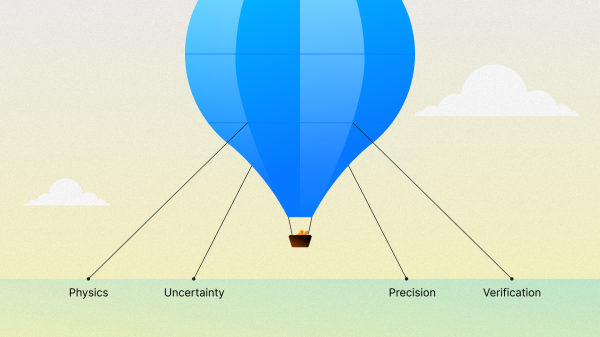
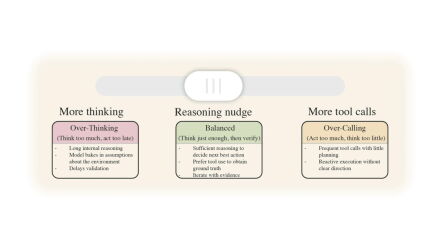
 June 8, 20267 min readFour approaches can dramatically improve the performance and trustworthiness of AI agents in operational environments.
 -

-
-
-
May 27, 20264 min readMachine learning


Featured news

Hosted by Danielle Perszyk, cognitive scientist at Amazon's AGI Lab, the podcast features researchers tackling the hardest problems in agentic AI — from building reliable perception systems to designing training environments that mirror human learning.

The Antibody Developability Benchmark is powered by one of the most diverse antibody datasets in public literature, enabling transparent performance evaluation for AI-guided antibody design.

Challenge pushes teams to demonstrate measurable gains in secure-coding performance while building AI agents that advance real-world utility and reliability at scale.

Initiative will fund over 100 doctoral students researching machine learning, computer vision, and natural-language processing at nine universities.
-
2026Unifying image clustering across different clustering scenarios remains challenging due to fundamental gaps among tasks. We introduce a Guideline-Driven Image Clustering Agent, the first universal framework that bridges these gaps through textual guidelines. To incorporate complex guidelines without task-specific training, we propose Generative Concept Proxy Modeling, which generates guideline-aware embeddings
-
2026We present FlowFixer, a refinement framework for subject-driven generation (SDG) that restores fine details lost during generation caused by changes in scale and perspective of a subject. FlowFixer proposes direct image-to-image translation from visual references, avoiding ambiguities in language prompts. To enable image-to-image training, we introduce a one-step denoising scheme to generate self-supervised
-
2026Speculative decoding is widely used in accelerating large language model (LLM) inference. In this work, we focus on the online draft model selection problem in speculative decoding. We design an algorithm that provably competes with the best draft model in hindsight for each query in terms of either the token acceptance probability or expected acceptance length. In particular, we show that we can accurately
-
2026We present AccelOpt, a self-improving large language model (LLM) agentic system that autonomously optimizes kernels for emerging AI acclerators, eliminating the need for expert-provided hardware-specific optimization knowledge. AccelOpt explores the kernel optimization space through iterative generation, informed by an optimization memory that curates experiences and insights from previously encountered
-
2026Diffusion models have emerged as the leading approach for text-to-image generation. However, their iterative sampling process, which gradually morphs random noise into coherent images, introduces significant latency that limits their applicability. While recent few-step diffusion models reduce the number of sampling steps to as few as one to four steps, they often compromise image quality and prompt alignment
Collaborations
View allWhether you're a faculty member or student, there are number of ways you can engage with Amazon.
View all

Gretchen Ertl
The program offers unrestricted funds and other resources to support research at academic institutions and non-profit organizations in areas that align with our mission.

A global university competition to drive secure innovation in generative AI technology, which focuses on responsible AI and large language model coding security.
Credit: Wolfram Scheible
We partner with particular academic organizations across the world for deep and sustained collaborations in multiple research areas of mutual interest.

Courtesy of Pai-Ling Yin
We hire world-class academics to work on large-scale technical challenges, while they continue to teach and conduct research at their universities.

