














Millimeter-scale particles of nuclear-reactor fuel are encased in four layers of different materials that act as a “miniature containment system”.


Customer-obsessed science


Research areas













-
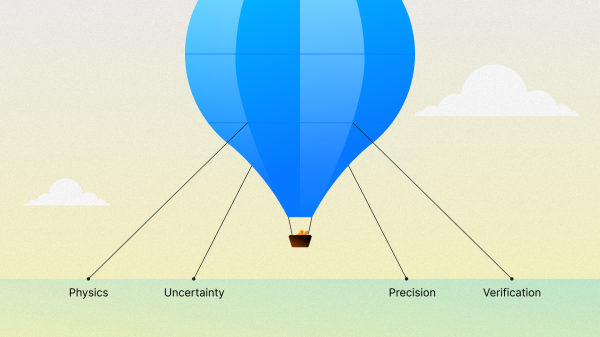
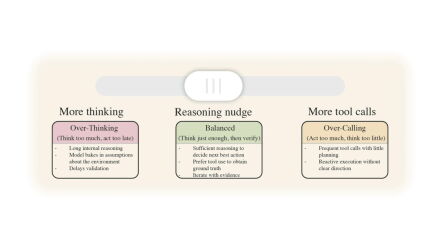
 June 8, 20267 min readFour approaches can dramatically improve the performance and trustworthiness of AI agents in operational environments.
 -

-
-
-
May 27, 20264 min readMachine learning


Featured news

Hosted by Danielle Perszyk, cognitive scientist at Amazon's AGI Lab, the podcast features researchers tackling the hardest problems in agentic AI — from building reliable perception systems to designing training environments that mirror human learning.

The Antibody Developability Benchmark is powered by one of the most diverse antibody datasets in public literature, enabling transparent performance evaluation for AI-guided antibody design.

Challenge pushes teams to demonstrate measurable gains in secure-coding performance while building AI agents that advance real-world utility and reliability at scale.

Initiative will fund over 100 doctoral students researching machine learning, computer vision, and natural-language processing at nine universities.
-
Transactions on Machine Learning Research2026Inspired by the success of reinforcement learning (RL) in Large Language Model (LLM) training for domains like math and code, recent work has begun training LLMs to dynamically plan, query, and reason with search engines as tools— a paradigm increasingly referred to as agentic search. Although these methods achieve performance improvement across popular short-form QA benchmarks, many prioritize final answer
-
2026LLM serving frameworks are quickly evolving with a complex software stack and a vast number of optimizations. The rapid development process can introduce silent errors where output quality silently degrades without any explicit error signals. Diagnosing silent errors is notoriously difficult due to the substantial semantic gap between the high-level symptoms and the low-level root causes. We observe that
-
SIGMOD/PODS 20262026We present the Poseidon engine behind the Neptune Analytics graph database service. Users interact with Poseidon using the declarative openCypher [11] query language. It enables requests that seamlessly combine traditional querying (such as graph pattern matching, variable length paths, aggregation) with graph algorithm invocations and has been syntactically extended to facilitate OneGraph interoperability
-
2026We consider anonymous multi-agent path finding (MAPF) where a set of robots is tasked to travel to a set of targets on a finite, connected graph. We show that MAPF can be cast as a special class of multi-marginal optimal transport (MMOT) problems with an underlying Markovian structure, under which the exponentially large MMOT collapses to a linear program (LP) polynomial in size. Focusing on the anonymous
-
ACL 2026 Workshop on Generation, Evaluation & Metrics (GEM)2026Recent studies have highlighted that Large Language Models (LLMs) often exhibit limited coherence, that is the ability to produce consistent responses to semantically equivalent questions. While most prior research has focused exclusively on English, limited investigation has been conducted on other languages. In this work, we study the coherence of LLMs on Question Answering tasks across six languages:
Collaborations
View allWhether you're a faculty member or student, there are number of ways you can engage with Amazon.
View all

Gretchen Ertl
The program offers unrestricted funds and other resources to support research at academic institutions and non-profit organizations in areas that align with our mission.

A global university competition to drive secure innovation in generative AI technology, which focuses on responsible AI and large language model coding security.

Credit: Wolfram Scheible
We partner with particular academic organizations across the world for deep and sustained collaborations in multiple research areas of mutual interest.

Courtesy of Pai-Ling Yin
We hire world-class academics to work on large-scale technical challenges, while they continue to teach and conduct research at their universities.

