















Customer-obsessed science


Research areas













-
 July 10, 20265 min readHydroShear, a new physics-based simulator, teaches robots how to use their sense of touch to perform complex manipulation tasks, in a way that transfers seamlessly to the real world.
 -
 July 9, 202610 min read
 -
-


Featured news

Hosted by Danielle Perszyk, cognitive scientist at Amazon's AGI Lab, the podcast features researchers tackling the hardest problems in agentic AI — from building reliable perception systems to designing training environments that mirror human learning.

The Antibody Developability Benchmark is powered by one of the most diverse antibody datasets in public literature, enabling transparent performance evaluation for AI-guided antibody design.

Challenge pushes teams to demonstrate measurable gains in secure-coding performance while building AI agents that advance real-world utility and reliability at scale.

Initiative will fund over 100 doctoral students researching machine learning, computer vision, and natural-language processing at nine universities.
-
ECML-PKDD 20262026Graph Neural Networks (GNNs) break down on zero-degree nodes, as message passing requires neighbors. Without interaction history, unseen entities are sub-optimally embedded, leaving them weakly anchored in the latent space, creating a cold-start bottleneck in retrieval. To address this, we propose GRAFT, a factorized architecture that unifies structural and feature transformations into a shared weight space
-
ECML-PKDD 20262026Accurate demand forecasting is vital for retail supply chain efficiency, yet a persistent trust-capacity gap limits industrial production to low-capacity interpretable models that fail to capture complex market dynamics. We propose Anchored FLoE, a dual-model framework that bridges this gap by fusing high-capacity deep learning with rigorous business guardrails. The framework integrates: (1) FLoE, an ensemble
-
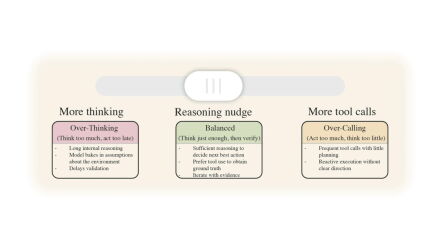
2026Recent progress in multi-turn reinforcement learning (RL) has significantly improved reasoning LLMs' performances on complex interactive tasks. Despite advances in stabilization techniques such as fine-grained credit assignment and trajectory filtering, instability remains pervasive and often leads to training collapse. We argue that this instability stems from inefficient exploration in multi-turn settings
-
KDD 20262026Vision language models face a fundamental geometry trade-off: Euclidean representations excel at instance-level discrimination, while hyperbolic representations naturally encode semantic hierarchies. Hybrid training is challenging because one geometry may dominate early, leaving the other under-trained failure mode we term geometry dominance. We introduce Adaptive Geometry Routing (AGR), a framework that
-
Interspeech 20262026Audio encoders are critical to modern audio applications as large language models (LLMs) increasingly rely on a single encoder for diverse inputs. While self-supervised learning (SSL) has yielded strong domain-specific encoders like speech or music experts, multi-domain approaches like USAD and SPEAR remain limited in coverage and evaluation. Recent studies also suggest supervised encoders align better
Collaborations
View allWhether you're a faculty member or student, there are number of ways you can engage with Amazon.
View all

Gretchen Ertl
The program offers unrestricted funds and other resources to support research at academic institutions and non-profit organizations in areas that align with our mission.

A global university competition to drive secure innovation in generative AI technology, which focuses on responsible AI and large language model coding security.
Credit: Wolfram Scheible
We partner with particular academic organizations across the world for deep and sustained collaborations in multiple research areas of mutual interest.

Courtesy of Pai-Ling Yin
We hire world-class academics to work on large-scale technical challenges, while they continue to teach and conduct research at their universities.

