














A family of four foundation models designed to meet diverse enterprise needs across reasoning, multimodal processing, and real-time conversational AI.

How agentic systems work under the hood — and how AWS’s new AgentCore framework implements their essential components.

Reasoning models can generate seven to 10 times as many tokens as necessary on simple tasks, creating unsustainable costs at scale. Amazon's vision for metacognitive AI could fundamentally shift how models allocate computational resources.

Amazon's competitive-agent architecture creates a continuous improvement cycle that develops security protections at machine speed, reducing what typically takes weeks down to hours.


A new approach to reducing carbon emissions reveals previously hidden emission “hotspots” within value chains, helping organizations make more detailed and dynamic decisions about their future carbon footprints.
Customer-obsessed science


Research areas


-
 December 5, 20256 min readA multiagent architecture separates data perception, tool knowledge, execution history, and code generation, enabling ML automation that works with messy, real-world inputs.
 -

-
-
November 20, 20254 min read
-
October 20, 20254 min read


Featured news
Initiative will fund over 100 doctoral students researching machine learning, computer vision, and natural-language processing at nine universities.
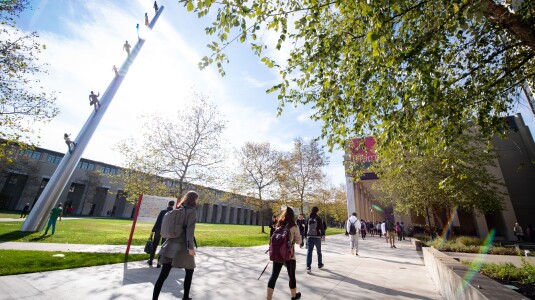
The collaboration will advance research in generative AI, robotics, natural language processing and cloud computing while fostering innovation in foundational and emerging technologies.
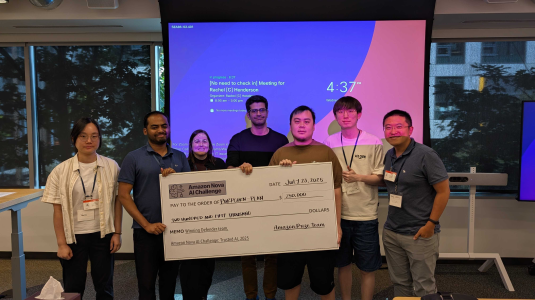
University teams battle to harden and hack AI coding assistants in head-to-head tournament

David Chang/Getty Images/iStockphoto
Led by David Luan and Pieter Abbeel, the lab will focus on developing new foundational capabilities for enabling useful AI agents.

The company's new state-of-the-art foundation models deliver frontier intelligence and industry-leading price performance.
-
Interspeech 20212021We introduce Amortized Neural Networks (AmNets), a compute cost- and latency-aware network architecture particularly well-suited for sequence modeling tasks. We apply AmNets to the Recurrent Neural Network Transducer (RNN-T) to reduce compute cost and latency for an automatic speech recognition (ASR) task. The AmNets RNN-T architecture enables the network to dynamically switch between encoder branches on
-
Interspeech 20212021By implicitly recognizing a user based on his/her speech input, speaker identification enables many downstream applications, such as personalized system behavior and expedited shopping checkouts. Based on whether the speech content is constrained or not, both text-dependent (TD) and text-independent (TI) speaker recognition models may be used. We wish to combine the advantages of both types of models through
-
Interspeech 20212021The success of modern deep learning systems is built on two cornerstones, massive amount of annotated training data and advanced computational infrastructure to support large-scale computation. In recent years, the model size of state-of-the-art deep learning systems has rapidly increased and sometimes reached to billions of parameters. Herein we take a close look into this phenomenon and present an empirical
-
SIGIR 2021 International Workshop on Causality in Search and Recommendation2021We propose a novel method to estimate metrics for a ranking policy, based on behavioral signal data (e.g. clicks or viewing of video contents) generated by a second different policy. Building on [1], we prove the counterfactual estimator is unbiased, and discuss its low-variance property. The estimator can be used to evaluate ranking model performance offline, to validate and selection positional bias models
-
Interspeech 20212021End-to-end automatic speech recognition systems map a sequence of acoustic features to text. In modern systems, text is encoded to grapheme subwords which are generated by methods designed for text processing tasks and therefore don’t model or take advantage of the statistics of the acoustic features. Here, we present a novel method for generating grapheme subwords that are derived from phoneme sequences
Collaborations
View allWhether you're a faculty member or student, there are number of ways you can engage with Amazon.
View all

Gretchen Ertl
The program offers unrestricted funds and other resources to support research at academic institutions and non-profit organizations in areas that align with our mission.
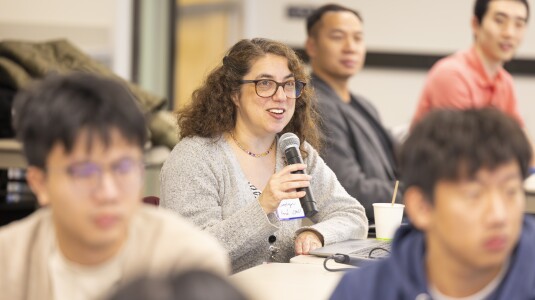
A global university competition to drive secure innovation in generative AI technology, which focuses on responsible AI and large language model coding security.
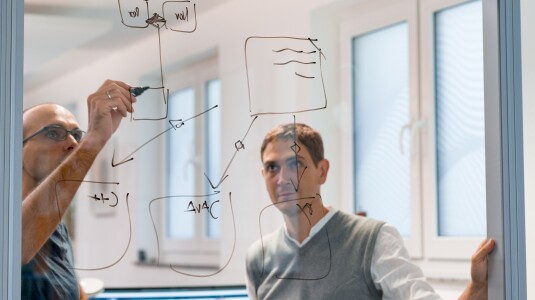
Credit: Wolfram Scheible
We partner with particular academic organizations across the world for deep and sustained collaborations in multiple research areas of mutual interest.
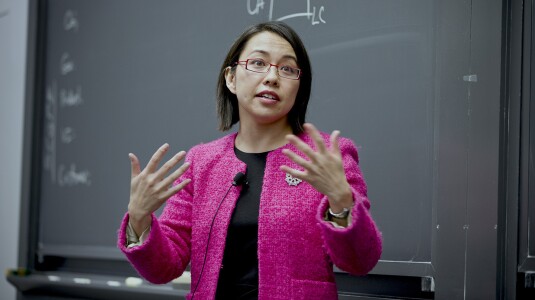
Courtesy of Pai-Ling Yin
We hire world-class academics to work on large-scale technical challenges, while they continue to teach and conduct research at their universities.

