














New audio-processing technology is making entertainment more accessible for millions of viewers.

Reasoning models can generate seven to 10 times as many tokens as necessary on simple tasks, creating unsustainable costs at scale. Amazon's vision for metacognitive AI could fundamentally shift how models allocate computational resources.

AGI SVP Rohit Prasad on how to mix your data with Amazon's training data at every stage — deep customization without catastrophic forgetting.

How agentic systems work under the hood — and how AWS’s new AgentCore framework implements their essential components.

Competitive-agent architecture develops security protections at machine speed, reducing weeks of work to hours.
Customer-obsessed science


Research areas


-
 December 5, 20256 min readA multiagent architecture separates data perception, tool knowledge, execution history, and code generation, enabling ML automation that works with messy, real-world inputs.
 -

-
-
November 20, 20254 min read
-


Featured news

Challenge pushes teams to demonstrate measurable gains in secure-coding performance while building AI agents that advance real-world utility and reliability at scale.

Meet the 63 Amazon Research Award (ARA) recipients, who represent 41 universities in 8 countries.
Initiative will fund over 100 doctoral students researching machine learning, computer vision, and natural-language processing at nine universities.

David Chang/Getty Images/iStockphoto
Led by David Luan and Pieter Abbeel, the lab will focus on developing new foundational capabilities for enabling useful AI agents.
-
2025With increasing demands for efficiency, information retrieval has developed a branch of sparse retrieval, further advancing towards inference-free retrieval where the documents are encoded during indexing time and there is no model-inference for queries. Existing sparse retrieval models rely on FLOPS regularization for sparsification, while this mechanism was originally designed for Siamese encoders, it
-
2025Toxicity text detectors can be vulnerable to adversarial examples - small perturbations to input text that fool the systems into wrong detection. Existing attack algorithms are time-consuming and often produce invalid or ambiguous adversarial examples, making them less useful for evaluating or improving real-world toxicity content moderators. This paper proposes an annotation pipeline for quality control
-
ICASSP 2025 Workshop on Generative Data Augmentation for Real-World Signal Processing Applications2025This paper describes the synthesis of the room acoustics challenge as a part of the generative data augmentation workshop at ICASSP 2025. The challenge defines a unique generative task that is designed to improve the quantity and diversity of the room impulse responses dataset so that it can be used for spatially sensitive downstream tasks: speaker distance estimation. The challenge identifies the technical
-
ICLR 2025 Workshop on Tackling Climate Change with Machine Learning2025Accurately quantifying product carbon footprints (PCFs) is critical for organizations to measure environmental impacts and develop decarbonization strategies. However, traditional methods require Bills of Materials (BOMs) data as a key input for PCF estimation, which is time-intensive and limits scalability. We present Palimpsest, an automated BOM generation algorithm given product specification as input
-
2025Jailbreaking large-language models (LLMs) involves testing their robustness against adversarial prompts and evaluating their ability to withstand prompt attacks that could elicit unauthorized or malicious responses. In this paper, we present TurboFuzzLLM, a mutation-based fuzzing technique for efficiently finding a collection of effective jailbreaking templates that, when combined with harmful questions
Collaborations
View allWhether you're a faculty member or student, there are number of ways you can engage with Amazon.
View all

Gretchen Ertl
The program offers unrestricted funds and other resources to support research at academic institutions and non-profit organizations in areas that align with our mission.
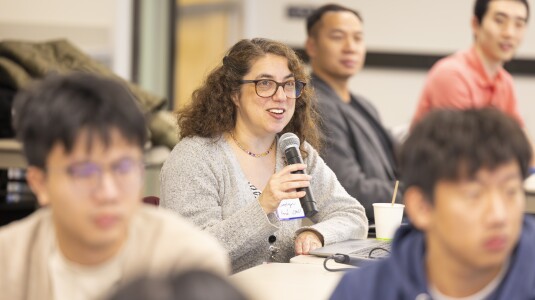
A global university competition to drive secure innovation in generative AI technology, which focuses on responsible AI and large language model coding security.

Credit: Wolfram Scheible
We partner with particular academic organizations across the world for deep and sustained collaborations in multiple research areas of mutual interest.
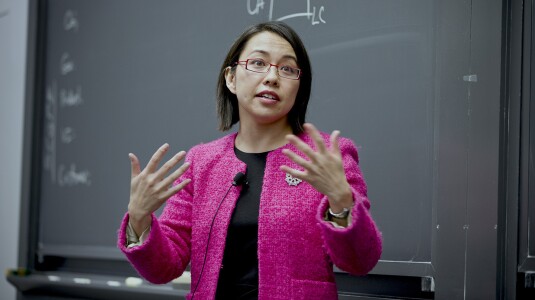
Courtesy of Pai-Ling Yin
We hire world-class academics to work on large-scale technical challenges, while they continue to teach and conduct research at their universities.

