















Customer-obsessed science


Research areas













-
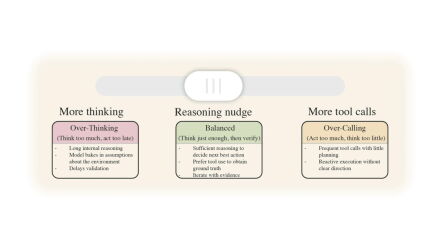
 July 9, 202610 min readA new Rust proxy called Turnstile sits between the model backend and the agent harness to capture information lost in mere text transcripts.
 -

-
-



Featured news

Hosted by Danielle Perszyk, cognitive scientist at Amazon's AGI Lab, the podcast features researchers tackling the hardest problems in agentic AI — from building reliable perception systems to designing training environments that mirror human learning.

The Antibody Developability Benchmark is powered by one of the most diverse antibody datasets in public literature, enabling transparent performance evaluation for AI-guided antibody design.

Challenge pushes teams to demonstrate measurable gains in secure-coding performance while building AI agents that advance real-world utility and reliability at scale.

Initiative will fund over 100 doctoral students researching machine learning, computer vision, and natural-language processing at nine universities.
-
2026Transformers are widely used across data modalities, and yet the principles dis-tilled from text models often transfer imperfectly to models trained to other modalities. In this paper, we analyze Transformers through the lens of rank structure. Our focus is on the time series setting, where the structural proper-ties of the data differ remarkably from those of text or vision. We show that time-series embeddings
-
Minimizing the inference cost and latency of foundation models has become a crucial area of research. Optimization approaches include theoretically lossless methods and others without accuracy guarantees like quantization. In all of these cases it is crucial to ensure that the model quality has not degraded. However, even at temperature zero, model generations are not necessarily robust even to theoretically
-
2026Knowledge distillation has become a crucial technique to transfer the capacities of large language models (LLMs) to smaller, more efficient models for practical deployment. While recent work exploits rich information from intermediate states of the teacher model for more effective knowledge transfer, imperfect knowledge from the teacher can also mislead student learning, restricting the student’s generalization
-
ICLR 2026 Workshop on Time Series in the Age of Large Models2026Foundation models promise zero-shot forecasting across domains, yet their effectiveness for cold-start scenarios with zero-inflated distributions remains underexplored. We study cross-domain demand forecasting, predicting outcomes for items launching in new domains without historical data where a substantial fraction of launches (≈ 30%) yield zero outcomes and overestimation carries asymmetric costs. We
-
2026Variational Autoencoders (VAEs) are a powerful alternative to matrix factorization for recommendation. A common technique in VAE-based collaborative filtering (CF) consists in applying binary input masking to user interaction vectors, which improves performance but remains underexplored theoretically. In this work, we analyze how collaboration arises in VAE-based CF and show it is governed by latent proximity
Collaborations
View allWhether you're a faculty member or student, there are number of ways you can engage with Amazon.
View all

Gretchen Ertl
The program offers unrestricted funds and other resources to support research at academic institutions and non-profit organizations in areas that align with our mission.

A global university competition to drive secure innovation in generative AI technology, which focuses on responsible AI and large language model coding security.
Credit: Wolfram Scheible
We partner with particular academic organizations across the world for deep and sustained collaborations in multiple research areas of mutual interest.

Courtesy of Pai-Ling Yin
We hire world-class academics to work on large-scale technical challenges, while they continue to teach and conduct research at their universities.

