














New audio-processing technology is making entertainment more accessible for millions of viewers.

Reasoning models can generate seven to 10 times as many tokens as necessary on simple tasks, creating unsustainable costs at scale. Amazon's vision for metacognitive AI could fundamentally shift how models allocate computational resources.

AGI SVP Rohit Prasad on how to mix your data with Amazon's training data at every stage — deep customization without catastrophic forgetting.

How agentic systems work under the hood — and how AWS’s new AgentCore framework implements their essential components.

Competitive-agent architecture develops security protections at machine speed, reducing weeks of work to hours.
Customer-obsessed science


Research areas


-
 December 5, 20256 min readA multiagent architecture separates data perception, tool knowledge, execution history, and code generation, enabling ML automation that works with messy, real-world inputs.
 -

-
-
November 20, 20254 min read
-


Featured news

Challenge pushes teams to demonstrate measurable gains in secure-coding performance while building AI agents that advance real-world utility and reliability at scale.

Meet the 63 Amazon Research Award (ARA) recipients, who represent 41 universities in 8 countries.
Initiative will fund over 100 doctoral students researching machine learning, computer vision, and natural-language processing at nine universities.

David Chang/Getty Images/iStockphoto
Led by David Luan and Pieter Abbeel, the lab will focus on developing new foundational capabilities for enabling useful AI agents.
-
KDD 2025 Workshop on LLM4ECommerce2025Customer service in e-commerce often relies on human agents to handle inquiries related to orders, returns, and product information. While this approach is effective, it can be expensive and difficult to scale during periods of high demand. Recent advances in intelligent chatbots, particularly those based on Retrieval Augmented Generation (RAG) models, have significantly improved customer service efficiency
-
KDD 2025 Workshop on LLM4ECommerce, EMNLP 20252025Accurate intent classification is critical for efficient routing in customer service, ensuring customers are connected with the most suitable agents while reducing handling times and operational costs. However, as companies expand their product lines, intent classification faces scalability challenges due to the increasing number of intents and variations in taxonomy across different verticals. In this
-
KDD 2025 Workshop on Structured Knowledge for Large Language Models2025Despite advances in large language model (LLM)-based natural language interfaces for databases, scaling to enterprise-level data catalogs remains an under-explored challenge. Prior works addressing this challenge rely on domain-specific fine-tuning—complicating deployment—and fail to leverage important semantic context contained within database metadata. To address these limitations, we introduce a component-based
-
KDD 2025 Workshop on Machine Learning in Finance (MLF)2025Financial accounting systems rely heavily on subledgers to track detailed transaction records. However, modern systems often evolve into complex architectures where different components use inconsistent labeling conventions, making it difficult to understand and utilize important relationships within subledger data. This paper presents a novel framework LLM-STARS (LLM-Enhanced Standardization of Time-series
-
KDD 2025 Workshop on Prompt Optimization2025Despite advances in the multilingual capabilities of Large Language Models (LLMs), their performance varies substantially across different languages and tasks. In multilingual retrieval-augmented generation (RAG)-based systems, knowledge bases (KB) are often shared from high-resource languages (such as English) to lowresource ones, resulting in retrieved information from the KB being in a different language
Collaborations
View allWhether you're a faculty member or student, there are number of ways you can engage with Amazon.
View all

Gretchen Ertl
The program offers unrestricted funds and other resources to support research at academic institutions and non-profit organizations in areas that align with our mission.
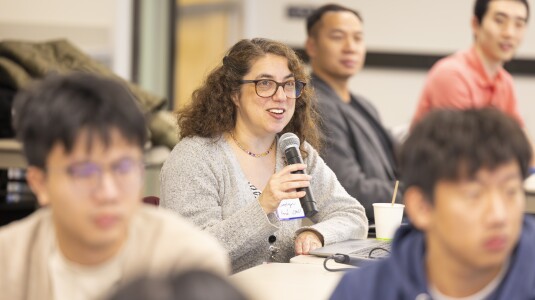
A global university competition to drive secure innovation in generative AI technology, which focuses on responsible AI and large language model coding security.
Credit: Wolfram Scheible
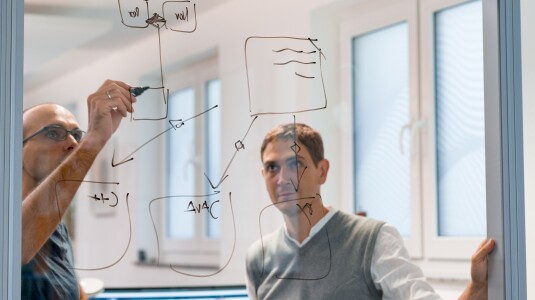
We partner with particular academic organizations across the world for deep and sustained collaborations in multiple research areas of mutual interest.
Courtesy of Pai-Ling Yin
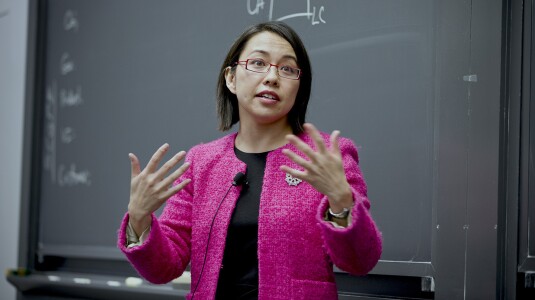
We hire world-class academics to work on large-scale technical challenges, while they continue to teach and conduct research at their universities.

