














Millimeter-scale particles of nuclear-reactor fuel are encased in four layers of different materials that act as a “miniature containment system”.


Customer-obsessed science


Research areas













-
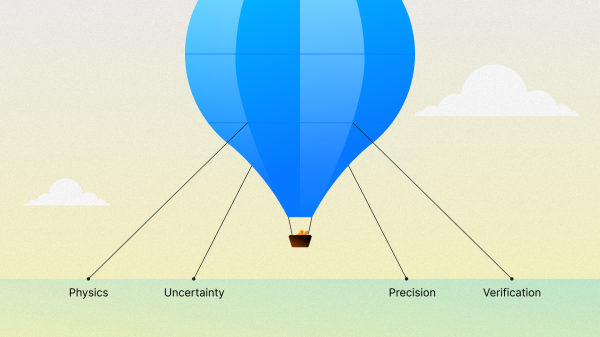
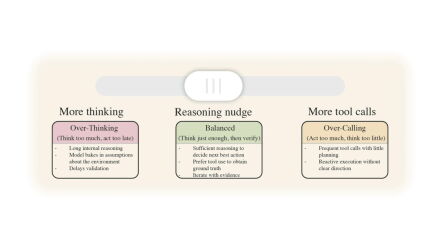
 June 8, 20267 min readFour approaches can dramatically improve the performance and trustworthiness of AI agents in operational environments.
 -

-
-
-
May 27, 20264 min readMachine learning


Featured news

Hosted by Danielle Perszyk, cognitive scientist at Amazon's AGI Lab, the podcast features researchers tackling the hardest problems in agentic AI — from building reliable perception systems to designing training environments that mirror human learning.

The Antibody Developability Benchmark is powered by one of the most diverse antibody datasets in public literature, enabling transparent performance evaluation for AI-guided antibody design.

Challenge pushes teams to demonstrate measurable gains in secure-coding performance while building AI agents that advance real-world utility and reliability at scale.

Initiative will fund over 100 doctoral students researching machine learning, computer vision, and natural-language processing at nine universities.
-
2026Search-augmented LLM agents can produce deep research reports (DRRs), but claim-level factuality remains hard to verify. Existing fact-checkers are optimized for short, general-domain claims and often reduce verification to matching snippets or checking cited sources, missing uncited synthesis and broader scientific consensus. Yet evaluating better DRR verifiers is itself difficult: the usual solution,
-
IEEE Symposium on Product Compliance Engineering 20262026Lightning-induced surge voltages constitute a primary failure mechanism for outdoor electronic equipment deployed in residential and commercial environments. This paper presents a physics-based Distance Effect model that establishes the quantitative relationship between lightning-induced voltage magnitude and the spatial volume fraction capable of producing that voltage level, yielding an inverse cubic
-
2026Context management enables agentic models to solve long-horizon tasks through iterative summarization of previous interaction histories. However, this process typically incurs substantial decoding overhead for the extra summarization tokens, which significantly affect the end-to-end response latency at deployment. In this paper, we introduce COMEM, a novel framework that decouples memory management from
-
2026Document understanding in real-world applications often requires processing heterogeneous, multi-page document packets containing multiple documents stitched together. Despite recent advances in visual document understanding, the fundamental task of document packet splitting, which involves separating a document packet into individual units, remains largely unaddressed. We present the first comprehensive
-
ICML 2026 Workshop on Scalable Learning and Optimization for Efficient Multimodal AI Agents (SCALE)2026Extracting structured information from visually rich documents at enterprise scale demands both the reasoning capability of large language models and the efficiency of deterministic execution. Current approaches either deploy LLMs as instance-level analysts, incurring per-document inference costs that are prohibitive for repetitive templates, or rely on manually authored vendor-specific prompts that do
Collaborations
View allWhether you're a faculty member or student, there are number of ways you can engage with Amazon.
View all

Gretchen Ertl
The program offers unrestricted funds and other resources to support research at academic institutions and non-profit organizations in areas that align with our mission.

A global university competition to drive secure innovation in generative AI technology, which focuses on responsible AI and large language model coding security.
Credit: Wolfram Scheible
We partner with particular academic organizations across the world for deep and sustained collaborations in multiple research areas of mutual interest.

Courtesy of Pai-Ling Yin
We hire world-class academics to work on large-scale technical challenges, while they continue to teach and conduct research at their universities.

