














New audio-processing technology is making entertainment more accessible for millions of viewers.

Reasoning models can generate seven to 10 times as many tokens as necessary on simple tasks, creating unsustainable costs at scale. Amazon's vision for metacognitive AI could fundamentally shift how models allocate computational resources.

AGI SVP Rohit Prasad on how to mix your data with Amazon's training data at every stage — deep customization without catastrophic forgetting.

How agentic systems work under the hood — and how AWS’s new AgentCore framework implements their essential components.

Competitive-agent architecture develops security protections at machine speed, reducing weeks of work to hours.
Customer-obsessed science


Research areas


-
 December 5, 20256 min readA multiagent architecture separates data perception, tool knowledge, execution history, and code generation, enabling ML automation that works with messy, real-world inputs.
 -

-
-
November 20, 20254 min read
-


Featured news

Challenge pushes teams to demonstrate measurable gains in secure-coding performance while building AI agents that advance real-world utility and reliability at scale.

Meet the 63 Amazon Research Award (ARA) recipients, who represent 41 universities in 8 countries.
Initiative will fund over 100 doctoral students researching machine learning, computer vision, and natural-language processing at nine universities.

David Chang/Getty Images/iStockphoto
Led by David Luan and Pieter Abbeel, the lab will focus on developing new foundational capabilities for enabling useful AI agents.
-
Code@MIT 20252025This paper examines the effectiveness of stratification in experimental design using evidence from multiple large-scale experiments. We analyze data from experiments ranging from approximately 30,000 to 180,000 units across different business contexts. Our results show that pre-stratification and post-stratification achieve virtually identical precision improvements - largest in smaller samples (10% improvement
-
Code@MIT 20252025Determining appropriate experimental duration remains a challenging problem in online experimentation. While experimenters ideally would know in advance how long to run experiments in order to inform confident business decisions, many factors affecting conclusiveness of their results are difficult to predict prior to the experiment. Consequently, experimentation services develop 'in-flight' tools that suggest
-
NeurIPS 2025 Workshop on Efficient Reasoning2025Large reasoning models (LRMs) excel at reasoning tasks but face deployment barriers due to computational constraints, regulatory requirements, and domain-specific knowledge gaps. This work addresses these limitations by developing cost-efficient post-training methods to enhance reasoning capabilities. Using Qwen3-4B as our base model, we investigate variations of efficient Supervised Fine-Tuning (SFT) and
-
IJCNLP-AACL 20252025Dense Retrieval (DR) models have proven to be effective for Document Retrieval and Information Grounding tasks. Usually, these models are trained and optimized for improving the relevance of top-ranked documents for a given query. Previous work has shown that popular DR models are sensitive to the query and document lexicon: small variations of it may lead to a significant difference in the set of retrieved
-
2025Large Language Models (LLMs) have emerged as powerful tools for generating coherent text, understanding context, and performing reasoning tasks. However, they struggle with temporal reasoning, which requires processing time-related information such as event sequencing, durations, and inter-temporal relationships. These capabilities are critical for applications including question answering, scheduling,
Collaborations
View allWhether you're a faculty member or student, there are number of ways you can engage with Amazon.
View all

Gretchen Ertl
The program offers unrestricted funds and other resources to support research at academic institutions and non-profit organizations in areas that align with our mission.
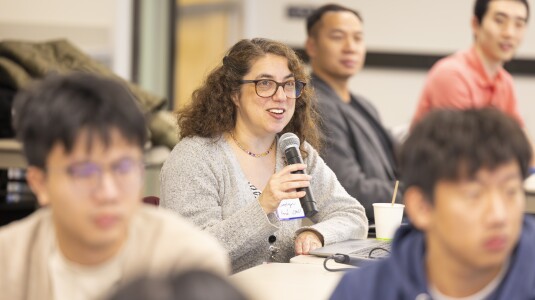
A global university competition to drive secure innovation in generative AI technology, which focuses on responsible AI and large language model coding security.
Credit: Wolfram Scheible
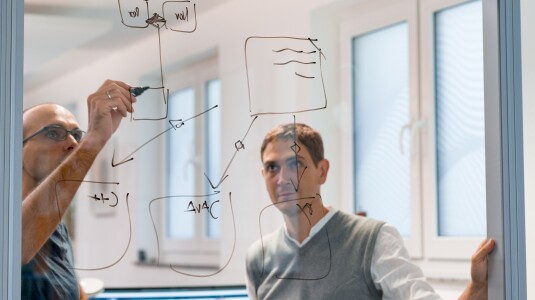
We partner with particular academic organizations across the world for deep and sustained collaborations in multiple research areas of mutual interest.
Courtesy of Pai-Ling Yin
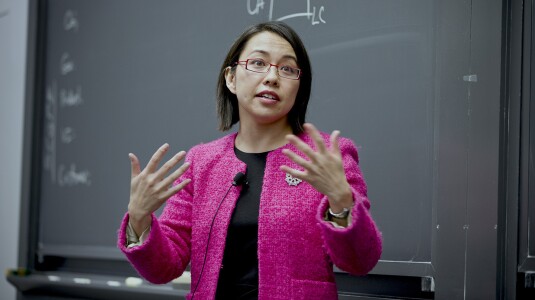
We hire world-class academics to work on large-scale technical challenges, while they continue to teach and conduct research at their universities.

