














Millimeter-scale particles of nuclear-reactor fuel are encased in four layers of different materials that act as a “miniature containment system”.


Customer-obsessed science


Research areas













-
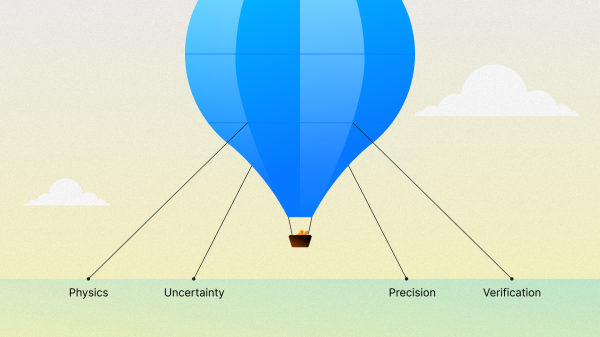
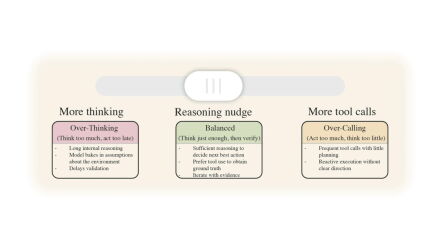
 June 8, 20267 min readFour approaches can dramatically improve the performance and trustworthiness of AI agents in operational environments.
 -

-
-
-
May 27, 20264 min readMachine learning


Featured news

Hosted by Danielle Perszyk, cognitive scientist at Amazon's AGI Lab, the podcast features researchers tackling the hardest problems in agentic AI — from building reliable perception systems to designing training environments that mirror human learning.

The Antibody Developability Benchmark is powered by one of the most diverse antibody datasets in public literature, enabling transparent performance evaluation for AI-guided antibody design.

Challenge pushes teams to demonstrate measurable gains in secure-coding performance while building AI agents that advance real-world utility and reliability at scale.

Initiative will fund over 100 doctoral students researching machine learning, computer vision, and natural-language processing at nine universities.
-
ACM BuildSys 20262026Modeling building thermal dynamics is essential for energy optimization, yet building heterogeneity and non-stationary dynamics demand per-building customization that typically requires expert intervention. Automated scientific discovery workflows powered by Large Language Models (LLM) could significantly decrease the human expertise requirements for generating custom thermal models at scale, but their
-
arXiv2026We show that the standard basis of transformer hidden states already provides a training-free, architecture-general feature basis. Individual dimensions encode semantic content via their signs (±1) and confidence via their magnitudes, functioning as independent binary registers. A feature is simply a subset of dimensions with a consistent sign pattern, readable by counting sign agreements with no learned
-
CVPR IEEE 2026 Workshop on Computer Vision in Sports2026Multi-agent trajectory generation in team sports requires models that capture both the diversity of possible plays and realistic spatial coordination between players on plays. Standard generative approaches such as Conditional Variational Autoencoders (CVAE) and diffusion models struggle with this task, exhibiting posterior collapse or convergence to the dataset mean. Moreover, most trajectory prediction
-
2026The LLM Jury, a Panel of LLM Evaluators (POLL) (Verga et al., 2024) reporting consensus scores, has become a practical alternative to single judge LLM evaluation, yet its statistical behavior remains poorly understood. Formalizing the setup under the Huber contamination model, we show that POLL incurs unbounded bias under any positive contamination, regardless of jury size, whenever a single judge fails
-
ECML-PKDD 20262026When fusing heterogeneous modalities for classification, a central challenge is cardinality heterogeneity: modalities often produce token sequences of vastly different lengths, yet standard symmetric fusion wastes attention capacity under this asymmetry. We present CRAFT, a modality-agnostic fusion framework that selects a high-density attention backbone using token cardinality and standalone task relevance
Collaborations
View allWhether you're a faculty member or student, there are number of ways you can engage with Amazon.
View all

Gretchen Ertl
The program offers unrestricted funds and other resources to support research at academic institutions and non-profit organizations in areas that align with our mission.

A global university competition to drive secure innovation in generative AI technology, which focuses on responsible AI and large language model coding security.
Credit: Wolfram Scheible
We partner with particular academic organizations across the world for deep and sustained collaborations in multiple research areas of mutual interest.

Courtesy of Pai-Ling Yin
We hire world-class academics to work on large-scale technical challenges, while they continue to teach and conduct research at their universities.

