












Using the Neuron Kernel Interface, a Reactor–AWS collaboration tackled the dynamic shapes, memory access patterns, and cache management that make real-time autoregressive diffusion hard—building techniques that generalize across models.


Three new papers from Amazon Bio Discovery address bottlenecks in AI-driven antibody engineering, from benchmarking binding predictors to experimentally validating de novo design.
New research indicates that AI agents learn compressible models of data, which don’t have enough space to enable memorization.

How the Verus "program verifier", which automatically checks code against a mathematical specification of its functionality, helps increase security assurance in software projects.

Ten years after we founded the Automated Reasoning Group, mathematical logic has moved from academic research into production services that secure millions of customer workloads — demonstrating that systems can be provably correct, not just probably correct.
Customer-obsessed science

Research areas








-
 October 12, 202614 min read“Priming” reuses pretrained Transformer weights to build models with more efficient architectures at less than 1% of the original training cost and with throughputs up to twice as high.
 -

-
-
August 21, 20269 min read
-
July 30, 20268 min read


Featured news

The collaboration will support research in robotics, industrial and systems engineering, and aerospace technology while fostering innovation in foundational and emerging technologies.

Submissions open October 1 and close on November 4, 2026

The Build on Trainium program is a $110 million credit initiative supporting AI research at 30 universities including Stanford, UC Berkeley, UIUC, UCLA, CMU, and MIT, with a focus on Responsible AI.

The Antibody Developability Benchmark is powered by one of the most diverse antibody datasets in public literature, enabling transparent performance evaluation for AI-guided antibody design.

Challenge pushes teams to demonstrate measurable gains in secure-coding performance while building AI agents that advance real-world utility and reliability at scale.

Initiative will fund over 100 doctoral students researching machine learning, computer vision, and natural-language processing at nine universities.
-
NAACL 20222022Keyphrase generation is the task of automatically predicting keyphrases given a piece of long text. Despite its recent flourishing, keyphrase generation on non-English languages haven’t been vastly investigated. In this paper, we call attention to a new setting named multilingual keyphrase generation and we contribute two new datasets, EcommerceMKP and AcademicMKP, covering six languages. Technically, we
-
NAACL 20222022Extreme multi-label classification (XMC) systems have been successfully applied in ecommerce (Shen et al., 2020; Dahiya et al., 2021) for retrieving products based on customer behavior. Such systems require large amounts of customer behavior data (e.g. queries, clicks, purchases) for training. However, behavioral data is limited in low-traffic e-commerce stores, impacting performance of these systems. In
-
NAACL 20222022Users often leave feedback on a myriad of aspects of a product which, if leveraged successfully, can help yield useful insights that can lead to further improvements down the line. Detecting actionable insights can be challenging owing to large amounts of data as well as the absence of labels in real-world scenarios. In this work, we present an aggregation and graph-based ranking strategy for unsupervised
-
NAACL 20222022Machine Learning (ML) systems are getting increasingly popular, and drive more and more applications and services in our daily life. This has led to growing concerns over user privacy, since human interaction data typically needs to be transmitted to the cloud in order to train and improve such systems. Federated learning (FL) has recently emerged as a method for training ML models on edge devices using
-
NAACL 20222022Training mixed-domain translation models is a complex task that demands tailored architectures and costly data preparation techniques. In this work, we leverage federated learning (FL) in order to tackle the problem. Our investigation demonstrates that with slight modifications in the training process, neural machine translation (NMT) engines can be easily adapted when an FL-based aggregation is applied
Collaborations
View allWhether you're a faculty member or student, there are number of ways you can engage with Amazon.
View all

Gretchen Ertl
The program offers unrestricted funds and other resources to support research at academic institutions and non-profit organizations in areas that align with our mission.
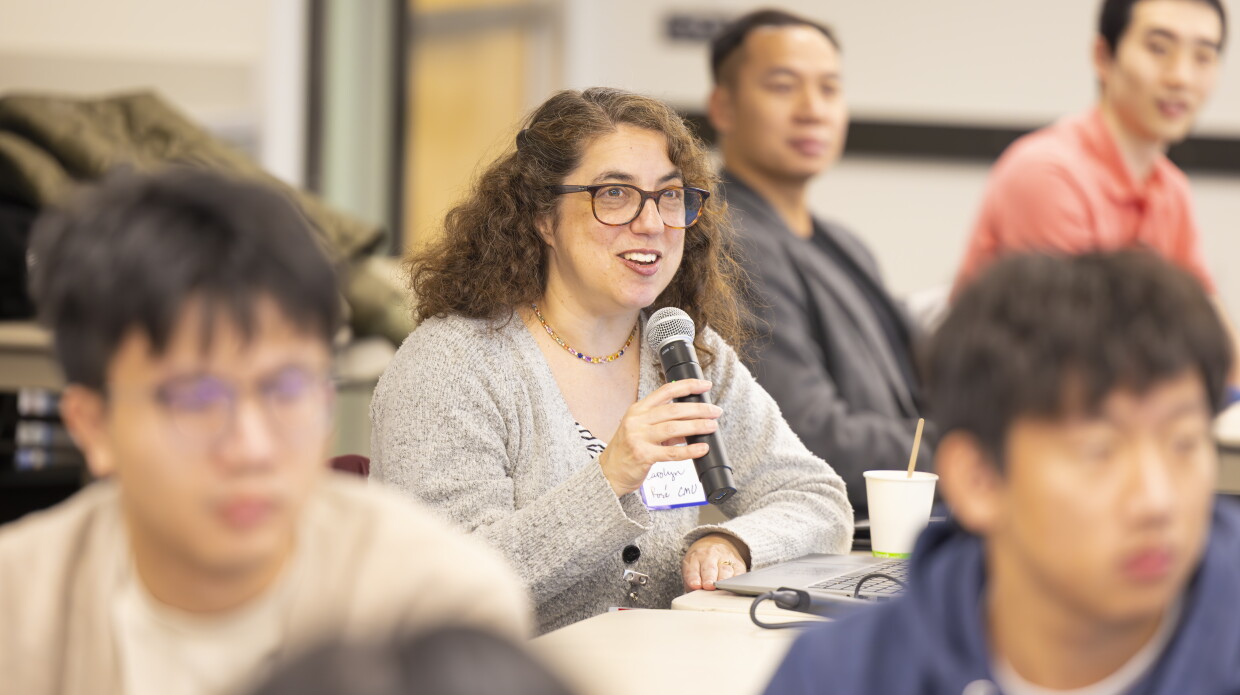
A global university competition to drive secure innovation in generative AI technology, which focuses on responsible AI and large language model coding security.

Credit: Wolfram Scheible
We partner with particular academic organizations across the world for deep and sustained collaborations in multiple research areas of mutual interest.
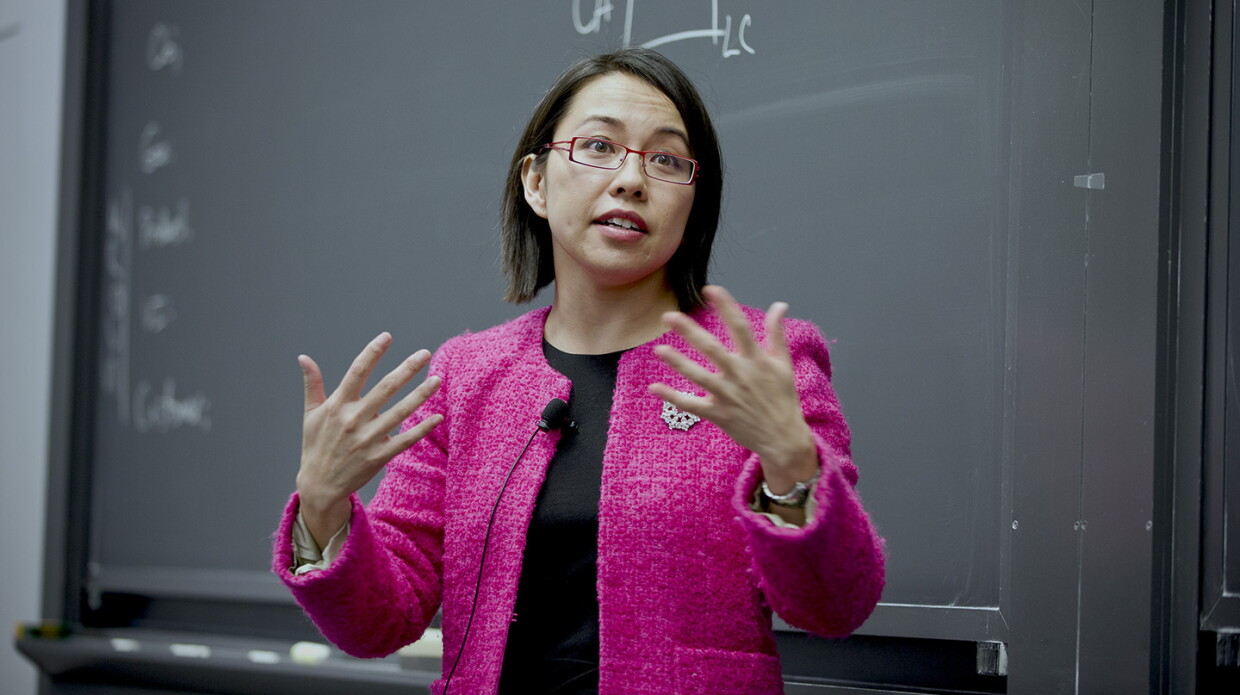
Courtesy of Pai-Ling Yin
We hire world-class academics to work on large-scale technical challenges, while they continue to teach and conduct research at their universities.