














“Quasi-random” network topologies and new passive optical components called ShuffleBoxes make more-efficient flat networks as practical as traditional “fat-tree” networks.

How we reproduced three attacks that extract private training data from AI models and the cryptographic defenses that stop them.

Amazon engineers and scientists have created new tools to optimize delivery networks under uncertainty — and keep them adapting without missing a beat.

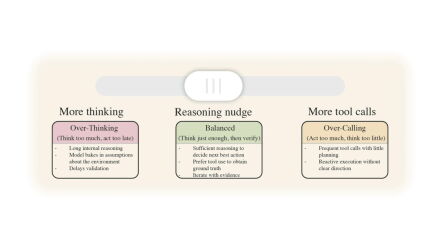
Reasoning models can generate seven to 10 times as many tokens as necessary on simple tasks, creating unsustainable costs at scale. Amazon's vision for metacognitive AI could fundamentally shift how models allocate computational resources.

As AI models grow larger, they become less insightful, not more. To ensure that they continue to learn, we need to reduce their inference time.
Customer-obsessed science


Research areas













-
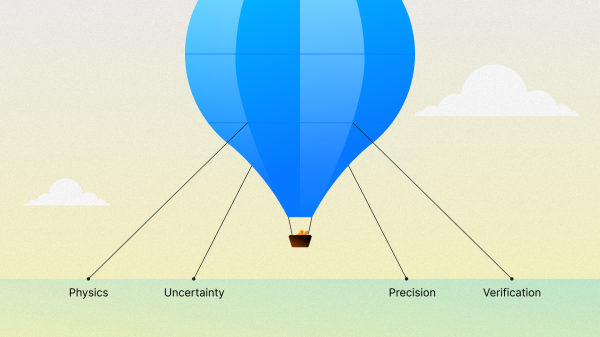
 June 8, 20267 min readFour approaches can dramatically improve the performance and trustworthiness of AI agents in operational environments.
 -

-
-
May 26, 20265 min read
-


Featured news

Hosted by Danielle Perszyk, cognitive scientist at Amazon's AGI Lab, the podcast features researchers tackling the hardest problems in agentic AI — from building reliable perception systems to designing training environments that mirror human learning.

The Antibody Developability Benchmark is powered by one of the most diverse antibody datasets in public literature, enabling transparent performance evaluation for AI-guided antibody design.

Challenge pushes teams to demonstrate measurable gains in secure-coding performance while building AI agents that advance real-world utility and reliability at scale.

Initiative will fund over 100 doctoral students researching machine learning, computer vision, and natural-language processing at nine universities.
-
2026The scaling of Large Language Models (LLMs) has driven significant performance gains but created substantial challenges in inference efficiency. While Mixture of Experts (MoEs) architectures address this by decoupling model size from inference cost, training MoEs from scratch is often unstable and compute intensive. Conversion of pre-trained dense models into sparse MoEs has emerged as an alternative solution
-
ACM CAIS 2026 Workshop on Agentic and AI Systems2026Compound AI systems that coordinate multiple specialized agents offer a promising path for complex reasoning tasks, yet principled architectural patterns for multi-agent coordination over structured data remain under-explored. We introduce Expansion-Contraction, a multi-agent graph traversal pattern in which an expansion phase walks a domain graph outward from a query origin, dynamically spawning ephemeral
-
KDD 20262026With the rapid advancement of powerful large language models (LLMs) in recent years, a wide range of software engineering tasks can now be addressed using LLMs, significantly enhancing productivity and scalability. Numerous benchmark datasets have been developed to evaluate the coding capabilities of these models, while they primarily focus on code generation and issue-resolution tasks. In contrast, we
-
We present ReSuMe, a general framework for mutual enhancement of dense retrieval systems and document summarizers through reinforcement learning. The framework jointly optimizes a language model for generating retrieval-oriented summaries and adapts the retrieval model to these summaries through alternating fine-tuning phases. We employ Group Relative Policy Optimization (GRPO) to fine-tune the language
-
IEEE SusTech 20262026In this paper, we present a comprehensive system-level approach to advancing device sustainability through power optimization for smart home devices, with a detailed case study of Amazon's Echo Pop. Through Lifecycle Assessment (LCA), we identified that Echo Pop generates an estimated 42 kg CO2e over its product lifetime, with 24 kg CO2e (57%) attributed to use-phase emissions, highlighting the critical
Collaborations
View allWhether you're a faculty member or student, there are number of ways you can engage with Amazon.
View all

Gretchen Ertl
The program offers unrestricted funds and other resources to support research at academic institutions and non-profit organizations in areas that align with our mission.

A global university competition to drive secure innovation in generative AI technology, which focuses on responsible AI and large language model coding security.

Credit: Wolfram Scheible
We partner with particular academic organizations across the world for deep and sustained collaborations in multiple research areas of mutual interest.

Courtesy of Pai-Ling Yin
We hire world-class academics to work on large-scale technical challenges, while they continue to teach and conduct research at their universities.

