















Customer-obsessed science


Research areas













-
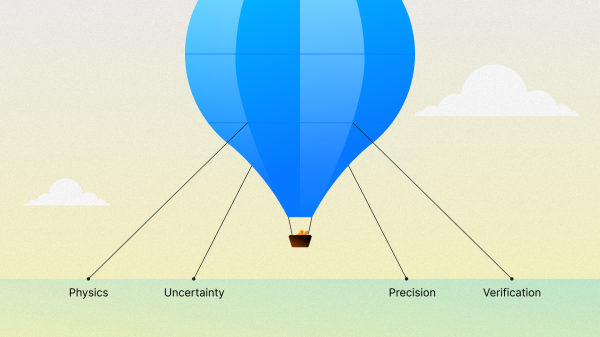
 June 8, 20267 min readFour approaches can dramatically improve the performance and trustworthiness of AI agents in operational environments.
 -

-
-
-
May 26, 20265 min read


Featured news

Hosted by Danielle Perszyk, cognitive scientist at Amazon's AGI Lab, the podcast features researchers tackling the hardest problems in agentic AI — from building reliable perception systems to designing training environments that mirror human learning.

The Antibody Developability Benchmark is powered by one of the most diverse antibody datasets in public literature, enabling transparent performance evaluation for AI-guided antibody design.

Challenge pushes teams to demonstrate measurable gains in secure-coding performance while building AI agents that advance real-world utility and reliability at scale.

Initiative will fund over 100 doctoral students researching machine learning, computer vision, and natural-language processing at nine universities.
-
2026Multi-hop reasoning remains a fundamental challenge for Retrieval-Augmented Generation (RAG) systems. Recent approaches-from adaptive retrieval to agentic pipelines-struggle to maintain coherent intermediate reasoning states as chains grow longer. We introduce State-Aware RAG, a framework that addresses this limitation through an explicit working memory that serves as a dynamic cognitive workspace for reasoning
-
2026Training large foundation models for agentic tasks is increasingly impractical due to the high computational costs, long iteration cycles, and rapid obsolescence as new models are continuously released. Instead of post-training massive models for every new task or domain, we propose Supplement Generation Training (SGT), a more efficient and sustainable strategy. SGT trains a smaller LLM to generate useful
-
2026Tool-calling agents are increasingly deployed in real-world customer-facing workflows. Yet most studies on tool-calling agents focus on idealized settings with general, fixed, and well-specified tasks. In real-world applications, user requests are often (1) ambiguous, (2) changing over time, or (3) infeasible due to policy constraints, and training and evaluation data that cover these diverse, complex interaction
-
Conventional adaptive bitrate (ABR) streaming systems typically rely on static bitrate ladders to optimize Quality of Experience (QoE). While operationally simple, this 'one-size-fits-all' approach neglects content-specific characteristics, often compromising streaming efficiency. Per-title optimization methods address this by predicting the rate-distortion convex hull directly from the source content,
-
2026LLMs can perform multi-step reasoning through Chain-of-Thought (CoT), but they cannot reliably verify their own logic. Even when they reach correct answers, the underlying reasoning may be flawed, undermining trust in high-stakes scenarios. To mitigate this issue, we introduce VERICOT, a neuro-symbolic method that extracts and verifies formal logical arguments from CoT reasoning. VERICOT formalizes each
Collaborations
View allWhether you're a faculty member or student, there are number of ways you can engage with Amazon.
View all

Gretchen Ertl
The program offers unrestricted funds and other resources to support research at academic institutions and non-profit organizations in areas that align with our mission.

A global university competition to drive secure innovation in generative AI technology, which focuses on responsible AI and large language model coding security.
Credit: Wolfram Scheible
We partner with particular academic organizations across the world for deep and sustained collaborations in multiple research areas of mutual interest.

Courtesy of Pai-Ling Yin
We hire world-class academics to work on large-scale technical challenges, while they continue to teach and conduct research at their universities.

