















Customer-obsessed science
Research areas













-
 July 30, 20268 min readInstead of compromising among parameter updates dictated by different training objectives, ControlG allocates computational capacity to objectives sequentially and dynamically.
 -

-
July 9, 202610 min read
-


Featured news

The Build on Trainium program is a $110 million credit initiative supporting AI research at 30 universities including Stanford, UC Berkeley, UIUC, UCLA, CMU, and MIT, with a focus on Responsible AI.

The Antibody Developability Benchmark is powered by one of the most diverse antibody datasets in public literature, enabling transparent performance evaluation for AI-guided antibody design.

Challenge pushes teams to demonstrate measurable gains in secure-coding performance while building AI agents that advance real-world utility and reliability at scale.

Initiative will fund over 100 doctoral students researching machine learning, computer vision, and natural-language processing at nine universities.
-
ICML 2021 Workshop on Machine Learning for Data: Automated Creation, Privacy, Bias2021With the use of personal devices connected to the Internet for tasks such as searches and shopping becoming ubiquitous, ensuring the privacy of the users of such services has become a requirement in order to build and maintain customer trust. While text privatization methods exist, they require the existence of a trusted party that collects user data before applying a privatization method to preserve users
-
IROS 20212021Localization is an essential module that supports many intelligent functions of a mobile robot such as transportation or inspection. However, justifying that a localization module is sufficiently accurate for supporting all downstream tasks is one of the most difficult questions to answer in practice. To overcome this problem, we move away from the traditional calculation of pose errors and propose a new
-
KDD 2021 Workshop on Data-Efficient Machine Learning2021Virtual assistants enable users to interact with a large number of services in natural language. Third-party developers building new applications for virtual assistants often have limited annotation resources and find it challenging to procure large amounts of suitable training data, opting instead for limited collections of sample utterance templates, annotated with their semantics. We can enrich such
-
Interspeech 2021 Workshop on Speech Synthesis (SSW11)2021We describe a heterophone homograph (simply ’homograph’ henceforth) disambiguation system based on per-case classifiers, trained on a small amount of labelled data. These classifiers use contextual word embeddings as input features and achieve state-of-the-art accuracy of 0.991 on the English homographs on a publicly available dataset, without any additional rule system being necessary. We show that as
-
Interspeech 2021 Workshop on Speech Synthesis (SSW11)2021We propose a novel Multi-Scale Spectrogram (MSS) modelling approach to synthesise speech with an improved coarse and fine-grained prosody. We present a generic multi-scale spectrogram prediction mechanism where the system first predicts coarser scale mel-spectrograms that capture the suprasegmental information in speech, and later uses these coarser scale mel-spectrograms to predict finer scale mel-spectrograms
Collaborations
View allWhether you're a faculty member or student, there are number of ways you can engage with Amazon.
View all

Gretchen Ertl
The program offers unrestricted funds and other resources to support research at academic institutions and non-profit organizations in areas that align with our mission.

A global university competition to drive secure innovation in generative AI technology, which focuses on responsible AI and large language model coding security.
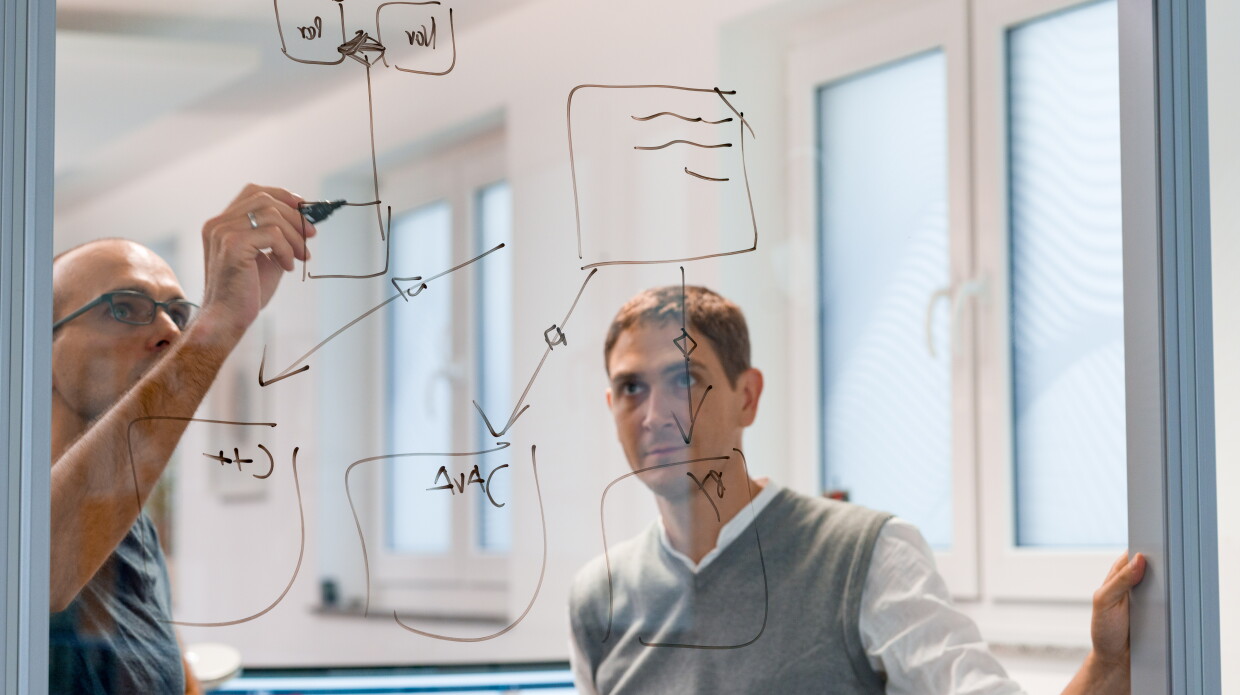
Credit: Wolfram Scheible
We partner with particular academic organizations across the world for deep and sustained collaborations in multiple research areas of mutual interest.

Courtesy of Pai-Ling Yin
We hire world-class academics to work on large-scale technical challenges, while they continue to teach and conduct research at their universities.

