















Customer-obsessed science
Research areas













-
 July 30, 20268 min readInstead of compromising among parameter updates dictated by different training objectives, ControlG allocates computational capacity to objectives sequentially and dynamically.
 -

-
July 9, 202610 min read
-


Featured news

Hosted by Danielle Perszyk, cognitive scientist at Amazon, the podcast features researchers tackling the hardest problems in agentic AI — from building reliable perception systems to designing training environments that mirror human learning.

The Antibody Developability Benchmark is powered by one of the most diverse antibody datasets in public literature, enabling transparent performance evaluation for AI-guided antibody design.

Challenge pushes teams to demonstrate measurable gains in secure-coding performance while building AI agents that advance real-world utility and reliability at scale.

Initiative will fund over 100 doctoral students researching machine learning, computer vision, and natural-language processing at nine universities.
-
ICASSP 20222022Traditionally, research in automated speech recognition has focused on local-first encoding of audio representations to predict the spoken phonemes in an utterance. Unfortunately, approaches relying on such hyper-local information tend to be vulnerable to both local-level corruption (such as audio-frame drops, or loud noises) and global-level noise (such as environmental noise, or background noise) that
-
NAACL 20222022Despite recent improvements in abstractive summarization, most current approaches generate summaries that are not factually consistent with the source document, severely restricting their trust and usage in real-world applications. Recent works have shown promising improvements in factuality error identification using text or dependency arc entailments; however, they do not consider the entire semantic
-
NAACL 20222022Fine-tuning a pre-trained language model using annotated data has become the de-facto standard for adapting general-purpose pretrained models like BERT to downstream tasks. However, given the trend of larger pretrained models, fine-tuning these models for each downstream task is parameter-inefficient and computationally-expensive deeming this approach sub-optimal for adoption by NLU systems. In recent years
-
ACL 20222022In text classification tasks, useful information is encoded in the label names. Label semantic aware systems have leveraged this information for improved text classification performance during fine-tuning and prediction. However, use of label-semantics during pre-training has not been extensively explored. We therefore propose Label Semantic Aware Pre-training (LSAP) to improve the generalization and data
-
ICLR 20222022Graph Neural Networks (GNNs) have achieved state-of-the-art performance in node classification, regression, and recommendation tasks. GNNs work well when rich and high-quality connections are available. However, their effectiveness is often jeopardized in many real-world graphs in which node degrees have power-law distributions. The extreme case of this situation, where a node may have no neighbors, is
Collaborations
View allWhether you're a faculty member or student, there are number of ways you can engage with Amazon.
View all

Gretchen Ertl
The program offers unrestricted funds and other resources to support research at academic institutions and non-profit organizations in areas that align with our mission.

A global university competition to drive secure innovation in generative AI technology, which focuses on responsible AI and large language model coding security.
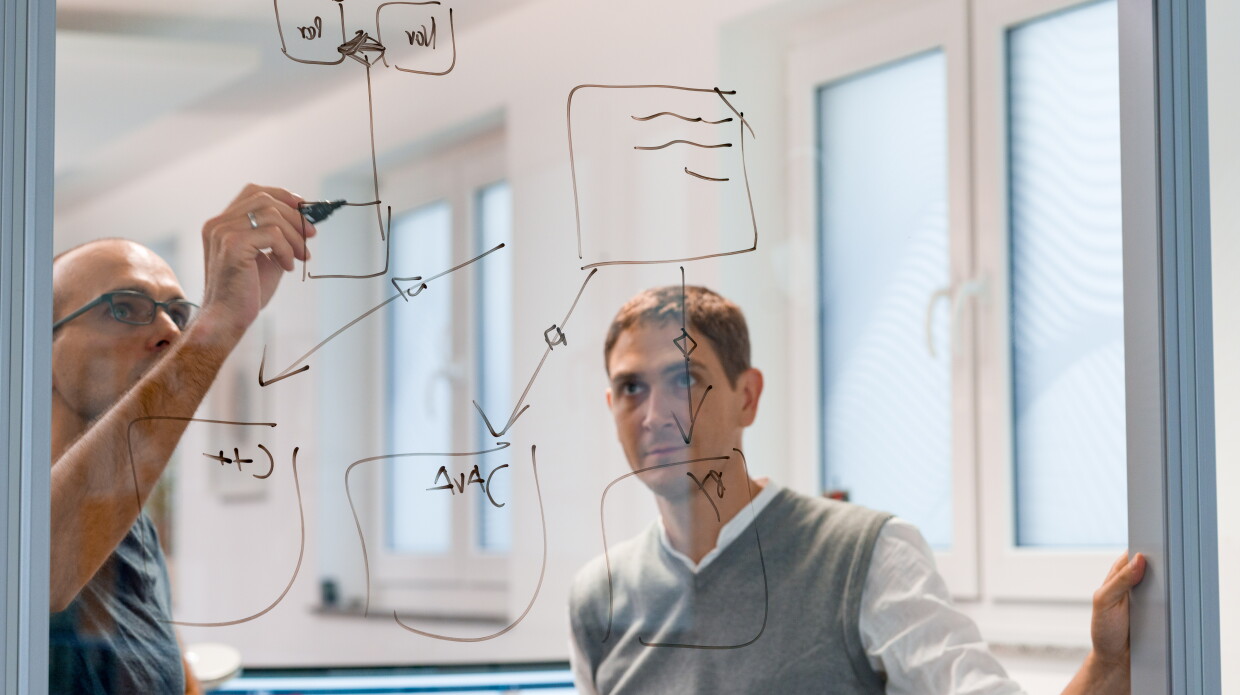
Credit: Wolfram Scheible
We partner with particular academic organizations across the world for deep and sustained collaborations in multiple research areas of mutual interest.

Courtesy of Pai-Ling Yin
We hire world-class academics to work on large-scale technical challenges, while they continue to teach and conduct research at their universities.

