















Customer-obsessed science
Research areas













-
 July 30, 20268 min readInstead of compromising among parameter updates dictated by different training objectives, ControlG allocates computational capacity to objectives sequentially and dynamically.
 -

-
July 9, 202610 min read
-


Featured news

Hosted by Danielle Perszyk, cognitive scientist at Amazon, the podcast features researchers tackling the hardest problems in agentic AI — from building reliable perception systems to designing training environments that mirror human learning.

The Antibody Developability Benchmark is powered by one of the most diverse antibody datasets in public literature, enabling transparent performance evaluation for AI-guided antibody design.

Challenge pushes teams to demonstrate measurable gains in secure-coding performance while building AI agents that advance real-world utility and reliability at scale.

Initiative will fund over 100 doctoral students researching machine learning, computer vision, and natural-language processing at nine universities.
-
AISTATS 20222022In many contexts it is useful to predict the number of individuals in some population who will initiate a particular activity during a given period. For example, the number of users who will install a software update, the number of customers who will use a new feature on a website or who will participate in an A/B test. In practical settings, there is heterogeneity amongst individuals with regard to the
-
ISSTA 20222022Verification toolchains are widely used to prove the correctness of critical software systems. To build confidence in their results, it is important to develop testing frameworks that help detect bugs in these toolchains. Inspired by the success of fuzzing in finding bugs in compilers and SMT solvers, we have built the first fuzzing and differential testing framework for Dafny, a high-level programming
-
ACL 2022 Workshop on NLP for Conversational AI2022Language understanding in speech-based systems has attracted extensive interest from both academic and industrial communities in recent years with the growing demand for voice-based applications. Prior works focus on independent research by the automatic speech recognition (ASR) and natural language processing (NLP) communities, or on jointly modeling the speech and NLP problems focusing on a single dataset
-
CVPR 20222022We introduce AdaMix, an adaptive differentially private algorithm for training deep neural network classifiers using both private and public image data. While pre-training language models on large public datasets has enabled strong differential privacy (DP) guarantees with minor loss of accuracy, a similar practice yields punishing trade-offs in vision tasks. A few-shot or even zero-shot learning baseline
-
NAACL 20222022Task-oriented parsing (TOP) aims to convert natural language into machine-readable representations of specific tasks, such as setting an alarm. A popular approach to TOP is to apply seq2seq models to generate linearized parse trees. A more recent line of work argues that pretrained seq2seq models are better at generating outputs that are themselves natural language, so they replace linearized parse trees
Collaborations
View allWhether you're a faculty member or student, there are number of ways you can engage with Amazon.
View all

Gretchen Ertl
The program offers unrestricted funds and other resources to support research at academic institutions and non-profit organizations in areas that align with our mission.

A global university competition to drive secure innovation in generative AI technology, which focuses on responsible AI and large language model coding security.
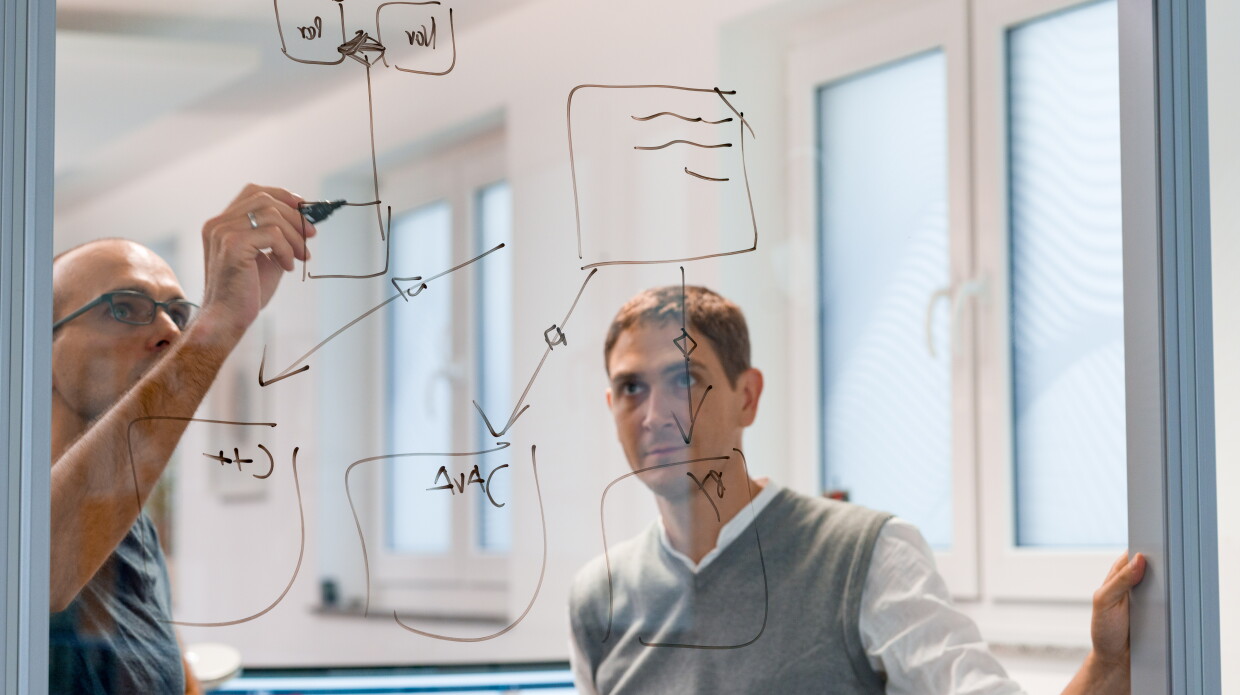
Credit: Wolfram Scheible
We partner with particular academic organizations across the world for deep and sustained collaborations in multiple research areas of mutual interest.

Courtesy of Pai-Ling Yin
We hire world-class academics to work on large-scale technical challenges, while they continue to teach and conduct research at their universities.

