















Customer-obsessed science
Research areas













-
 July 30, 20268 min readInstead of compromising among parameter updates dictated by different training objectives, ControlG allocates computational capacity to objectives sequentially and dynamically.
 -

-
July 9, 202610 min read
-


Featured news

Hosted by Danielle Perszyk, cognitive scientist at Amazon, the podcast features researchers tackling the hardest problems in agentic AI — from building reliable perception systems to designing training environments that mirror human learning.

The Antibody Developability Benchmark is powered by one of the most diverse antibody datasets in public literature, enabling transparent performance evaluation for AI-guided antibody design.

Challenge pushes teams to demonstrate measurable gains in secure-coding performance while building AI agents that advance real-world utility and reliability at scale.

Initiative will fund over 100 doctoral students researching machine learning, computer vision, and natural-language processing at nine universities.
-
KDD 20222022As training deep learning models on large dataset takes a lot of time and resources, it is desired to construct a small synthetic dataset with which we can train deep learning models sufficiently. There are recent works that have explored solutions on condensing image datasets through complex bi-level optimization. For instance, dataset condensation (DC) matches network gradients w.r.t. large real data
-
KDD 20222022Graph neural networks (GNN) have shown great success in learning from graph-structured data. They are widely used in various applications, such as recommendation, fraud detection, and search. In these domains, the graphs are typically large and heterogeneous, containing many millions or billions of vertices and edges of different types. To tackle this challenge, we develop DistDGLv2, a system that extends
-
KDD 20222022The ability to accurately pinpoint the location of an event (e.g. loss, fault or bug) is of fundamental requirement in many systems. While we have state-of-the-art models to predict likelihood of an outcome, being able to pinpoint to the entity responsible for the outcome is also important. For example, in an e-commerce setup, a lost package detection system needs to infer the reason or location (delivery
-
SAT 20222022We present approaches to store and restore the state of a SAT solver, allowing us to migrate the state between different compute resources, or even between different solvers. This can be used in many ways, e.g., to improve the fault tolerance of solvers, to schedule SAT problems on a restricted number of cores, or to use dedicated preprocessing tools for in-processing. We identify a minimum viable subset
-
SIGIR 20222022Conventional methods for query autocompletion aim to predict which completed query a user will select from a list. A shortcoming of this approach is that users often do not know which query will provide the best retrieval performance on the current information retrieval system, meaning that any query autocompletion methods trained to mimic user behavior can lead to suboptimal query suggestions. To overcome
Collaborations
View allWhether you're a faculty member or student, there are number of ways you can engage with Amazon.
View all

Gretchen Ertl
The program offers unrestricted funds and other resources to support research at academic institutions and non-profit organizations in areas that align with our mission.

A global university competition to drive secure innovation in generative AI technology, which focuses on responsible AI and large language model coding security.
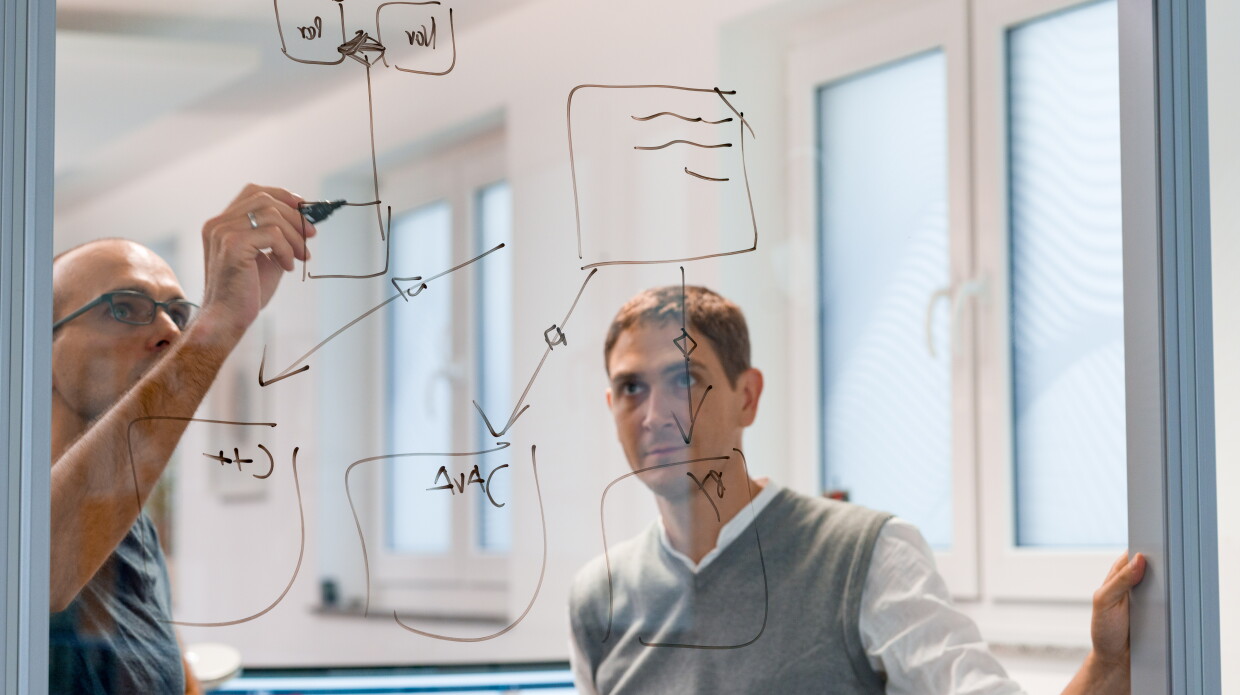
Credit: Wolfram Scheible
We partner with particular academic organizations across the world for deep and sustained collaborations in multiple research areas of mutual interest.

Courtesy of Pai-Ling Yin
We hire world-class academics to work on large-scale technical challenges, while they continue to teach and conduct research at their universities.

