















Customer-obsessed science


Research areas













-
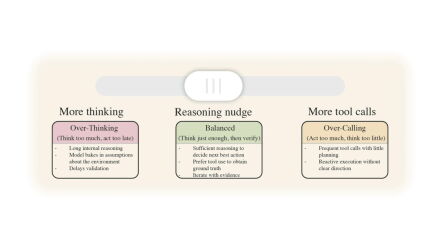
 July 9, 202610 min readA new Rust proxy called Turnstile sits between the model backend and the agent harness to capture information lost in mere text transcripts.
 -

-
-



Featured news

Hosted by Danielle Perszyk, cognitive scientist at Amazon's AGI Lab, the podcast features researchers tackling the hardest problems in agentic AI — from building reliable perception systems to designing training environments that mirror human learning.

The Antibody Developability Benchmark is powered by one of the most diverse antibody datasets in public literature, enabling transparent performance evaluation for AI-guided antibody design.

Challenge pushes teams to demonstrate measurable gains in secure-coding performance while building AI agents that advance real-world utility and reliability at scale.

Initiative will fund over 100 doctoral students researching machine learning, computer vision, and natural-language processing at nine universities.
-
ACL 20232023Spoken Question Answering (QA) is a key feature of voice assistants, usually backed by multiple QA systems. Users ask questions via spontaneous speech which can contain disfluencies, errors, and informal syntax or phrasing. This is a major challenge in QA, causing unanswered questions or irrelevant answers, and leading to bad user experiences. We analyze failed QA requests to identify core challenges: lexical
-
ACL 20232023Customers interacting with product search en-gines are increasingly formulating information-seeking queries. Frequently Asked Ques-tion (FAQ) retrieval aims to retrieve common question-answer pairs for a user query with question intent. Integrating FAQ retrieval in product search can not only empower users to make more informed purchase decisions, but also enhance user retention through efficient post-purchase
-
KDD 2023 Workshop on Resource-Efficient Learning for Knowledge Discovery (RelKD)2023As fraudulent and abusive activities performed by groups continue to plague e-commerce stores, we realize that detecting groups of abusers, or Ring-of-Abusers (RoAs), has become crucial. Unlike existing works about abuser detection on e-commerce stores that merely consider the individual features of abusers or the relationships among abusers, we design a Universal Ring-Of-Abusers Detection framework (abbreviated
-
ICML 20232023The success of self-supervised learning in computer vision and natural language processing has motivated pretraining methods on tabular data. However, most existing tabular self-supervised learning models fail to leverage information across multiple data tables and cannot generalize to new tables. In this work, we introduce XTab, a framework for cross-table pretraining of tabular transformers on datasets
-
ICML 20232023Despite the emergence of principled methods for domain adaptation under label shift, their sensitivity to shifts in class conditional distributions is precariously under explored. Meanwhile, popular deep domain adaptation heuristics tend to falter when faced with label proportions shifts. While several papers modify these heuristics in attempts to handle label proportions shifts, inconsistencies in evaluation
Collaborations
View allWhether you're a faculty member or student, there are number of ways you can engage with Amazon.
View all

Gretchen Ertl
The program offers unrestricted funds and other resources to support research at academic institutions and non-profit organizations in areas that align with our mission.

A global university competition to drive secure innovation in generative AI technology, which focuses on responsible AI and large language model coding security.

Credit: Wolfram Scheible
We partner with particular academic organizations across the world for deep and sustained collaborations in multiple research areas of mutual interest.

Courtesy of Pai-Ling Yin
We hire world-class academics to work on large-scale technical challenges, while they continue to teach and conduct research at their universities.

