














Millimeter-scale particles of nuclear-reactor fuel are encased in four layers of different materials that act as a “miniature containment system”.


Customer-obsessed science


Research areas













-
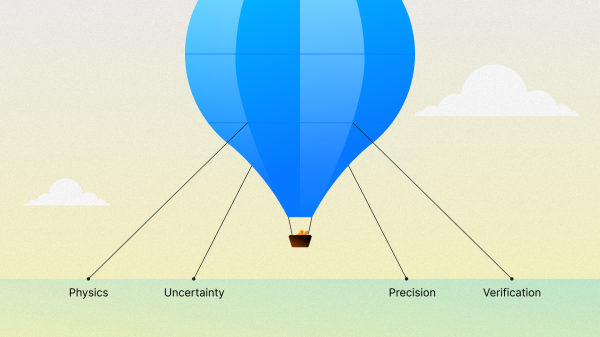
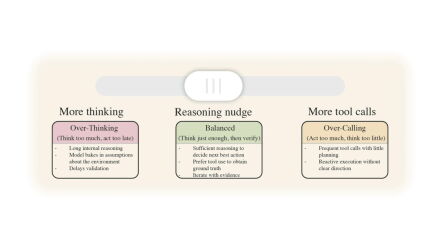
 June 8, 20267 min readFour approaches can dramatically improve the performance and trustworthiness of AI agents in operational environments.
 -

-
-
-
May 27, 20264 min readMachine learning


Featured news

Hosted by Danielle Perszyk, cognitive scientist at Amazon's AGI Lab, the podcast features researchers tackling the hardest problems in agentic AI — from building reliable perception systems to designing training environments that mirror human learning.

The Antibody Developability Benchmark is powered by one of the most diverse antibody datasets in public literature, enabling transparent performance evaluation for AI-guided antibody design.

Challenge pushes teams to demonstrate measurable gains in secure-coding performance while building AI agents that advance real-world utility and reliability at scale.

Initiative will fund over 100 doctoral students researching machine learning, computer vision, and natural-language processing at nine universities.
-
2024Recent advancements in Generative AI, such as scaled Transformer large language models (LLM) and diffusion decoders, have revolutionized speech synthesis. With speech encompassing the complexities of natural language and audio dimensionality, many recent models have relied on autoregressive modeling of quantized speech tokens. Such an approach limits speech synthesis to left-to-right generation, making
-
CHIIR 20242024To help customers who are still in the exploration phase, Web search engines and e-commerce websites often provide relevant Q&As in widgets, such as ‘People Also Ask’ and ‘Customers Also Ask Alexa’, with additional information. In this work, we propose to enrich this customer experience by rendering related products under each Q&A based on an automated online query recommendation. We define what are the
-
AAAI 2024 Workshop on Scientific Document Understanding2024Watermark text spotting in document images can offer access to an often unexplored source of information, providing crucial evidence about a record’s scope, audience and sometimes even authenticity. Stemming from the problem of text spotting, detecting and understanding watermarks in documents inherits the same hardships - in the wild, writing can come in various fonts, sizes and forms, making generic recognition
-
2024While word error rates of automatic speech recognition (ASR) systems have consistently fallen, natural language understanding (NLU) applications built on top of ASR systems still attribute significant numbers of failures to low-quality speech recognition results. Existing assistant systems collect large numbers of these unsuccessful interactions, but these systems usually fail to learn from these interactions
-
2024In this work, we propose a novel sequence-discriminative training criterion for automatic speech recognition (ASR) based on the Conformer Transducer. Inspired by the large-margin classifier framework, we separate the “good” and the “bad” hypotheses in an N-best list produced from a pre-trained transducer model by a margin (τ ), hence the term, Max-Margin Transducer (MMT) loss. It is observed that fine-tuning
Collaborations
View allWhether you're a faculty member or student, there are number of ways you can engage with Amazon.
View all

Gretchen Ertl
The program offers unrestricted funds and other resources to support research at academic institutions and non-profit organizations in areas that align with our mission.

A global university competition to drive secure innovation in generative AI technology, which focuses on responsible AI and large language model coding security.

Credit: Wolfram Scheible
We partner with particular academic organizations across the world for deep and sustained collaborations in multiple research areas of mutual interest.

Courtesy of Pai-Ling Yin
We hire world-class academics to work on large-scale technical challenges, while they continue to teach and conduct research at their universities.

