















Customer-obsessed science
Research areas













-
 July 30, 20268 min readInstead of compromising among parameter updates dictated by different training objectives, ControlG allocates computational capacity to objectives sequentially and dynamically.
 -

-
July 9, 202610 min read
-


Featured news

The Build on Trainium program is a $110 million credit initiative supporting AI research at 30 universities including Stanford, UC Berkeley, UIUC, UCLA, CMU, and MIT, with a focus on Responsible AI.

The Antibody Developability Benchmark is powered by one of the most diverse antibody datasets in public literature, enabling transparent performance evaluation for AI-guided antibody design.

Challenge pushes teams to demonstrate measurable gains in secure-coding performance while building AI agents that advance real-world utility and reliability at scale.

Initiative will fund over 100 doctoral students researching machine learning, computer vision, and natural-language processing at nine universities.
-
CVPR 2022 Workshop on Image Matching: Local Features & Beyond2022Unstructured object matching is a less-explored and very challenging topic in the scientific literature. This includes matching scenarios where the context, appearance and the geometrical integrity of the objects to be matched changes drastically from one image to another (e.g. a pair of pyjamas which in one image is folded and in the other is worn by a person), making it impossible to determine a transformation
-
NAACL 20222022Seq2seq language generation models that are trained offline with multiple domains in a sequential fashion often suffer from catastrophic forgetting. Lifelong learning has been proposed to handle this problem. However, existing work such as experience replay or elastic weighted consolidation requires incremental memory space. In this work, we propose an innovative framework, RMR_DSE, that leverages a recall
-
NAACL 20222022We present a method to control the emotional prosody of Text to Speech (TTS) systems by using phoneme-level intermediate features (pitch, energy, and duration) as levers. As a key idea, we propose Differential Scaling (DS) to disentangle features relating to affective prosody from those arising due to acoustics conditions and speaker identity. With thorough experimental studies, we show that the proposed
-
HPDC 20222022In data-intensive workloads, data placement and memory management are inherently difficult: the programmer and the operating system have to choose between (combinations of) DRAM and storage, replacement policies, as well as paging sizes. Efficient memory management is based on fine-grained data access patterns driving placement decisions. Current solutions in this space cannot be applied to general workloads
-
Annual Review of Chemical and Biomolecular Engineering2022There is an urgent need for new technologies to enable circularity for synthetic polymers, spurred by the accumulation of waste plastics in landfills and the environment and the contributions of plastics manufacturing to climate change. Chemical recycling is a promising means to convert waste plastics into molecular intermediates that can be remanufactured into new products. Given the growing interest in
Collaborations
View allWhether you're a faculty member or student, there are number of ways you can engage with Amazon.
View all

Gretchen Ertl
The program offers unrestricted funds and other resources to support research at academic institutions and non-profit organizations in areas that align with our mission.

A global university competition to drive secure innovation in generative AI technology, which focuses on responsible AI and large language model coding security.
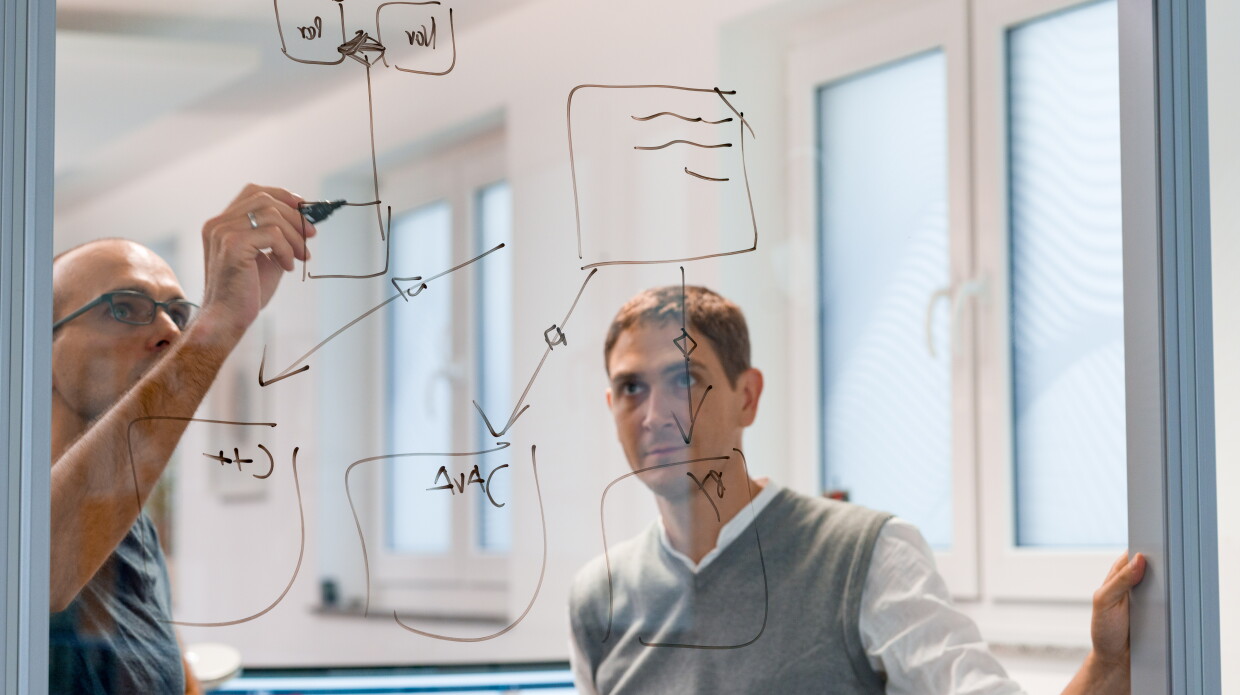
Credit: Wolfram Scheible
We partner with particular academic organizations across the world for deep and sustained collaborations in multiple research areas of mutual interest.

Courtesy of Pai-Ling Yin
We hire world-class academics to work on large-scale technical challenges, while they continue to teach and conduct research at their universities.

