















Customer-obsessed science


Research areas













-
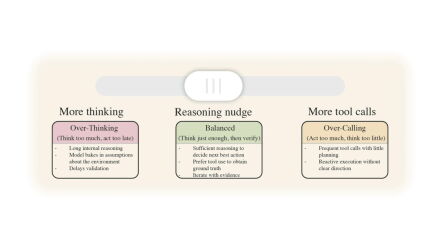
 July 9, 202610 min readA new Rust proxy called Turnstile sits between the model backend and the agent harness to capture information lost in mere text transcripts.
 -

-
-



Featured news

Hosted by Danielle Perszyk, cognitive scientist at Amazon's AGI Lab, the podcast features researchers tackling the hardest problems in agentic AI — from building reliable perception systems to designing training environments that mirror human learning.

The Antibody Developability Benchmark is powered by one of the most diverse antibody datasets in public literature, enabling transparent performance evaluation for AI-guided antibody design.

Challenge pushes teams to demonstrate measurable gains in secure-coding performance while building AI agents that advance real-world utility and reliability at scale.

Initiative will fund over 100 doctoral students researching machine learning, computer vision, and natural-language processing at nine universities.
-
2024Context cues carry information which can improve multiturn interactions in automatic speech recognition (ASR) systems. In this paper, we introduce a novel mechanism inspired by hyper-prompting to fuse textual context with acoustic representations in the attention mechanism. Results on a test set with multi-turn interactions show that our method achieves 5.9% relative word error rate reduction (rWERR) over
-
ECIR 20242024E-commerce customers frequently seek detailed product information for purchase decisions, commonly contacting sellers directly with extended queries. This manual response requirement imposes additional costs and disrupts buyer’s shopping experience with response time fluctuations ranging from hours to days. We seek to automate buyer inquiries to sellers in a leading e-commerce store using a domain-specific
-
Conference on Natural Language Processing (NATP) 20242024We present a supervised learning approach for automatic extraction of keyphrases from single documents. Our solution uses simple-to-compute statistical and positional features of candidate phrases and does not rely on any external knowledge base or on pre-trained language models or word embeddings. The ranking component of our proposed solution is a fairly lightweight ensemble model. Evaluation on benchmark
-
WACV 20242024Video quality can suffer from limited internet speed while being streamed by users. Compression artifacts start to appear when the bitrate decreases to match the available bandwidth. Existing algorithms either focus on removing the compression artifacts at the same video resolution, or on upscaling the video resolution but not removing the artifacts. Super resolution-only approaches will amplify the artifacts
-
IEEE SaTML 20242024We revisit the problem of differentially private squared error linear regression. We observe that existing state- of-the-art methods are sensitive to the choice of hyperparameters — including the “clipping threshold” that cannot be set optimally in a data-independent way. We give a new algorithm for private linear regression based on gradient boosting. We show that our method consistently improves over
Collaborations
View allWhether you're a faculty member or student, there are number of ways you can engage with Amazon.
View all

Gretchen Ertl
The program offers unrestricted funds and other resources to support research at academic institutions and non-profit organizations in areas that align with our mission.

A global university competition to drive secure innovation in generative AI technology, which focuses on responsible AI and large language model coding security.
Credit: Wolfram Scheible
We partner with particular academic organizations across the world for deep and sustained collaborations in multiple research areas of mutual interest.

Courtesy of Pai-Ling Yin
We hire world-class academics to work on large-scale technical challenges, while they continue to teach and conduct research at their universities.

