














Millimeter-scale particles of nuclear-reactor fuel are encased in four layers of different materials that act as a “miniature containment system”.


Customer-obsessed science


Research areas













-
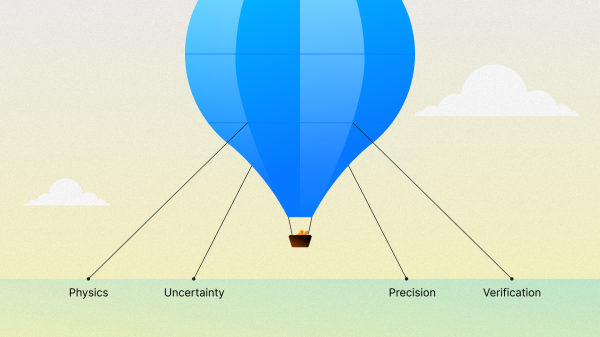
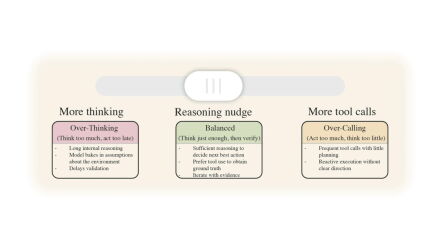
 June 8, 20267 min readFour approaches can dramatically improve the performance and trustworthiness of AI agents in operational environments.
 -

-
-
-
May 27, 20264 min readMachine learning


Featured news

Hosted by Danielle Perszyk, cognitive scientist at Amazon's AGI Lab, the podcast features researchers tackling the hardest problems in agentic AI — from building reliable perception systems to designing training environments that mirror human learning.

The Antibody Developability Benchmark is powered by one of the most diverse antibody datasets in public literature, enabling transparent performance evaluation for AI-guided antibody design.

Challenge pushes teams to demonstrate measurable gains in secure-coding performance while building AI agents that advance real-world utility and reliability at scale.

Initiative will fund over 100 doctoral students researching machine learning, computer vision, and natural-language processing at nine universities.
-
2025For music streaming services expanding into audiobooks, cold-start personalization presents a critical challenge: as audiobooks are a newly introduced content type, the vast majority of existing users have no audiobook listening history. This domain-level cold-start scenario differs from traditional item or user cold-start scenarios, since personalization must begin before any behavioral data exists in
-
2025Some text generation tasks, such as Attribute Value Extraction (AVE), require decoding multiple independent sequences from the same document context. While standard autoregressive decoding is slow due to its sequential nature, the independence between output sequences offers an opportunity for parallelism. We present Hyper-Parallel Decoding, a novel decoding algorithm that accelerates offline decoding by
-
2025Large Language Models (LLMs) have demonstrated exceptional performance in natural language processing tasks, yet their massive size makes serving them inefficient and costly. Semistructured pruning has emerged as an effective method for model acceleration, but existing approaches are suboptimal because they focus on local, layer-wise optimizations using heuristic rules, failing to leverage global feedback
-
FAIM 20252025Conveyors play a crucial role in transporting packages and containers in manufacturing and production facilities. While computer vision has emerged as a promising technology for real-time monitoring of transportation systems, its application in conveyor operations remains in the early stages. This paper introduces an Industrial Internet of Things (IIoT) framework for real-time conveyor monitoring. We first
-
AISTATS 2025, NeurIPS 2025 Workshop on Efficient Reasoning2025Speculative decoding is an effective technique for accelerating large language model (LLM) inference by drafting multiple tokens in parallel. However, its practical speedup is often limited by a rigid verification step, which strictly enforces that the accepted token distribution exactly matches that of the target model. This constraint leads to the rejection of many plausible tokens, reducing the acceptance
Collaborations
View allWhether you're a faculty member or student, there are number of ways you can engage with Amazon.
View all

Gretchen Ertl
The program offers unrestricted funds and other resources to support research at academic institutions and non-profit organizations in areas that align with our mission.

A global university competition to drive secure innovation in generative AI technology, which focuses on responsible AI and large language model coding security.

Credit: Wolfram Scheible
We partner with particular academic organizations across the world for deep and sustained collaborations in multiple research areas of mutual interest.

Courtesy of Pai-Ling Yin
We hire world-class academics to work on large-scale technical challenges, while they continue to teach and conduct research at their universities.

