Runtime optimizations and a thorough evaluation process driven by agentic AI help ensure that models written in PyTorch will execute efficiently and reliably on Trainium systems.

Expanding the mix of synthetic data used to train a tabular foundation model enables it to adapt to new tables without new models and lead the single-model field on the TabArena benchmark.

Using the Neuron Kernel Interface, a Reactor–AWS collaboration tackled the dynamic shapes, memory access patterns, and cache management that make real-time autoregressive diffusion hard—building techniques that generalize across models.


Three new papers from Amazon Bio Discovery address bottlenecks in AI-driven antibody engineering, from benchmarking binding predictors to experimentally validating de novo design.
New research indicates that AI agents learn compressible models of data, which don’t have enough space to enable memorization.
Customer-obsessed science

Research areas


-
 November 16, 202611 min readNew open-source tool turns existing test suites into sets of formal-verification tasks, which catch buggy solutions that tests alone would miss.
-
 November 11, 20265 min read
-
-
-


Featured news

The collaboration aims to advance research while broadening participation and translating discovery into real-world solutions.

Submissions open October 1 and close on November 11, 2026

The collaboration will support research in robotics, industrial and systems engineering, and aerospace technology while fostering innovation in foundational and emerging technologies.

The Build on Trainium program is a $110 million credit initiative supporting AI research at 30 universities including Stanford, UC Berkeley, UIUC, UCLA, CMU, and MIT, with a focus on Responsible AI.

The Antibody Developability Benchmark is powered by one of the most diverse antibody datasets in public literature, enabling transparent performance evaluation for AI-guided antibody design.

Challenge pushes teams to demonstrate measurable gains in secure-coding performance while building AI agents that advance real-world utility and reliability at scale.

Initiative will fund over 100 doctoral students researching machine learning, computer vision, and natural-language processing at nine universities.
-
ICASSP 20192019Automatic speech recognition (ASR), audio quality, and loudness are key performance indicators (KPIs) in smart speakers. To improve all these KPIs, audio dynamics processing is a crucial component in related systems. Unfortunately, single-band and existing multiband dynamics processing (MBDP) schemes fail to maximize bass and loudness but even produce unwanted peaks, distortions, and nonlinear echo so that
-
ICASSP 20192019Voice-controlled house-hold devices, like Amazon Echo or Google Home, face the problem of performing speech recognition of devicedirected speech in the presence of interfering background speech, i.e., background noise and interfering speech from another person or media device in proximity need to be ignored. We propose two end-to-end models to tackle this problem with information extracted from the “anchored
-
ICASSP 20192019In this paper, we present a method to handle data imbalance for classification with neural networks, and apply it to acoustic event detection (AED) problem. The common approach to tackle data imbalance is to use class-weights in the objective function while training. An existing more sophisticated approach is to map the input to clusters in an embedding space, so that learning is locally balanced by incorporating
-
ICASSP 20192019In this work we focus on confidence modeling for neural network based text classification and sequence to sequence models in the context of Natural Language Understanding (NLU) tasks. For most applications, the confidence of a neural network model in it’s output is computed as a function of the posterior probability, determined via a softmax layer. In this work, we show that such scores can be poorly calibrated
-
ICASSP 20192019We study media presence detection, that is, learning to recognize if a sound segment (typically lasting for a few seconds) of a long recorded stream contains media (TV) sound. This problem is difficult because non-media sound sources can be quite diverse (e.g. human voicing, non-vocal sounds and non-human sounds), and the recorded sound can be a mixture of media and non-media sound. Different from speech
Collaborations
View allWhether you're a faculty member or student, there are number of ways you can engage with Amazon.
View all
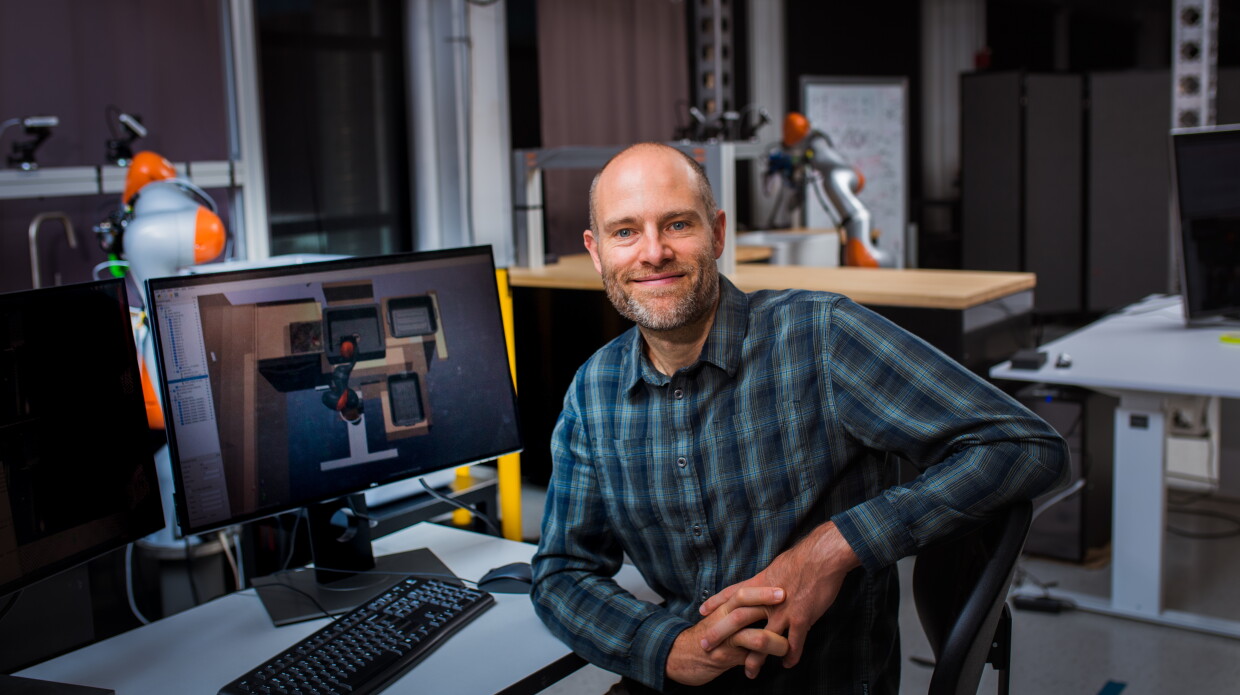
Gretchen Ertl
The program offers unrestricted funds and other resources to support research at academic institutions and non-profit organizations in areas that align with our mission.
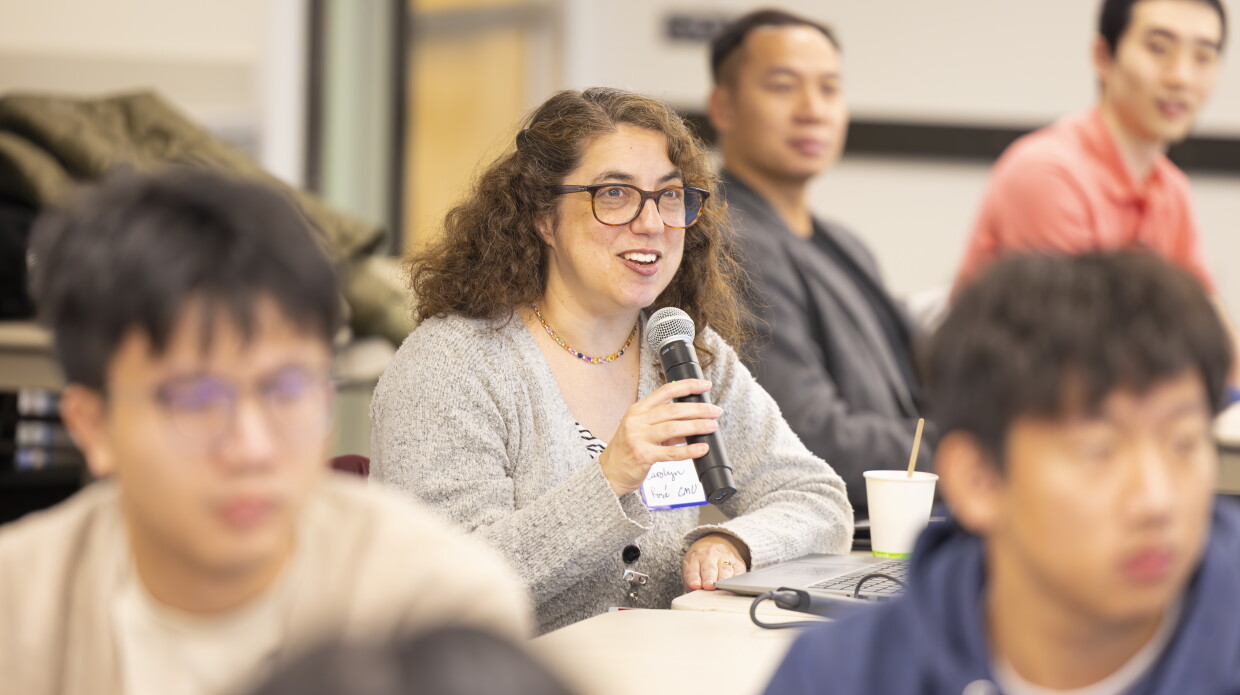
A global university competition to drive secure innovation in generative AI technology, which focuses on responsible AI and large language model coding security.

Credit: Wolfram Scheible
We partner with particular academic organizations across the world for deep and sustained collaborations in multiple research areas of mutual interest.
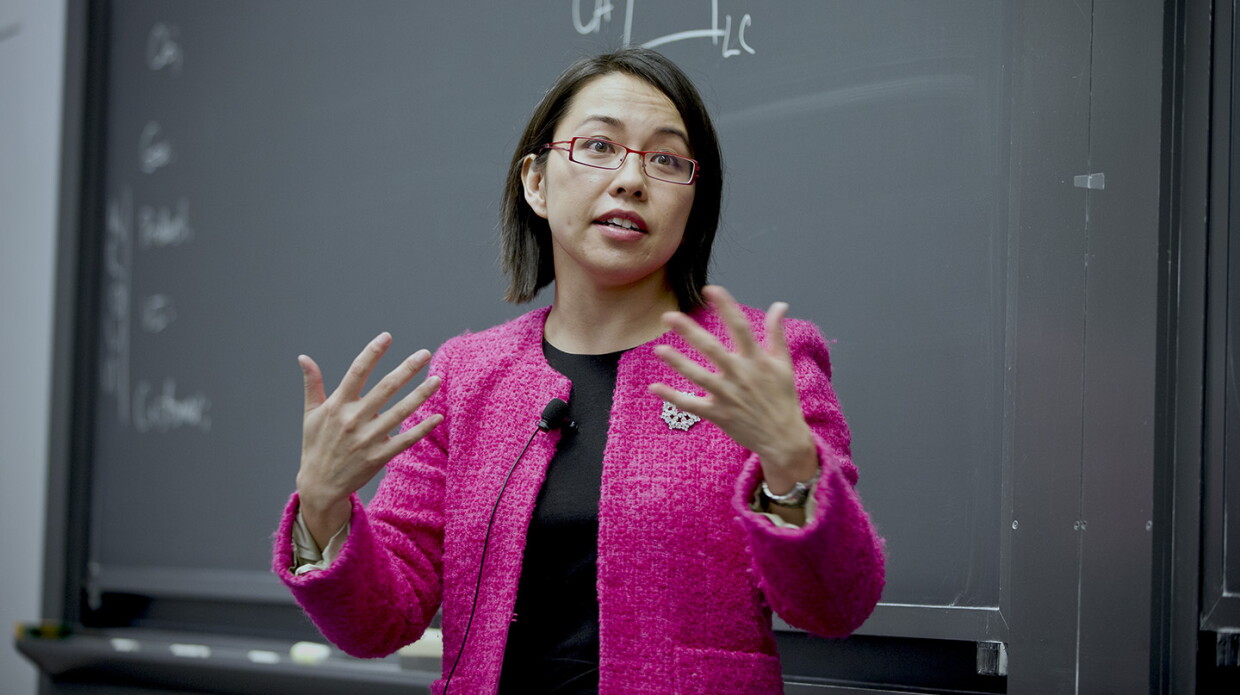
Courtesy of Pai-Ling Yin
We hire world-class academics to work on large-scale technical challenges, while they continue to teach and conduct research at their universities.