














Runtime optimizations and a thorough evaluation process driven by agentic AI help ensure that models written in PyTorch will execute efficiently and reliably on Trainium systems.

Expanding the mix of synthetic data used to train a tabular foundation model enables it to adapt to new tables without new models and lead the single-model field on the TabArena benchmark.

Using the Neuron Kernel Interface, a Reactor–AWS collaboration tackled the dynamic shapes, memory access patterns, and cache management that make real-time autoregressive diffusion hard—building techniques that generalize across models.


Three new papers from Amazon Bio Discovery address bottlenecks in AI-driven antibody engineering, from benchmarking binding predictors to experimentally validating de novo design.
New research indicates that AI agents learn compressible models of data, which don’t have enough space to enable memorization.
Customer-obsessed science

Research areas










-
 November 5, 20266 min readAmazon senior applied scientist and coauthors showed that an overlooked mathematical condition from 1963 proves why frequently used machine-learning optimization methods work well.
-

-
-
October 20, 20263 min read
-
October 12, 202614 min read


Featured news

The collaboration aims to advance research while broadening participation and translating discovery into real-world solutions.

Submissions open October 1 and close on November 11, 2026

The collaboration will support research in robotics, industrial and systems engineering, and aerospace technology while fostering innovation in foundational and emerging technologies.

The Build on Trainium program is a $110 million credit initiative supporting AI research at 30 universities including Stanford, UC Berkeley, UIUC, UCLA, CMU, and MIT, with a focus on Responsible AI.

The Antibody Developability Benchmark is powered by one of the most diverse antibody datasets in public literature, enabling transparent performance evaluation for AI-guided antibody design.

Challenge pushes teams to demonstrate measurable gains in secure-coding performance while building AI agents that advance real-world utility and reliability at scale.

Initiative will fund over 100 doctoral students researching machine learning, computer vision, and natural-language processing at nine universities.
-
CVPR 20202020Neural architecture search (NAS) approaches aim at automatically finding novel CNN architectures that fit computational constraints while maintaining a good performance on the target platform. We introduce a novel efficient oneshot NAS approach to optimally search for channel numbers, given latency constraints on a specific hardware. We first show that we can use a black-box approach to estimate a realistic
-
CVPR 20202020Complementary fashion item recommendation is critical for fashion outfit completion. Existing methods mainly focus on outfit compatibility prediction but not in a retrieval setting. We propose a new framework for outfit complementary item retrieval. Specifically, a category-based sub-space attention network is presented, which is a scalable approach for learning the subspace attentions. In addition, we
-
ITNG 20202020This note discusses two aspects of the performance of Round-2KEM candidates: a) the impact of Simultaneous MultiThreading (SMT); b) the balance between encapsulation and decapsulation. Software performance can sometimes be improved by parallelization of tasks. In some cases this can be achieved by simultaneous execution on logical CPUs (also known asSMT). Since such a technology opens the door to possible
-
LREC 20202020Language-independent tokenisation (LIT) methods that do not require labelled language resources or lexicons have recently gained popularity because of their applicability in resource-poor languages. Moreover, they compactly represent a language using a fixed size vocabulary and can efficiently handle unseen or rare words. On the other hand, language-specific tokenisation (LST) methods have along and established
-
ICASSP 20202020Acoustic event classification (AEC) and acoustic event detection (AED) refer to the task of detecting whether specific target events occur in audios. As long short-term memory (LSTM) leads to state-of- the-art results in various speech related tasks, it is employed as a popular solution for AEC as well. This paper focuses on investigating the dynamics of LSTM model on AEC tasks. It includes a detailed analysis
Collaborations
View allWhether you're a faculty member or student, there are number of ways you can engage with Amazon.
View all

Gretchen Ertl
The program offers unrestricted funds and other resources to support research at academic institutions and non-profit organizations in areas that align with our mission.
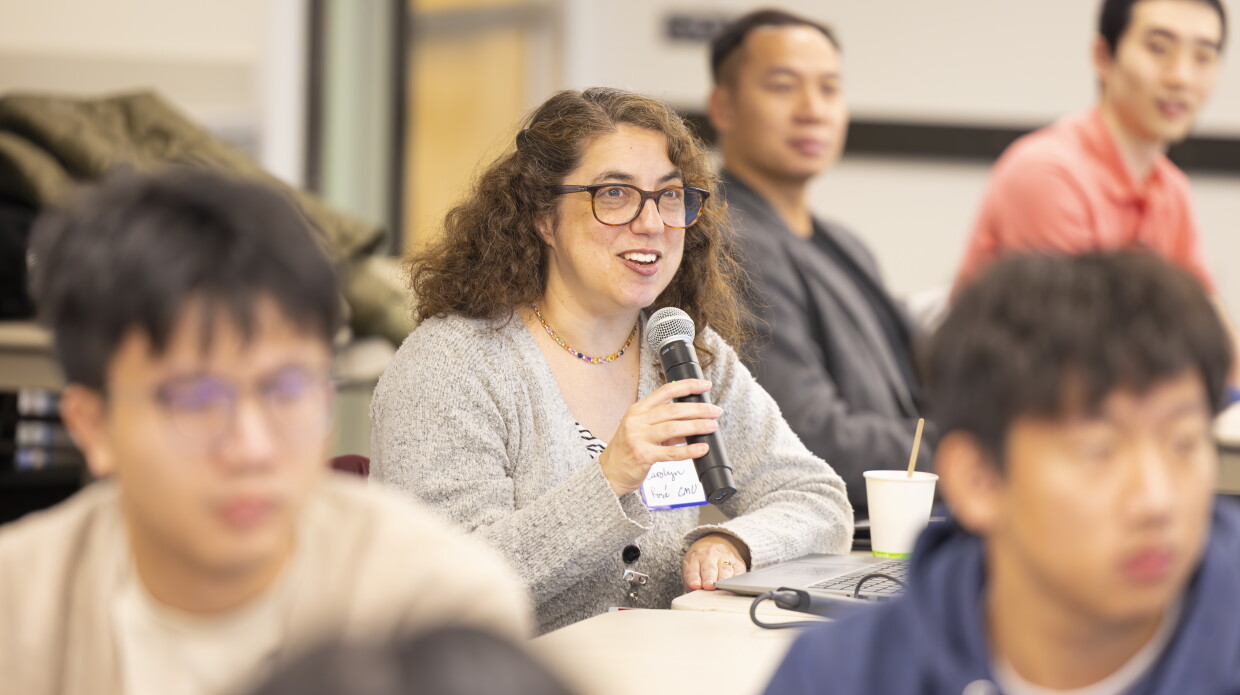
A global university competition to drive secure innovation in generative AI technology, which focuses on responsible AI and large language model coding security.

Credit: Wolfram Scheible
We partner with particular academic organizations across the world for deep and sustained collaborations in multiple research areas of mutual interest.
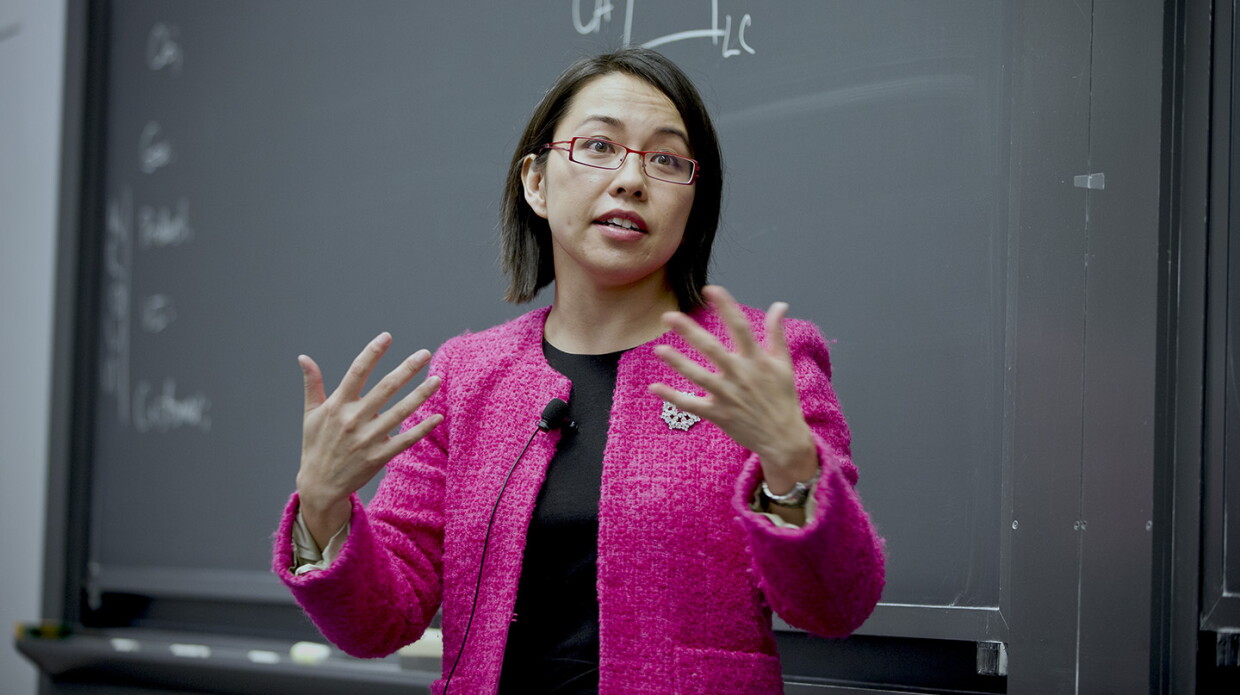
Courtesy of Pai-Ling Yin
We hire world-class academics to work on large-scale technical challenges, while they continue to teach and conduct research at their universities.

