















Customer-obsessed science


Research areas













-
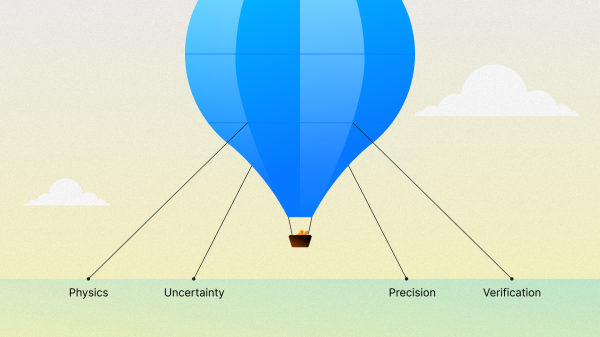
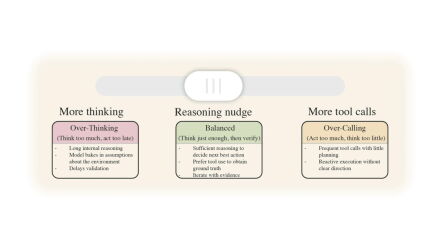
 June 8, 20267 min readFour approaches can dramatically improve the performance and trustworthiness of AI agents in operational environments.
 -

-
-
-
May 26, 20265 min read


Featured news

Hosted by Danielle Perszyk, cognitive scientist at Amazon's AGI Lab, the podcast features researchers tackling the hardest problems in agentic AI — from building reliable perception systems to designing training environments that mirror human learning.

The Antibody Developability Benchmark is powered by one of the most diverse antibody datasets in public literature, enabling transparent performance evaluation for AI-guided antibody design.

Challenge pushes teams to demonstrate measurable gains in secure-coding performance while building AI agents that advance real-world utility and reliability at scale.

Initiative will fund over 100 doctoral students researching machine learning, computer vision, and natural-language processing at nine universities.
-
npj Systems Biology and Applications2026Recent advances in Machine Learning have transformed antibody development through in-silico models, accelerating therapeutic candidate identification. However, challenges persist: rapid adaptation of property predictors to laboratory-specific assays with incomplete datasets; batch effects introducing systematic bias; assay costs necessitating efficient unseen property prediction. We introduce a novel multi-modal
-
ICLR 2026 Workshop on Time Series in the Age of Large Models2026In many time series forecasting settings, the target time series is accompanied by exogenous covariates, such as promotions and prices in retail demand; temperature in energy load; calendar and holiday indicators for traffic or sales; and grid load or fuel costs in electricity pricing. Ignoring these exogenous signals can substantially degrade forecasting accuracy, particularly when they drive spikes, discontinuities
-
SIGIR 20262026Modern e-commerce recommendation systems aim to improve customer experience by ranking content on search results page (SRP). However, displaying content is not always beneficial for customers across all contexts; even top-ranked content can be irrelevant, misleading, or redundant in certain scenarios. In this work, we propose a robust content suppression mechanism to selectively suppress content when necessary
-
ACL 2026 Industry Track2026Literary translation poses unique challenges due to the scarcity of high-quality annotated data and the need to balance expression fluency with literary effect. We present a multi-aspect iterative refinement framework that generates high-quality translation references and preference data through specialized LLM translators, each targeting a distinct quality dimension. We leverage the generated data for
-
2026Address intelligence in e-commerce demands accurate geocoding and proactive defect detection under strict sub-50 ms latency constraints. These tasks are inherently coupled: precise spatial grounding provides a strong prior for defect propensity, yet prior approaches optimize them independently. While generative LLMs offer rich semantic representations, they lack spatial inductive bias and fail to meet real-time
Collaborations
View allWhether you're a faculty member or student, there are number of ways you can engage with Amazon.
View all

Gretchen Ertl
The program offers unrestricted funds and other resources to support research at academic institutions and non-profit organizations in areas that align with our mission.

A global university competition to drive secure innovation in generative AI technology, which focuses on responsible AI and large language model coding security.
Credit: Wolfram Scheible
We partner with particular academic organizations across the world for deep and sustained collaborations in multiple research areas of mutual interest.

Courtesy of Pai-Ling Yin
We hire world-class academics to work on large-scale technical challenges, while they continue to teach and conduct research at their universities.

