


Runtime optimizations and a thorough evaluation process driven by agentic AI help ensure that models written in PyTorch will execute efficiently and reliably on Trainium systems.

Using the Neuron Kernel Interface, a Reactor–AWS collaboration tackled the dynamic shapes, memory access patterns, and cache management that make real-time autoregressive diffusion hard—building techniques that generalize across models.


Three new papers from Amazon Bio Discovery address bottlenecks in AI-driven antibody engineering, from benchmarking binding predictors to experimentally validating de novo design.
New research indicates that AI agents learn compressible models of data, which don’t have enough space to enable memorization.

How the Verus "program verifier", which automatically checks code against a mathematical specification of its functionality, helps increase security assurance in software projects.

Ten years after we founded the Automated Reasoning Group, mathematical logic has moved from academic research into production services that secure millions of customer workloads — demonstrating that systems can be provably correct, not just probably correct.
Customer-obsessed science

Research areas


-
 October 29, 20265 min readTwo optimization techniques, when combined, can significantly improve a model’s speed and cost effectiveness without sacrificing quality.
-

-
October 20, 20263 min read
-
October 12, 202614 min read
-


Featured news

The collaboration aims to advance research while broadening participation and translating discovery into real-world solutions.

Submissions open October 1 and close on November 11, 2026

The collaboration will support research in robotics, industrial and systems engineering, and aerospace technology while fostering innovation in foundational and emerging technologies.

The Build on Trainium program is a $110 million credit initiative supporting AI research at 30 universities including Stanford, UC Berkeley, UIUC, UCLA, CMU, and MIT, with a focus on Responsible AI.

The Antibody Developability Benchmark is powered by one of the most diverse antibody datasets in public literature, enabling transparent performance evaluation for AI-guided antibody design.

Challenge pushes teams to demonstrate measurable gains in secure-coding performance while building AI agents that advance real-world utility and reliability at scale.

Initiative will fund over 100 doctoral students researching machine learning, computer vision, and natural-language processing at nine universities.
-
ECCV 20202020The ubiquity of smartphone cameras has led to more and more documents being captured by cameras rather than scanned. Unlike flatbed scanners, photographed documents are often folded and crumpled, resulting in large local variance in text structure. The problem of document rectification is fundamental to the Optical Character Recognition (OCR) process on documents, and its ability to overcome geometric distortions
-
Interspeech 20202020A modern Spoken Language Understanding (SLU) system usually contains two sub-systems, Automatic Speech Recognition (ASR) and Natural Language Understanding (NLU),where ASR transforms voice signal to text form and NLU provides intent classification and slot filling from the text. In practice,such decoupled ASR/NLU design facilitates fast model iteration for both components. However, this makes downstream NLU
-
Interspeech 20202020Prosody Transfer (PT) is a technique that aims to use the prosody from a source audio as a reference while synthesizing speech. Fine-grained PT aims at capturing prosodic aspects like rhythm, emphasis, melody, duration, and loudness, from a source audio at a very granular level and transferring them when synthesizing speech in a different target speaker’s voice. Cur-rent approaches for fine-grained PT suffer
-
Interspeech 20202020The speech recognition training data corresponding to digital voice assistants is dominated by wake-words. Training endto-end (E2E) speech recognition models without careful attention to such data results in sub-optimal performance as models prioritize learning wake-words. To address this problem, we propose a novel discriminative initialization strategy by introducing a regularization term to penalize
-
Interspeech 20202020As a crucial part of Alexa products, our on-device keyword spotting system detects the wakeword in conversation and initiates subsequent user-device interactions. Convolutional neural networks (CNNs) have been widely used to model the relationship between time and frequency in the audio spectrum. However, it is not obvious how to appropriately leverage the rich descriptive information from device state
Collaborations
View allWhether you're a faculty member or student, there are number of ways you can engage with Amazon.
View all

Gretchen Ertl
The program offers unrestricted funds and other resources to support research at academic institutions and non-profit organizations in areas that align with our mission.
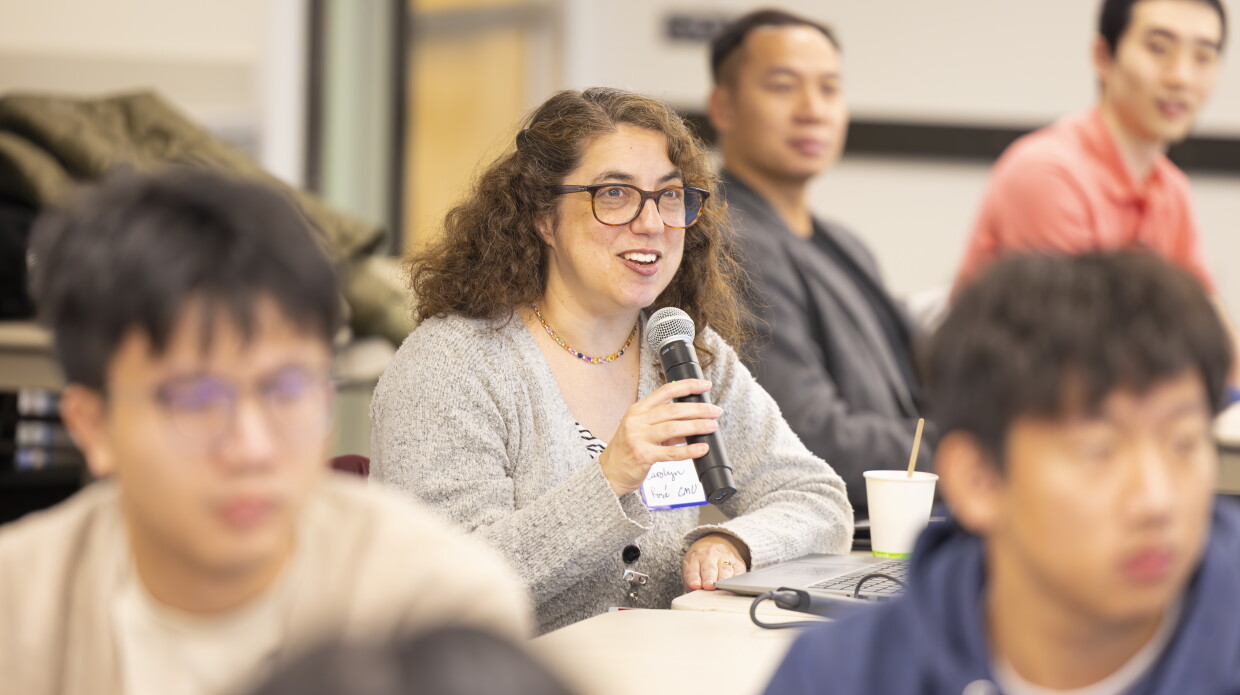
A global university competition to drive secure innovation in generative AI technology, which focuses on responsible AI and large language model coding security.

Credit: Wolfram Scheible
We partner with particular academic organizations across the world for deep and sustained collaborations in multiple research areas of mutual interest.
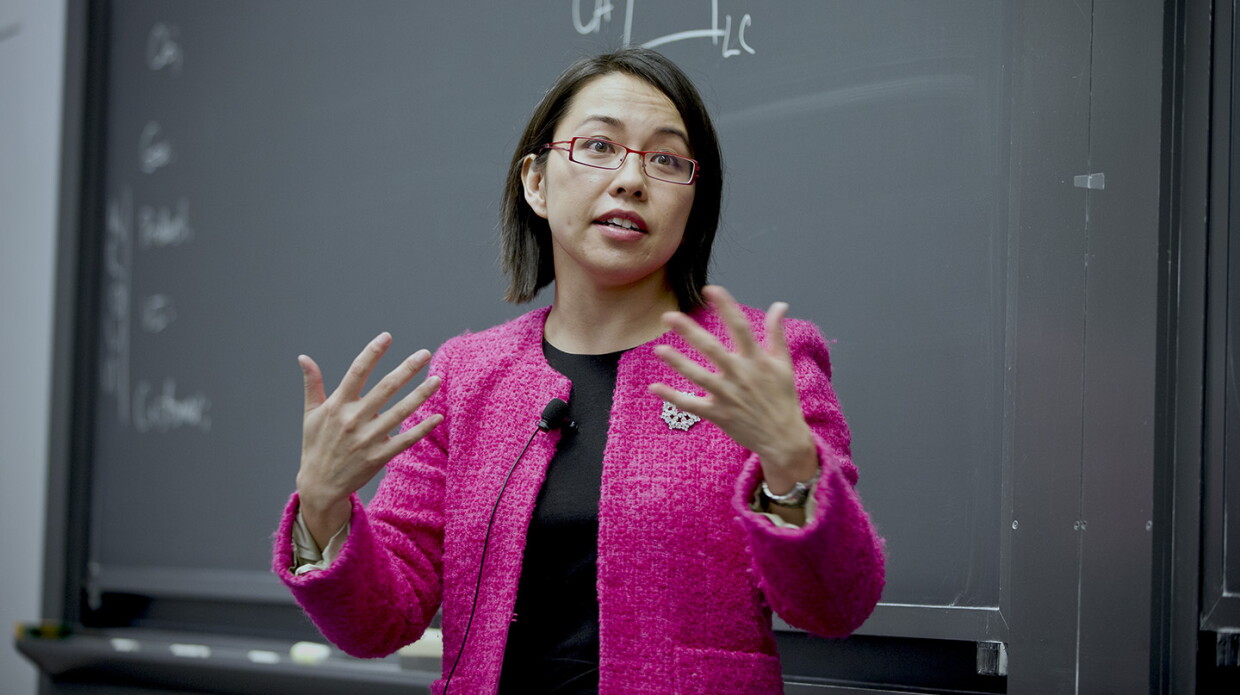
Courtesy of Pai-Ling Yin
We hire world-class academics to work on large-scale technical challenges, while they continue to teach and conduct research at their universities.

