













Using the Neuron Kernel Interface, a Reactor–AWS collaboration tackled the dynamic shapes, memory access patterns, and cache management that make real-time autoregressive diffusion hard—building techniques that generalize across models.


Three new papers from Amazon Bio Discovery address bottlenecks in AI-driven antibody engineering, from benchmarking binding predictors to experimentally validating de novo design.
New research indicates that AI agents learn compressible models of data, which don’t have enough space to enable memorization.

How the Verus "program verifier", which automatically checks code against a mathematical specification of its functionality, helps increase security assurance in software projects.

Ten years after we founded the Automated Reasoning Group, mathematical logic has moved from academic research into production services that secure millions of customer workloads — demonstrating that systems can be provably correct, not just probably correct.
Customer-obsessed science

Research areas











-
 October 12, 202614 min read“Priming” reuses pretrained Transformer weights to build models with more efficient architectures at less than 1% of the original training cost and with throughputs up to twice as high.
 -

-
-
August 21, 20269 min read
-
July 30, 20268 min read


Featured news

The collaboration will support research in robotics, industrial and systems engineering, and aerospace technology while fostering innovation in foundational and emerging technologies.

Submissions open October 1 and close on November 4, 2026

The Build on Trainium program is a $110 million credit initiative supporting AI research at 30 universities including Stanford, UC Berkeley, UIUC, UCLA, CMU, and MIT, with a focus on Responsible AI.

The Antibody Developability Benchmark is powered by one of the most diverse antibody datasets in public literature, enabling transparent performance evaluation for AI-guided antibody design.

Challenge pushes teams to demonstrate measurable gains in secure-coding performance while building AI agents that advance real-world utility and reliability at scale.

Initiative will fund over 100 doctoral students researching machine learning, computer vision, and natural-language processing at nine universities.
-
SIGDIAL 20212021Smooth and effective communication requires the ability to perform latent or explicit commonsense inference. Prior commonsense reasoning benchmarks (such as SocialIQA and CommonsenseQA) mainly focus on the discriminative task of choosing the right answer from a set of candidates, and do not involve interactive language generation as in dialogue. Moreover, existing dialogue datasets do not explicitly focus
-
ICML 20212021This paper presents a novel approach to forecasting of hierarchical time series that produces coherent, probabilistic forecasts without requiring any explicit post-processing step. Unlike the state-of-the-art, the proposed method simultaneously learns from all time series in the hierarchy and incorporates the reconciliation step as part of a single trainable model. This is achieved by applying the reparameterization
-
West Virginia Law Review2021Western societies are marked by diverse and extensive biases and inequality that are unavoidably embedded in the data used to train machine learning. Algorithms trained on biased data will, without intervention, produce biased outcomes and increase the inequality experienced by historically disadvantaged groups. Recognising this problem, much work has emerged in recent years to test for bias in machine
-
ECML-PKDD 20212021Demand forecasting is fundamental to successful inventory planning and optimisation of logistics costs for online marketplaces such as Amazon. Millions of products and thousands of sellers are competing against each other in an online marketplace. In this paper, we propose a framework to forecast demand for a product from a particular seller (referred as offer/seller-product demand in the paper). Inventory
-
ECML-PKDD 20212021Amazon Last Mile strives to learn an accurate delivery point for each address by using the noisy GPS locations reported from past deliveries. Centroids and other center-finding methods do not serve well, because the noise is consistently biased. The problem calls for supervised machine learning, but how? We addressed it with a novel adaptation of learning to rank from the information retrieval domain. This
Collaborations
View allWhether you're a faculty member or student, there are number of ways you can engage with Amazon.
View all
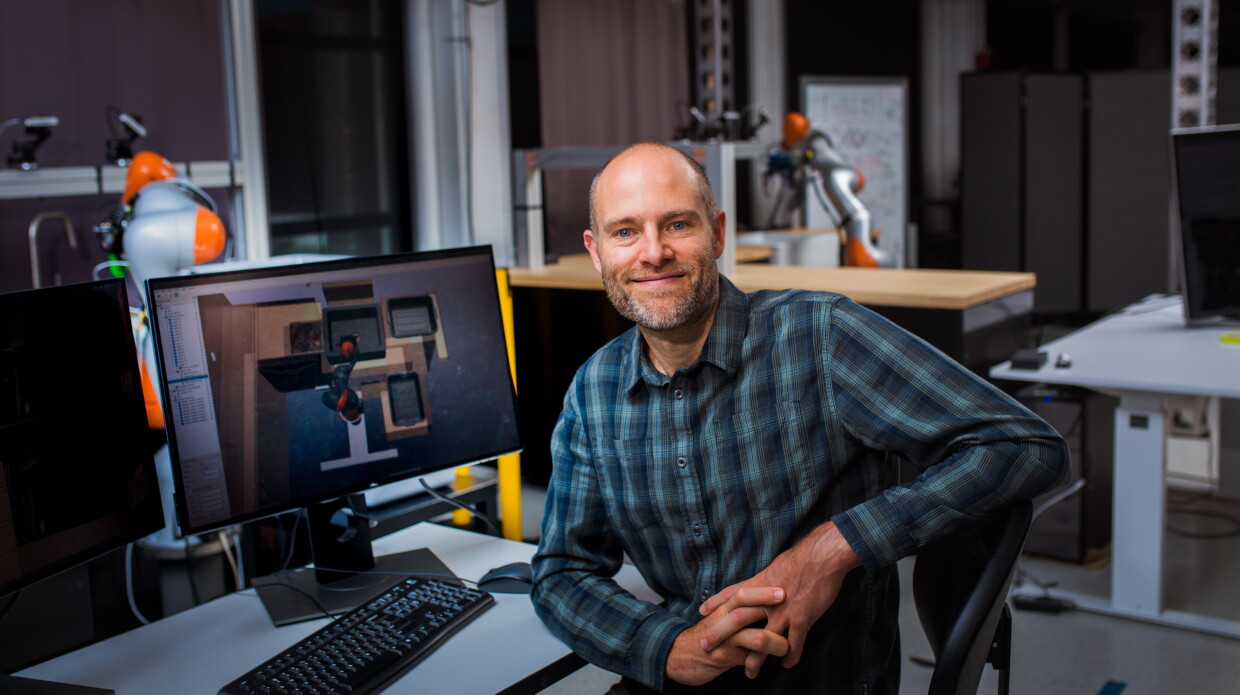
Gretchen Ertl
The program offers unrestricted funds and other resources to support research at academic institutions and non-profit organizations in areas that align with our mission.
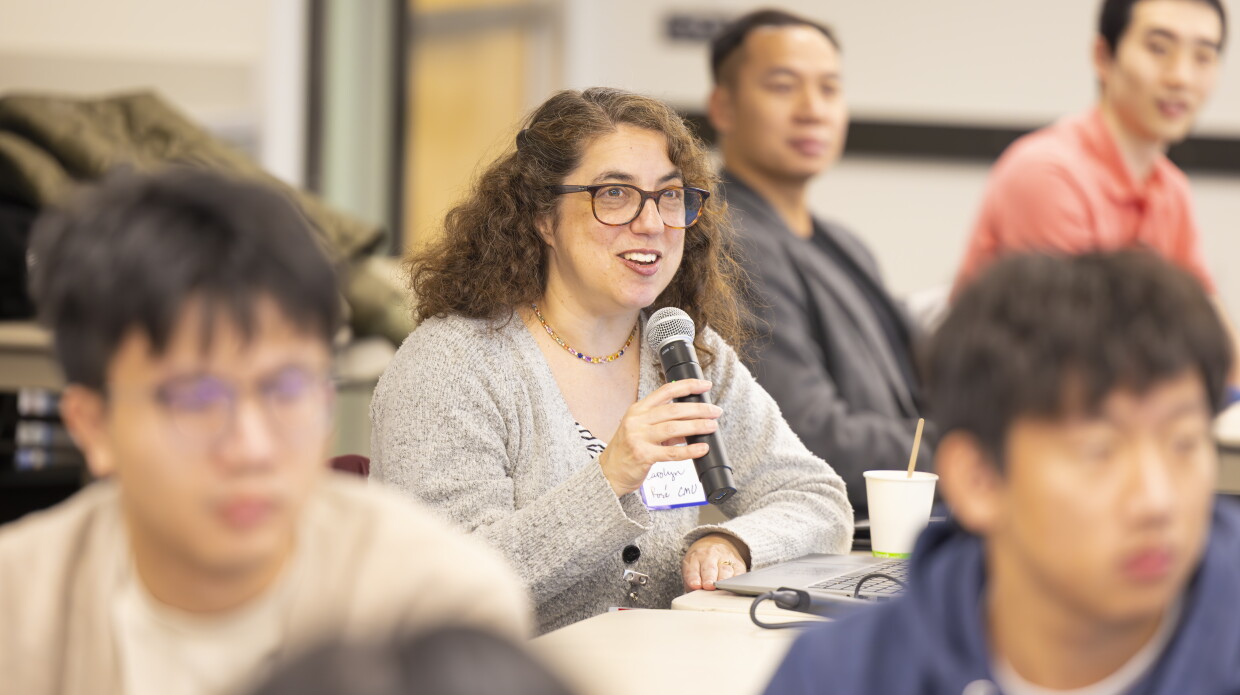
A global university competition to drive secure innovation in generative AI technology, which focuses on responsible AI and large language model coding security.

Credit: Wolfram Scheible
We partner with particular academic organizations across the world for deep and sustained collaborations in multiple research areas of mutual interest.
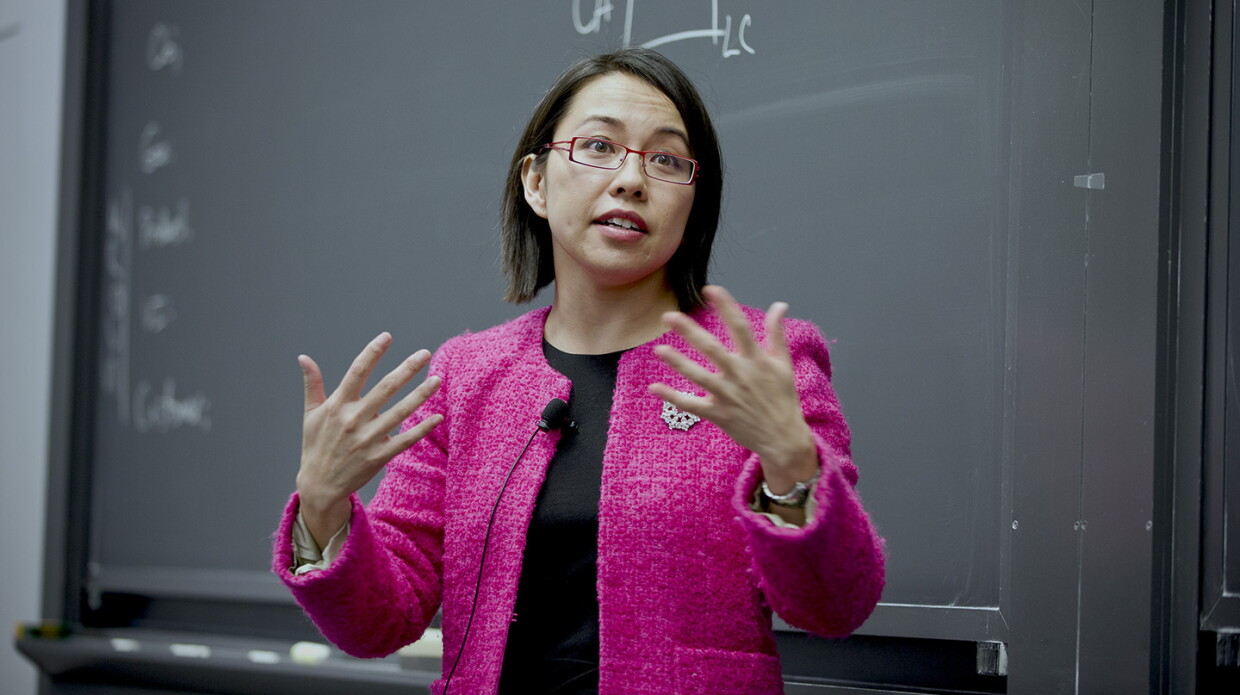
Courtesy of Pai-Ling Yin
We hire world-class academics to work on large-scale technical challenges, while they continue to teach and conduct research at their universities.