


Runtime optimizations and a thorough evaluation process driven by agentic AI help ensure that models written in PyTorch will execute efficiently and reliably on Trainium systems.

Expanding the mix of synthetic data used to train a tabular foundation model enables it to adapt to new tables without new models and lead the single-model field on the TabArena benchmark.

Using the Neuron Kernel Interface, a Reactor–AWS collaboration tackled the dynamic shapes, memory access patterns, and cache management that make real-time autoregressive diffusion hard—building techniques that generalize across models.


Three new papers from Amazon Bio Discovery address bottlenecks in AI-driven antibody engineering, from benchmarking binding predictors to experimentally validating de novo design.
New research indicates that AI agents learn compressible models of data, which don’t have enough space to enable memorization.
Customer-obsessed science

Research areas


-
 November 16, 202611 min readNew open-source tool turns existing test suites into sets of formal-verification tasks, which catch buggy solutions that tests alone would miss.
-
 November 11, 20265 min read
-
-
-


Featured news

The collaboration aims to advance research while broadening participation and translating discovery into real-world solutions.

Submissions open October 1 and close on November 11, 2026

The collaboration will support research in robotics, industrial and systems engineering, and aerospace technology while fostering innovation in foundational and emerging technologies.

The Build on Trainium program is a $110 million credit initiative supporting AI research at 30 universities including Stanford, UC Berkeley, UIUC, UCLA, CMU, and MIT, with a focus on Responsible AI.

The Antibody Developability Benchmark is powered by one of the most diverse antibody datasets in public literature, enabling transparent performance evaluation for AI-guided antibody design.

Challenge pushes teams to demonstrate measurable gains in secure-coding performance while building AI agents that advance real-world utility and reliability at scale.

Initiative will fund over 100 doctoral students researching machine learning, computer vision, and natural-language processing at nine universities.
-
AAAI 20222022Robots operating in human spaces must be able to engage in natural language interaction, both understanding and executing instructions, and using conversation to resolve ambiguity and correct mistakes. To study this, we introduce TEACh, a dataset of over 3,000 human–human, interactive dialogues to complete household tasks in simulation. A Commander with access to oracle information about a task communicates
-
QIP 20222022Phase estimation is a quantum algorithm for measuring the eigenvalues of a Hamiltonian. We propose and rigorously analyze a randomized phase estimation algorithm with two distinctive features. First, our algorithm has complexity independent of the number of terms L in the Hamiltonian. Second, unlike previous L-independent approaches, such as those based on qDRIFT, all sources of error in our algorithm can
-
IEEE Transactions on Electromagnetic Compatibility2022As more compact designs and more assembled function modules are utilized in modern electronic devices, radiofrequency interference (RFI) source reconstruction is becoming more challenging because different noise sources may contribute simultaneously. This article presents a novel methodology to reconstruct multiple random noise sources on a real-world product, including several double-data-rate (DDR) memory
-
WACV 20222022This work presents a No-Reference model to detect audio artifacts in video. The model, based upon a Pretrained Audio Neural Network, classifies a 1-second audio segment as either No Defect, Audio Hum, Audio Hiss, Audio Distortion or Audio Clicks. The model achieves a balanced accuracy of 0.986 on our proprietary simulated dataset.
-
AAAI 2022 Workshop on Combining Learning and Reasoning: Programming Languages, Formalisms, and Representations (CLeaR)2022Language-enabled AI systems can answer complex, multihop questions to high accuracy, but supporting answers with evidence is a more challenging task which is important for the transparency and trustworthiness to users. Prior work in this area typically makes a trade-off between efficiency and accuracy; state-of-the-art deep neural network systems are too cumbersome to be useful in large-scale applications
Collaborations
View allWhether you're a faculty member or student, there are number of ways you can engage with Amazon.
View all
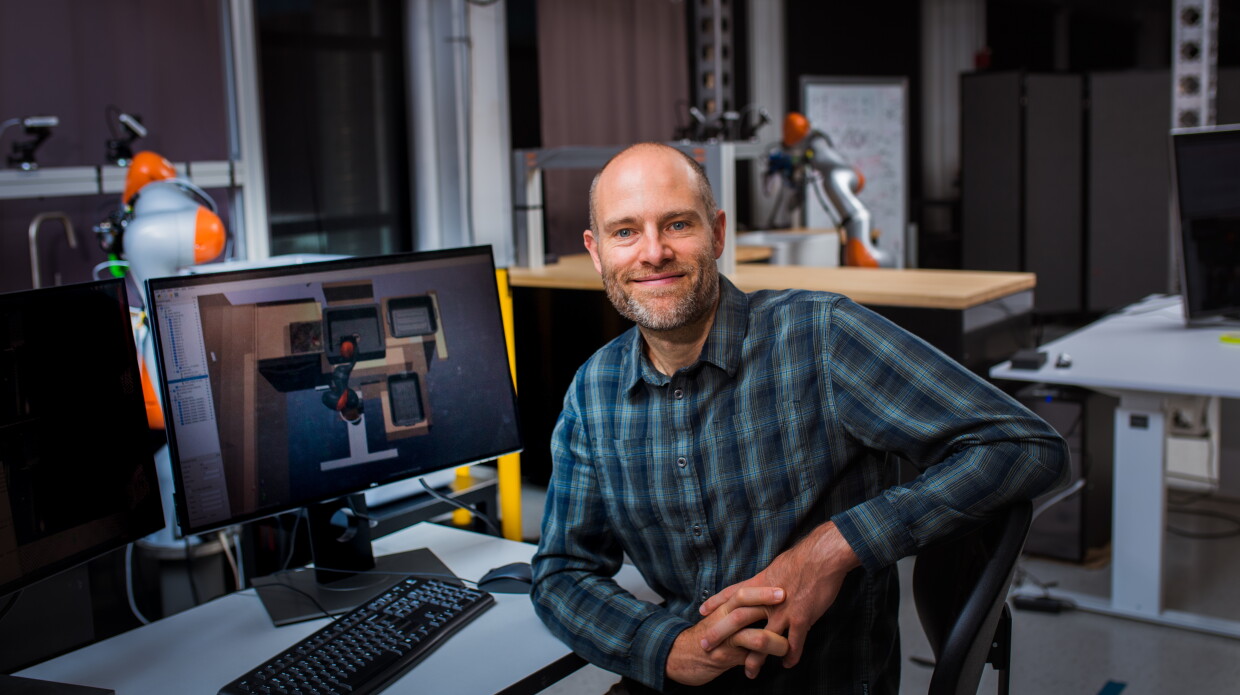
Gretchen Ertl
The program offers unrestricted funds and other resources to support research at academic institutions and non-profit organizations in areas that align with our mission.
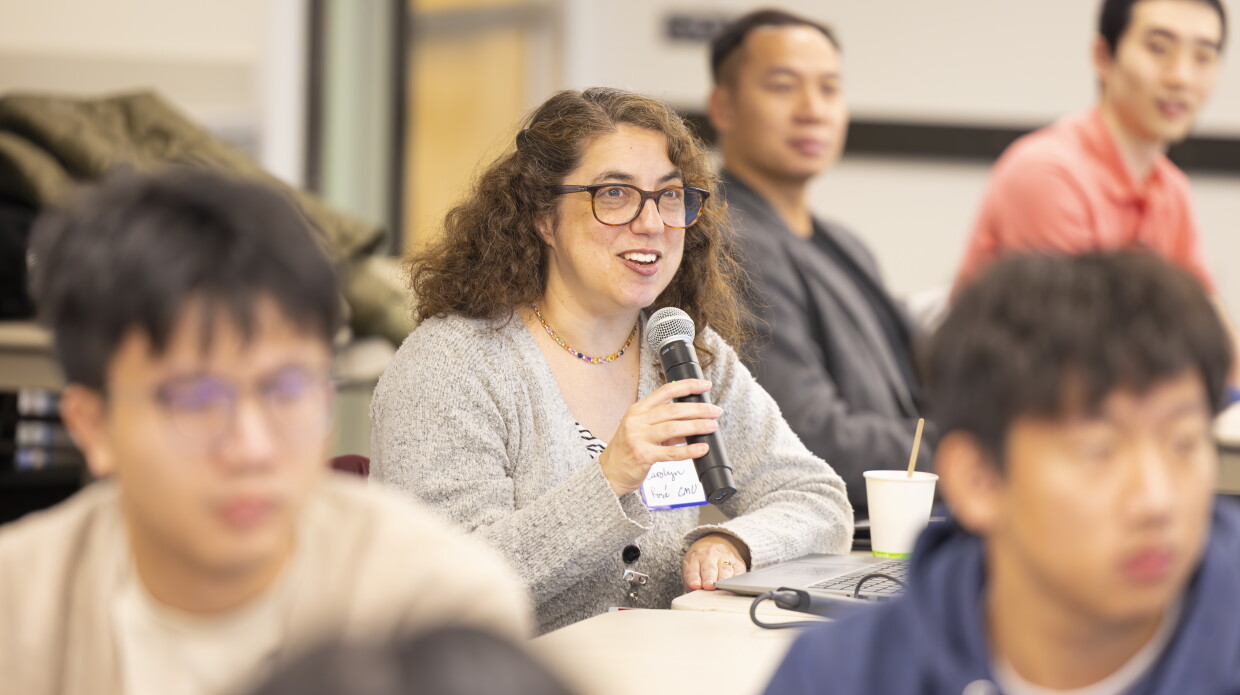
A global university competition to drive secure innovation in generative AI technology, which focuses on responsible AI and large language model coding security.

Credit: Wolfram Scheible
We partner with particular academic organizations across the world for deep and sustained collaborations in multiple research areas of mutual interest.
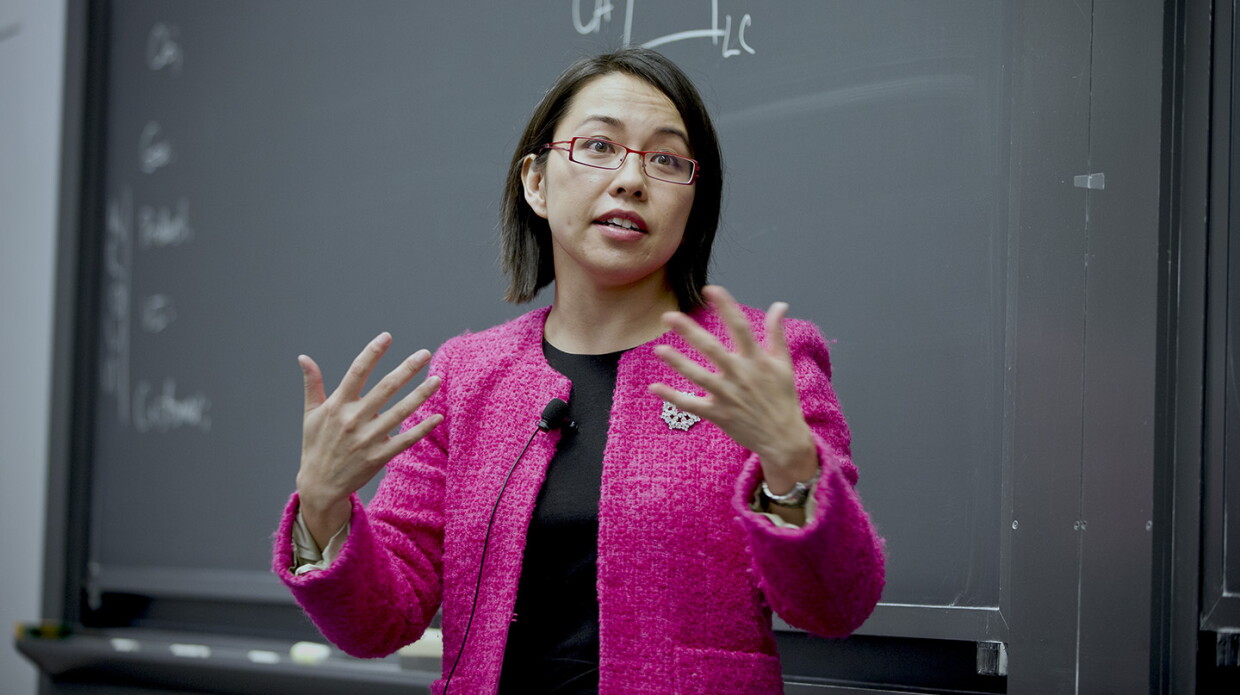
Courtesy of Pai-Ling Yin
We hire world-class academics to work on large-scale technical challenges, while they continue to teach and conduct research at their universities.

