


Runtime optimizations and a thorough evaluation process driven by agentic AI help ensure that models written in PyTorch will execute efficiently and reliably on Trainium systems.

Expanding the mix of synthetic data used to train a tabular foundation model enables it to adapt to new tables without new models and lead the single-model field on the TabArena benchmark.

Using the Neuron Kernel Interface, a Reactor–AWS collaboration tackled the dynamic shapes, memory access patterns, and cache management that make real-time autoregressive diffusion hard—building techniques that generalize across models.


Three new papers from Amazon Bio Discovery address bottlenecks in AI-driven antibody engineering, from benchmarking binding predictors to experimentally validating de novo design.
New research indicates that AI agents learn compressible models of data, which don’t have enough space to enable memorization.
Customer-obsessed science

Research areas


-
 November 11, 20265 min readStatic analysis of deployed networks helps reduce the risk that sensitive data leaks across partitions, supporting the security and reliability of global-scale networking.
-

-
-
-
October 20, 20263 min read


Featured news

The collaboration aims to advance research while broadening participation and translating discovery into real-world solutions.

Submissions open October 1 and close on November 11, 2026

The collaboration will support research in robotics, industrial and systems engineering, and aerospace technology while fostering innovation in foundational and emerging technologies.

The Build on Trainium program is a $110 million credit initiative supporting AI research at 30 universities including Stanford, UC Berkeley, UIUC, UCLA, CMU, and MIT, with a focus on Responsible AI.

The Antibody Developability Benchmark is powered by one of the most diverse antibody datasets in public literature, enabling transparent performance evaluation for AI-guided antibody design.

Challenge pushes teams to demonstrate measurable gains in secure-coding performance while building AI agents that advance real-world utility and reliability at scale.

Initiative will fund over 100 doctoral students researching machine learning, computer vision, and natural-language processing at nine universities.
-
ICASSP 20222022Self-supervision has shown outstanding results for natural language processing, and more recently, for image recognition. Simultaneously, vision transformers and its variants have emerged as a promising and scalable alternative to convolutions on various computer vision tasks. In this paper, we are the first to question if self-supervised vision transformers (SSL-ViTs) can be adapted to two important computer
-
AAAI 20222022Inspired by two basic mechanisms in animal visual systems, we introduce a feature transform technique that imposes invariance properties in the training of deep neural networks. The resulting algorithm requires less parameter tuning, trains well with an initial learning rate 1.0, and easily generalizes to different tasks. We enforce scale invariance with local statistics in the data to align similar samples
-
The Web Conference 20222022Substitute product recommendation is important to improve customer satisfaction on E-commerce domain. E-commerce in nature provides rich sources of substitute relationships, e.g., customers purchase a substitute product when the viewed product is sold out, etc. However, existing recommendation systems usually learn the product substitution correlations without jointly considering variant customer behavior
-
ACL 20222022Transformer-based language models such as BERT (Devlin et al., 2018) have achieved the state-of-the-art performance on various NLP tasks, but are computationally prohibitive. A recent line of works use various heuristics to successively shorten sequence length while transforming tokens through encoders, in tasks such as classification and ranking that require a single token embedding for prediction. We
-
AAAI 20222022We introduce Recursive INsertion-based Encoder (RINE), a novel approach for semantic parsing in task-oriented dialog. Our model consists of an encoder network that incrementally builds the semantic parse tree by predicting the non-terminal label and its positions in the linearized tree. At the generation time, the model constructs the semantic parse tree by recursively inserting the predicted non-terminal
Collaborations
View allWhether you're a faculty member or student, there are number of ways you can engage with Amazon.
View all

Gretchen Ertl
The program offers unrestricted funds and other resources to support research at academic institutions and non-profit organizations in areas that align with our mission.
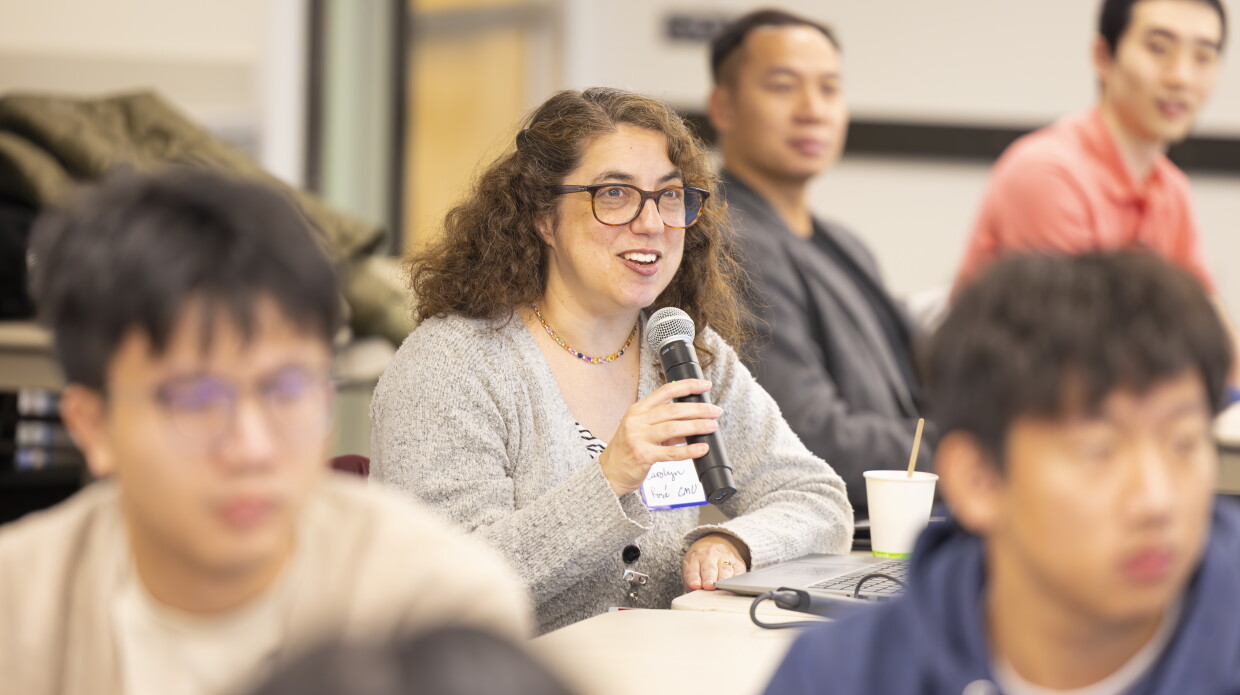
A global university competition to drive secure innovation in generative AI technology, which focuses on responsible AI and large language model coding security.

Credit: Wolfram Scheible
We partner with particular academic organizations across the world for deep and sustained collaborations in multiple research areas of mutual interest.
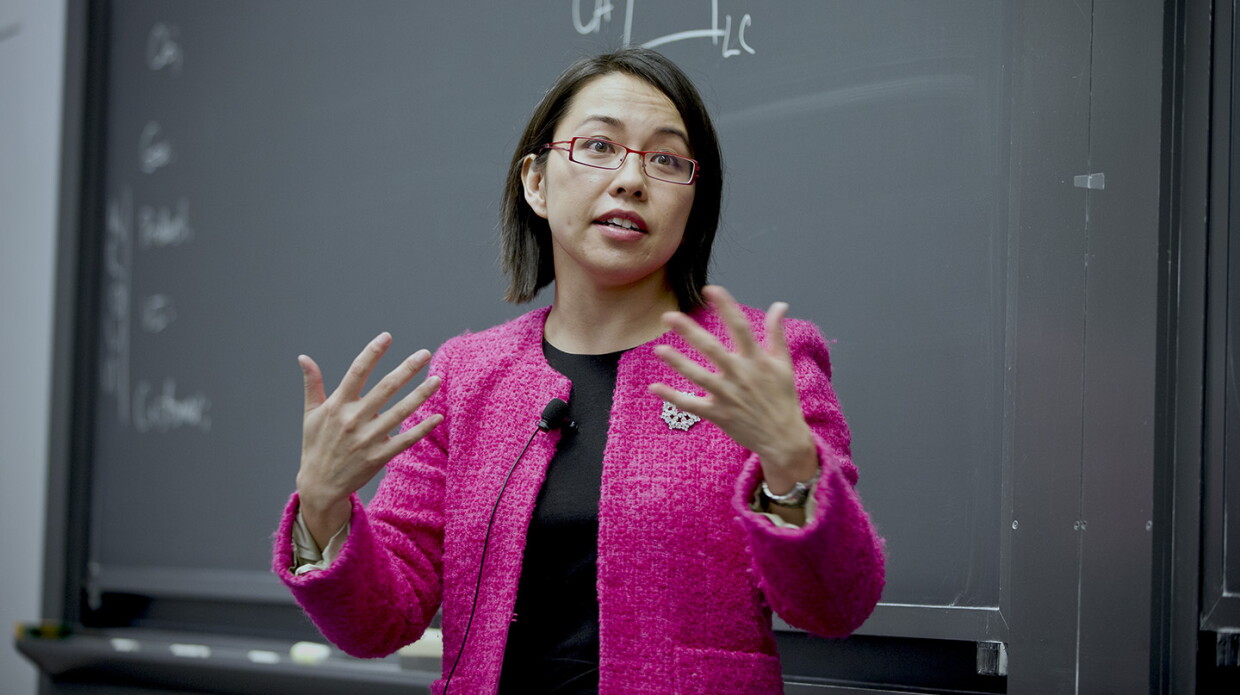
Courtesy of Pai-Ling Yin
We hire world-class academics to work on large-scale technical challenges, while they continue to teach and conduct research at their universities.

