














A family of four foundation models designed to meet diverse enterprise needs across reasoning, multimodal processing, and real-time conversational AI.

How agentic systems work under the hood — and how AWS’s new AgentCore framework implements their essential components.

Reasoning models can generate seven to 10 times as many tokens as necessary on simple tasks, creating unsustainable costs at scale. Amazon's vision for metacognitive AI could fundamentally shift how models allocate computational resources.

Amazon's competitive-agent architecture creates a continuous improvement cycle that develops security protections at machine speed, reducing what typically takes weeks down to hours.


A new approach to reducing carbon emissions reveals previously hidden emission “hotspots” within value chains, helping organizations make more detailed and dynamic decisions about their future carbon footprints.
Customer-obsessed science


Research areas


-
 December 5, 20256 min readA multiagent architecture separates data perception, tool knowledge, execution history, and code generation, enabling ML automation that works with messy, real-world inputs.
 -

-
-
November 20, 20254 min read
-
October 20, 20254 min read


Featured news
Initiative will fund over 100 doctoral students researching machine learning, computer vision, and natural-language processing at nine universities.

The collaboration will advance research in generative AI, robotics, natural language processing and cloud computing while fostering innovation in foundational and emerging technologies.
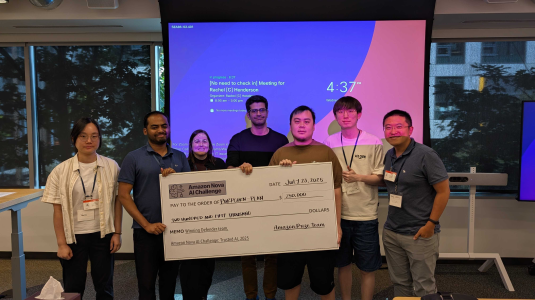
University teams battle to harden and hack AI coding assistants in head-to-head tournament

David Chang/Getty Images/iStockphoto
Led by David Luan and Pieter Abbeel, the lab will focus on developing new foundational capabilities for enabling useful AI agents.

The company's new state-of-the-art foundation models deliver frontier intelligence and industry-leading price performance.
-
ACL-IJCNLP 2021 Workshop on e-Commerce and NLP (ECNLP)2021Keyword augmentation is a fundamental problem for sponsored search modeling and business. Machine generated keywords can be recommended to advertisers for better campaign discoverability as well as used as features for sourcing and ranking models. Generating high-quality keywords is difficult, especially for cold campaigns with limited or even no historical logs; and the industry trend of including multiple
-
ACL-IJCNLP 20212021The current state-of-the-art generative models for open-domain question answering (ODQA) have focused on generating direct answers from unstructured textual information. However, a large amount of world’s knowledge is stored in structured databases, and need to be accessed using query languages such as SQL. Furthermore, query languages can answer questions that require complex reasoning, as well as offering
-
ACL-IJCNLP 2021 Workshop on e-Commerce and NLP (ECNLP)2021In this paper, we present SANTA, a scalable framework to automatically normalize Ecommerce attribute values (e.g. “Win 10 Pro”) to a fixed set of pre-defined canonical values (e.g. “Windows 10”). Earlier works on attribute normalization focused on fuzzy string matching (also referred as syntactic matching in this paper). In this work, we first perform an extensive study of nine syntactic matching algorithms
-
KDD 20212021Understanding product attributes plays an important role in improving online shopping experience for customers and serves as an integral part for constructing a product knowledge graph. Most existing methods focus on attribute extraction from text description or utilize visual information from product images such as shape and color. Compared to the inputs considered in prior works, a product image in fact
-
ACL-IJCNLP 2021 Workshop on e-Commerce and NLP (ECNLP)2021With the rapid growth of online video streaming, recent years have seen increasing concerns about profane language in their content. Detecting profane language in streaming services is challenging due to the long sentences appeared in a video. While recent research on handling long sentences has focused on developing deep learning modeling techniques, little work has focused on techniques on improving data
Collaborations
View allWhether you're a faculty member or student, there are number of ways you can engage with Amazon.
View all

Gretchen Ertl
The program offers unrestricted funds and other resources to support research at academic institutions and non-profit organizations in areas that align with our mission.
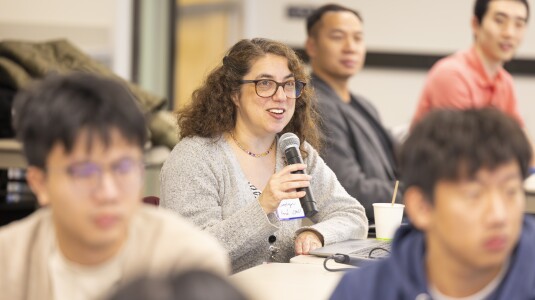
A global university competition to drive secure innovation in generative AI technology, which focuses on responsible AI and large language model coding security.

Credit: Wolfram Scheible
We partner with particular academic organizations across the world for deep and sustained collaborations in multiple research areas of mutual interest.
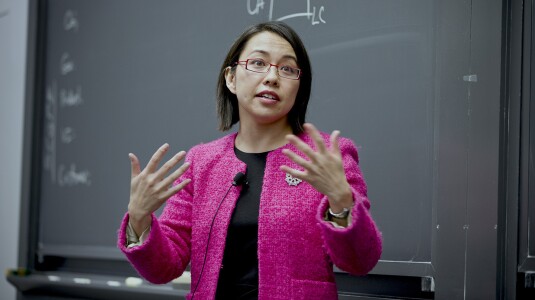
Courtesy of Pai-Ling Yin
We hire world-class academics to work on large-scale technical challenges, while they continue to teach and conduct research at their universities.

