Runtime optimizations and a thorough evaluation process driven by agentic AI help ensure that models written in PyTorch will execute efficiently and reliably on Trainium systems.

Using the Neuron Kernel Interface, a Reactor–AWS collaboration tackled the dynamic shapes, memory access patterns, and cache management that make real-time autoregressive diffusion hard—building techniques that generalize across models.


Three new papers from Amazon Bio Discovery address bottlenecks in AI-driven antibody engineering, from benchmarking binding predictors to experimentally validating de novo design.
New research indicates that AI agents learn compressible models of data, which don’t have enough space to enable memorization.

How the Verus "program verifier", which automatically checks code against a mathematical specification of its functionality, helps increase security assurance in software projects.

Ten years after we founded the Automated Reasoning Group, mathematical logic has moved from academic research into production services that secure millions of customer workloads — demonstrating that systems can be provably correct, not just probably correct.
Customer-obsessed science

Research areas


-
 October 29, 20265 min readTwo optimization techniques, when combined, can significantly improve a model’s speed and cost effectiveness without sacrificing quality.
-

-
October 20, 20263 min read
-
October 12, 202614 min read
-


Featured news

The collaboration aims to advance research while broadening participation and translating discovery into real-world solutions.

Submissions open October 1 and close on November 11, 2026

The collaboration will support research in robotics, industrial and systems engineering, and aerospace technology while fostering innovation in foundational and emerging technologies.

The Build on Trainium program is a $110 million credit initiative supporting AI research at 30 universities including Stanford, UC Berkeley, UIUC, UCLA, CMU, and MIT, with a focus on Responsible AI.

The Antibody Developability Benchmark is powered by one of the most diverse antibody datasets in public literature, enabling transparent performance evaluation for AI-guided antibody design.

Challenge pushes teams to demonstrate measurable gains in secure-coding performance while building AI agents that advance real-world utility and reliability at scale.

Initiative will fund over 100 doctoral students researching machine learning, computer vision, and natural-language processing at nine universities.
-
RSS 20232023Automating warehouse operations can reduce logistics overhead costs, ultimately driving down the final price for consumers, increasing the speed of delivery, and enhancing the resiliency to workforce fluctuations. The past few years have seen increased interest in automating such repeated tasks but mostly in controlled settings. Tasks such as picking objects from unstructured, cluttered piles have only
-
ICLR 2023 Workshop on Successful Domain Generalization2023Masked Language Models (MLMs) have proven to be effective for second-pass rescoring in Automatic Speech Recognition (ASR) systems. In this work, we propose Masked Audio Text Encoder (MATE), a multi-modal masked language model rescorer which incorporates acoustic representations into the input space of MLM. We adopt contrastive learning for effectively aligning the modalities by learning shared representations
-
ACM FAccT 20232023Warning: This paper contains examples of gender non-affirmative language which could be offensive, upsetting, and/or triggering. Transgender and non-binary (TGNB) individuals disproportionately experience discrimination and exclusion from daily life. Given the recent popularity and adoption of language generation technologies, the potential to further marginalize this population only grows. Although a multitude
-
ACL 20232023Recent studies show that sentence-level extractive QA, i.e., based on Answer Sentence Selection (AS2), is outperformed by Generationbased QA (GenQA) models, which generate answers using the top-k answer sentences ranked by AS2 models (a la retrieval-augmented generation style). In this paper, we propose a novel training paradigm for GenQA using supervision from automatic QA evaluation models (GAVA). Specifically
-
ACL 20232023Various Vision-Language Pre-training (VLP) models (e.g., CLIP, BLIP) have sprung up and dramatically improved the benchmarks of public general-domain datasets (e.g., COCO, Flickr30k). Such models typically learn the cross-modal alignment from large-scale well-aligned image-text datasets. Adapting these models to downstream applications in specific domains, such as fashion, requires fine-grained in-domain
Collaborations
View allWhether you're a faculty member or student, there are number of ways you can engage with Amazon.
View all

Gretchen Ertl
The program offers unrestricted funds and other resources to support research at academic institutions and non-profit organizations in areas that align with our mission.
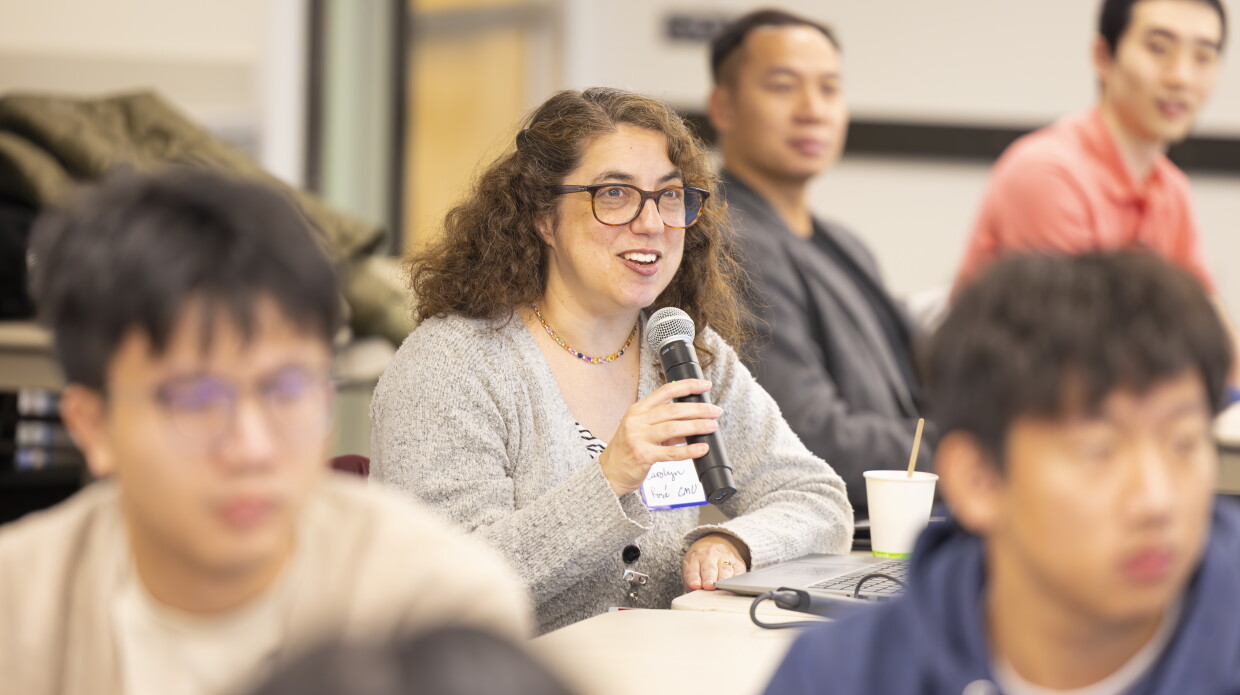
A global university competition to drive secure innovation in generative AI technology, which focuses on responsible AI and large language model coding security.

Credit: Wolfram Scheible
We partner with particular academic organizations across the world for deep and sustained collaborations in multiple research areas of mutual interest.
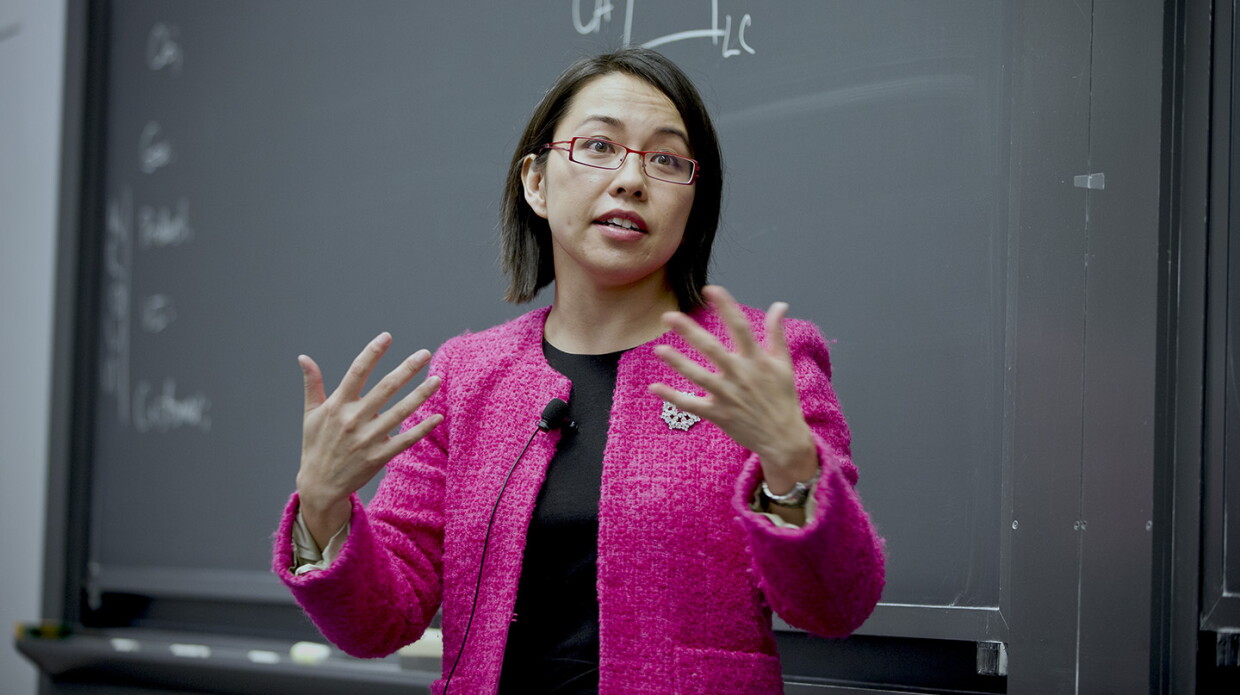
Courtesy of Pai-Ling Yin
We hire world-class academics to work on large-scale technical challenges, while they continue to teach and conduct research at their universities.