


Runtime optimizations and a thorough evaluation process driven by agentic AI help ensure that models written in PyTorch will execute efficiently and reliably on Trainium systems.

Using the Neuron Kernel Interface, a Reactor–AWS collaboration tackled the dynamic shapes, memory access patterns, and cache management that make real-time autoregressive diffusion hard—building techniques that generalize across models.


Three new papers from Amazon Bio Discovery address bottlenecks in AI-driven antibody engineering, from benchmarking binding predictors to experimentally validating de novo design.
New research indicates that AI agents learn compressible models of data, which don’t have enough space to enable memorization.

How the Verus "program verifier", which automatically checks code against a mathematical specification of its functionality, helps increase security assurance in software projects.

Ten years after we founded the Automated Reasoning Group, mathematical logic has moved from academic research into production services that secure millions of customer workloads — demonstrating that systems can be provably correct, not just probably correct.
Customer-obsessed science

Research areas


-
 October 23, 20266 min read“Controllable text to speech” makes speech more expressive, character voices more distinct and consistent.
-
 October 22, 20266 min read
-
October 20, 20263 min read
-
October 12, 202614 min read
-


Featured news

The collaboration aims to advance research while broadening participation and translating discovery into real-world solutions.

Submissions open October 1 and close on November 4, 2026

The collaboration will support research in robotics, industrial and systems engineering, and aerospace technology while fostering innovation in foundational and emerging technologies.

The Build on Trainium program is a $110 million credit initiative supporting AI research at 30 universities including Stanford, UC Berkeley, UIUC, UCLA, CMU, and MIT, with a focus on Responsible AI.

The Antibody Developability Benchmark is powered by one of the most diverse antibody datasets in public literature, enabling transparent performance evaluation for AI-guided antibody design.

Challenge pushes teams to demonstrate measurable gains in secure-coding performance while building AI agents that advance real-world utility and reliability at scale.

Initiative will fund over 100 doctoral students researching machine learning, computer vision, and natural-language processing at nine universities.
-
NeurIPS 2026 Workshop on Foundation Models for Temporal Systems2026Adapting a forecasting system to a changing world classically means retraining. We ask whether the task of continually learning regimes for time series forecasting can be represented by a piece of text: a guidance block, evolved by outcome-driven reflection and used in a frozen LLM forecaster's prompt. On a refreshed multimodal benchmark (weekly search indices, daily currencies, daily commodities, each
-
SOSP 20262026This talk presents a layered C++ architecture that solves this at scale. We present our core abstrcactions; a header-only Lie group library provides shared spatial math types (SE(3) poses, twists, wrenches); a trajectory library for motion planners and controllers; and a collision detection library from the same. We will discuss how we moved from virtual functions to C++ concepts with zero overhead and
-
2026LLM-based factuality judges provide scalable evaluation signals, but their metrics are often systematically biased relative to human judgments. We study human-anchored factuality evaluation under limited annotation budgets, where judge predictions on the full dataset are combined with human labels on a small selectively sampled subset to obtain statistically valid estimates. The efficiency of this approach
-
EMNLP 2026 Workshop on Multilingual Representation Learning2026Pretrained multilingual language models perform well on many NLP tasks, yet their performance remains uneven, with English consistently outperforming most other languages. Multilingual adaptation aims to close this gap while preserving English performance, but faces challenges such as limited task-specific multilingual data, the curse of multilinguality, and catastrophic forgetting. Large language models
-
This paper presents a thermo-mechanical reliability investigation of two epoxy-filled via structures, Via-in-Pad Plated over (VIPPO) vias and the stacked microvias, combining finite element analysis (FEA) with experimental failure analysis. For VIPPO structures, pad crater susceptibility after reflow exposure was assessed using the first principal stress within the prepreg laminate, while for stacked microvias
Collaborations
View allWhether you're a faculty member or student, there are number of ways you can engage with Amazon.
View all

Gretchen Ertl
The program offers unrestricted funds and other resources to support research at academic institutions and non-profit organizations in areas that align with our mission.
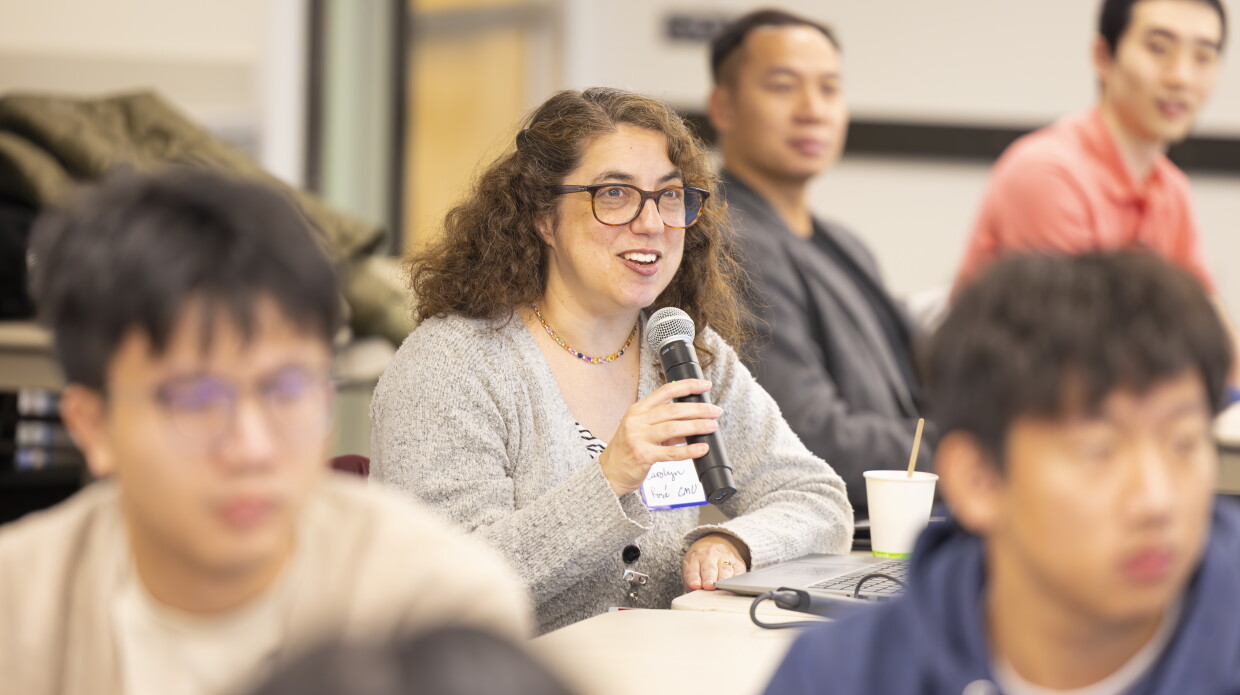
A global university competition to drive secure innovation in generative AI technology, which focuses on responsible AI and large language model coding security.

Credit: Wolfram Scheible
We partner with particular academic organizations across the world for deep and sustained collaborations in multiple research areas of mutual interest.
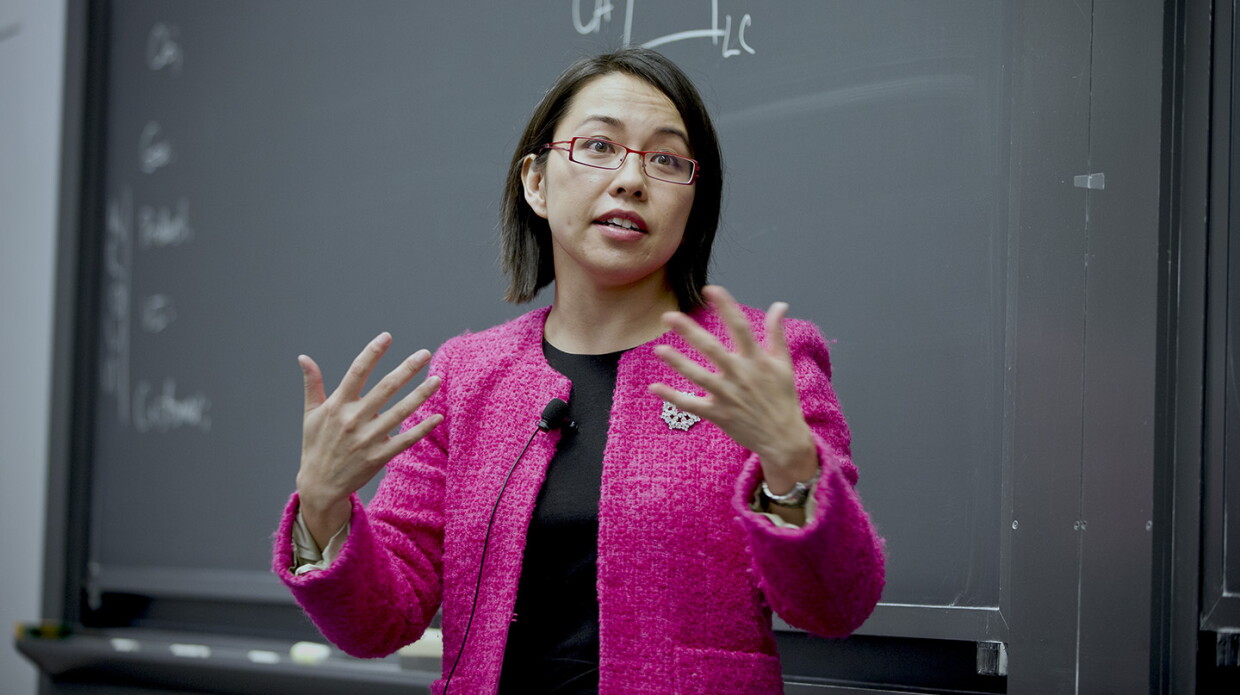
Courtesy of Pai-Ling Yin
We hire world-class academics to work on large-scale technical challenges, while they continue to teach and conduct research at their universities.

