Runtime optimizations and a thorough evaluation process driven by agentic AI help ensure that models written in PyTorch will execute efficiently and reliably on Trainium systems.

Expanding the mix of synthetic data used to train a tabular foundation model enables it to adapt to new tables without new models and lead the single-model field on the TabArena benchmark.

Using the Neuron Kernel Interface, a Reactor–AWS collaboration tackled the dynamic shapes, memory access patterns, and cache management that make real-time autoregressive diffusion hard—building techniques that generalize across models.


Three new papers from Amazon Bio Discovery address bottlenecks in AI-driven antibody engineering, from benchmarking binding predictors to experimentally validating de novo design.
New research indicates that AI agents learn compressible models of data, which don’t have enough space to enable memorization.
Customer-obsessed science

Research areas


-
 November 11, 20265 min readStatic analysis of deployed networks helps reduce the risk that sensitive data leaks across partitions, supporting the security and reliability of global-scale networking.
-

-
-
-
October 20, 20263 min read


Featured news

The collaboration aims to advance research while broadening participation and translating discovery into real-world solutions.

Submissions open October 1 and close on November 11, 2026

The collaboration will support research in robotics, industrial and systems engineering, and aerospace technology while fostering innovation in foundational and emerging technologies.

The Build on Trainium program is a $110 million credit initiative supporting AI research at 30 universities including Stanford, UC Berkeley, UIUC, UCLA, CMU, and MIT, with a focus on Responsible AI.

The Antibody Developability Benchmark is powered by one of the most diverse antibody datasets in public literature, enabling transparent performance evaluation for AI-guided antibody design.

Challenge pushes teams to demonstrate measurable gains in secure-coding performance while building AI agents that advance real-world utility and reliability at scale.

Initiative will fund over 100 doctoral students researching machine learning, computer vision, and natural-language processing at nine universities.
-
2026Both full fine-tuning (Full FT) and parameter-efficient methods like LoRA add weight updates without regard to the spectral structure that pretraining has established. This allows noisy gradients from a small fine-tuning distribution to freely perturb the robust features learned through pretraining. We first identify spectral preconditioning as the key missing ingredient: reparameterizing each weight W
-
StalePO: Anchored token-level preference optimization using legacy post-edits in machine translationWMT 20262026Machine translation systems are periodically upgraded to stronger models, but the available preference signal is human post-edits of an older system's outputs, which the newer model may already surpass. Moreover, collecting fresh post-edits for every new model is prohibitively expensive. We call this the Stale Preference problem. Standard DPO can fail in this setting: it may increase the likelihood of inferior
-
2026Machine Translation (MT) and automatic MT evaluation have improved dramatically in recent years, enabling numerous novel applications. Automatic evaluation techniques have evolved from producing scalar quality scores to precisely locating translation errors and assigning them error categories and severity levels. However, it remains unclear how to reliably measure the evaluation capabilities of auto-evaluators
-
2026Data annotation remains a central bottleneck in natural language processing, requiring human effort to obtain high-quality labels at scale. While Large Language Models (LLMs) offer a fast and cost-effective alternative, their reliability is highly instance-dependent: they perform well on simple inputs but often fail on examples requiring nuanced reasoning or contextual understanding. In this work, we address
-
2026Uncertainty estimation is essential not only for the trustworthy deployment of large language models (LLMs) but also as a foundation for self-refinement in LLM generation. However, existing approaches operate at suboptimal granularities: token-level scores lack semantic coherence, while sequence-level scores fail to localize errors. We formalize Span-Level Uncertainty Estimation (SLUE), a new task that
Collaborations
View allWhether you're a faculty member or student, there are number of ways you can engage with Amazon.
View all

Gretchen Ertl
The program offers unrestricted funds and other resources to support research at academic institutions and non-profit organizations in areas that align with our mission.
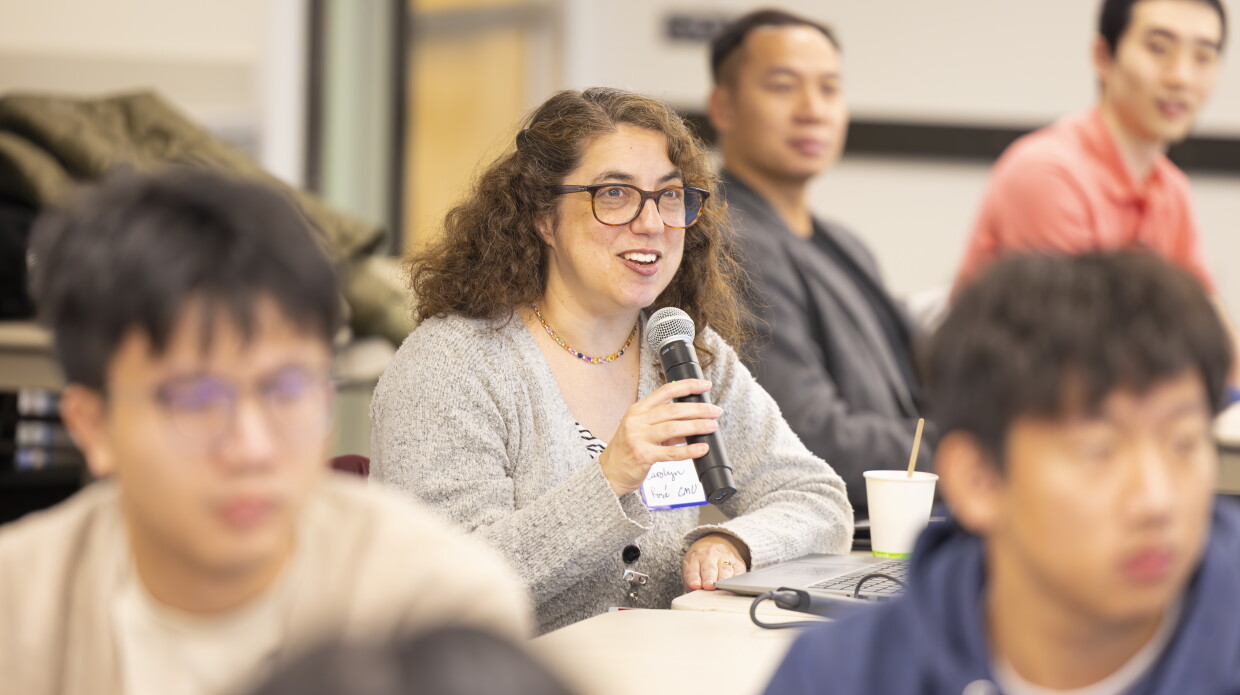
A global university competition to drive secure innovation in generative AI technology, which focuses on responsible AI and large language model coding security.

Credit: Wolfram Scheible
We partner with particular academic organizations across the world for deep and sustained collaborations in multiple research areas of mutual interest.
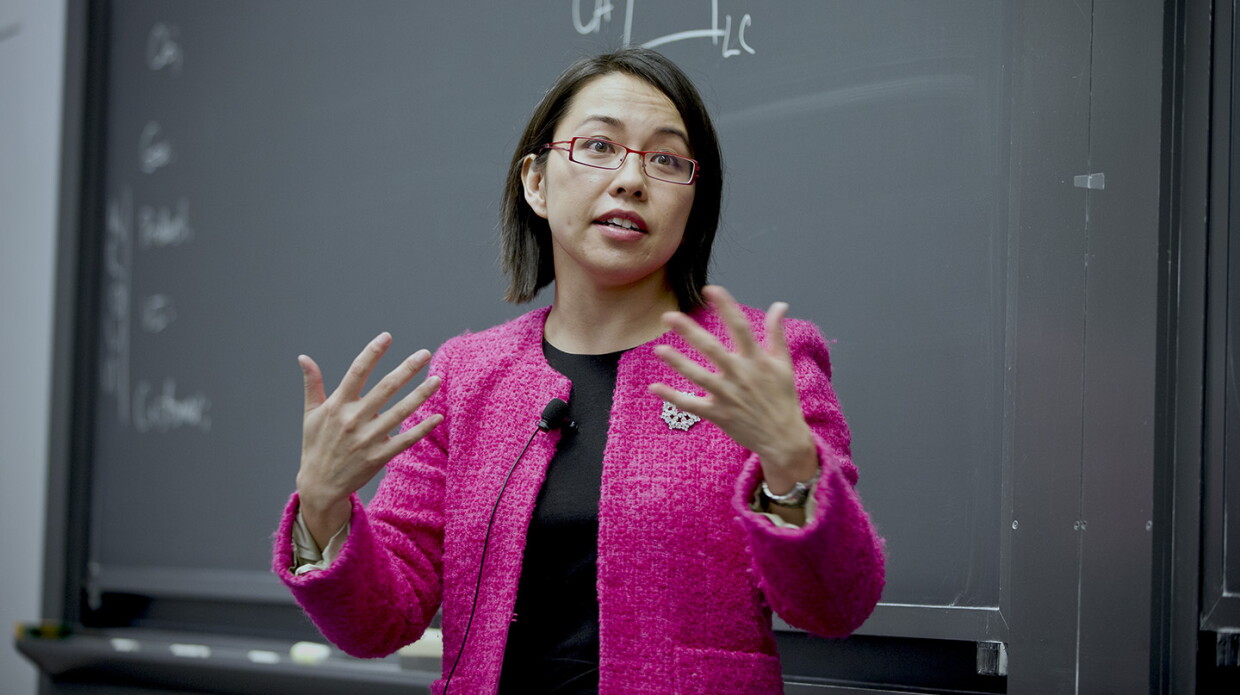
Courtesy of Pai-Ling Yin
We hire world-class academics to work on large-scale technical challenges, while they continue to teach and conduct research at their universities.