














"Reinforcement learning gyms" train agents on the many low-level tasks that they must chain together to execute customer requests.


From foundation model safety frameworks and formal verification at cloud scale to advanced robotics and multimodal AI reasoning, these are the most viewed publications from Amazon scientists and collaborators in 2025.


From quantum computing breakthroughs and foundation models for robotics to the evolution of Amazon Aurora and advances in agentic AI, these are the posts that captured readers' attention in 2025.
Customer-obsessed science


Research areas


-
 January 8, 20264 min readA new hybrid optimization approach allows edge devices to fine-tune vision-language models using only forward passes, achieving up to 7% higher accuracy than existing techniques.
 -
 December 10, 20255 min read
 -
December 8, 20258 min read
-
December 5, 20256 min read
-


Featured news

Hosted by Dr. Danielle Perszyk, cognitive scientist at Amazon's AGI Lab, the podcast features conversations with leading AI researchers about the breakthroughs needed to achieve general intelligence.

Challenge pushes teams to demonstrate measurable gains in secure-coding performance while building AI agents that advance real-world utility and reliability at scale.

Meet the 63 Amazon Research Award (ARA) recipients, who represent 41 universities in 8 countries.
Initiative will fund over 100 doctoral students researching machine learning, computer vision, and natural-language processing at nine universities.
-
2024Integrated Speech and Large Language Models (SLMs) that can follow speech instructions and generate relevant text responses have gained popularity lately. However, the safety and robustness of these models remains largely unclear. In this work, we investigate the potential vulnerabilities of such instruction-following speech-language models to adversarial attacks and jailbreaking. Specifically, we design
-
2024Conversational systems often rely on embedding models for intent classification and intent clustering tasks. The advent of Large Language Models (LLMs), which enable instructional embeddings allowing one to adjust semantics over the embedding space using prompts, are being viewed as a panacea for these downstream conversational tasks. However, traditional evaluation benchmarks rely solely on task metrics
-
ICML 2024, TPDP 20242024Recently, diffusion models have become popular tools for image synthesis due to their high-quality outputs. However, like other large models, they may leak private information about their training data. Here, we demonstrate a privacy vulnerability of diffusion models through a membership inference (MI) attack, which aims to identify whether a target example belongs to the training set when given the trained
-
2024A large branch of explainable machine learning is grounded in cooperative game theory. However, research indicates that game-theoretic explanations may mislead or be hard to interpret. We argue that often there is a critical mismatch between what one wishes to explain (e.g. the output of a classifier) and what current methods such as SHAP explain (e.g. the scalar probability of a class). This paper addresses
-
FaCT 20242024Updates to Machine Learning as a Service (MLaaS) APIs may affect downstream systems that depend on their predictions. However, performance changes introduced by these updates are poorly documented by providers and seldom studied in the literature. As a result, API producers and consumers are left wondering: do model updates introduce performance changes that could adversely affect users’ system? Ideally
Collaborations
View allWhether you're a faculty member or student, there are number of ways you can engage with Amazon.
View all

Gretchen Ertl
The program offers unrestricted funds and other resources to support research at academic institutions and non-profit organizations in areas that align with our mission.
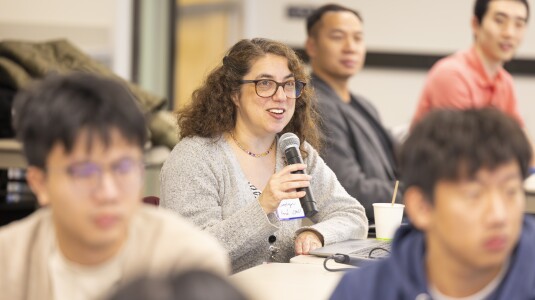
A global university competition to drive secure innovation in generative AI technology, which focuses on responsible AI and large language model coding security.

Credit: Wolfram Scheible
We partner with particular academic organizations across the world for deep and sustained collaborations in multiple research areas of mutual interest.
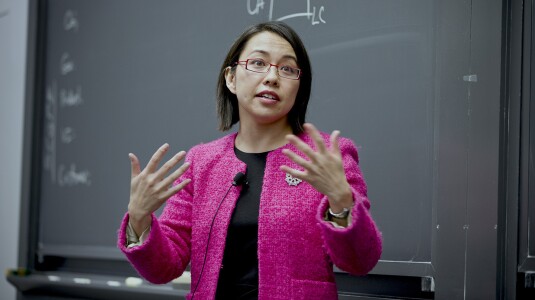
Courtesy of Pai-Ling Yin
We hire world-class academics to work on large-scale technical challenges, while they continue to teach and conduct research at their universities.

