Runtime optimizations and a thorough evaluation process driven by agentic AI help ensure that models written in PyTorch will execute efficiently and reliably on Trainium systems.

Expanding the mix of synthetic data used to train a tabular foundation model enables it to adapt to new tables without new models and lead the single-model field on the TabArena benchmark.

Using the Neuron Kernel Interface, a Reactor–AWS collaboration tackled the dynamic shapes, memory access patterns, and cache management that make real-time autoregressive diffusion hard—building techniques that generalize across models.


Three new papers from Amazon Bio Discovery address bottlenecks in AI-driven antibody engineering, from benchmarking binding predictors to experimentally validating de novo design.
New research indicates that AI agents learn compressible models of data, which don’t have enough space to enable memorization.
Customer-obsessed science

Research areas


-
 November 16, 202611 min readNew open-source tool turns existing test suites into sets of formal-verification tasks, which catch buggy solutions that tests alone would miss.
-
 November 11, 20265 min read
-
-
-


Featured news

The collaboration aims to advance research while broadening participation and translating discovery into real-world solutions.

Submissions open October 1 and close on November 11, 2026

The collaboration will support research in robotics, industrial and systems engineering, and aerospace technology while fostering innovation in foundational and emerging technologies.

The Build on Trainium program is a $110 million credit initiative supporting AI research at 30 universities including Stanford, UC Berkeley, UIUC, UCLA, CMU, and MIT, with a focus on Responsible AI.

The Antibody Developability Benchmark is powered by one of the most diverse antibody datasets in public literature, enabling transparent performance evaluation for AI-guided antibody design.

Challenge pushes teams to demonstrate measurable gains in secure-coding performance while building AI agents that advance real-world utility and reliability at scale.

Initiative will fund over 100 doctoral students researching machine learning, computer vision, and natural-language processing at nine universities.
-
EMNLP 2026 Workshop for Research on Agent Language Models (REALM)2026Research on coding agents mainly focuses on generation quality. Yet, safety-critical automotive software makes two additional demands. It prioritizes verification, since every change is reviewed, traced to a requirement, and checked against industry standards such as MISRA and AUTOSAR before it can be committed. It is also a narrow domain, written against layered architectures, embedded resource constraints
-
NeurIPS 2026 Workshop on the Linguistic Principles for Foundation Models (LP4FM)2026Aggregating several LLM responses to the same question can improve accuracy, but every method that does so must decide where the responses should differ. Established test-time scaling methods such as self-consistency vary only the reasoning path, resampling from a fixed input. The input modification offers several further options: the wording of the question can be rephrased, the spelling can be perturbed
-
NeurIPS 2026 Workshop on Who Verifies the Agents? Toward Reliable Agent Development (Verify-Agents)2026We changed the agent: did it actually get better? Every self-improving agent loop answers this hundreds of times, and every answer comes from a verifier. On open-ended tasks none exists, so the loop is handed a hand-written rubric or a bare LLM judge grading output from a model like itself, inviting reward hacking and shared blind spots. We make the verifier the evolving object: an inspectable expression
-
COLM 20262026Building LLMs that behave well socially, not merely correctly, requires more than producing locally helpful responses. A socially competent agent must infer users' unstated goals, respect their preferences, and adapt as the conversation unfolds. These behaviors are inherently multi-turn and social, making them hard to optimize: real interaction data is scarce, and user preferences are typically latent rather
-
Functionally equivalent or not? Graph-grounded differential surrogate execution for code equivalenceNeurIPS 2026 Workshop on AI for Verifiable Coding2026Determining whether two programs are functionally equivalent or not is central not only to code modernization, patch validation, and refactoring, but also to code-generation evaluation in general. Yet the usual signals are incomplete: tests cover only finite inputs, textual similarity confuses implementation with behavior, and unconstrained language model judgments are difficult to audit. Direct execution
Collaborations
View allWhether you're a faculty member or student, there are number of ways you can engage with Amazon.
View all

Gretchen Ertl
The program offers unrestricted funds and other resources to support research at academic institutions and non-profit organizations in areas that align with our mission.
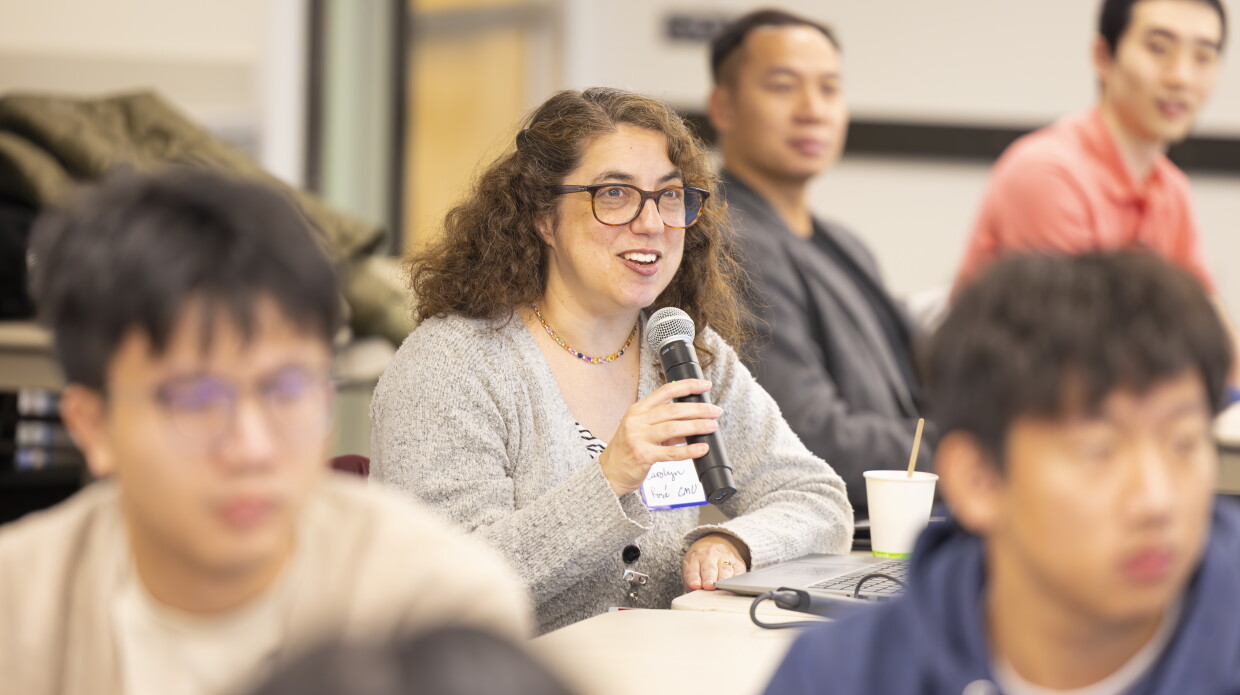
A global university competition to drive secure innovation in generative AI technology, which focuses on responsible AI and large language model coding security.

Credit: Wolfram Scheible
We partner with particular academic organizations across the world for deep and sustained collaborations in multiple research areas of mutual interest.
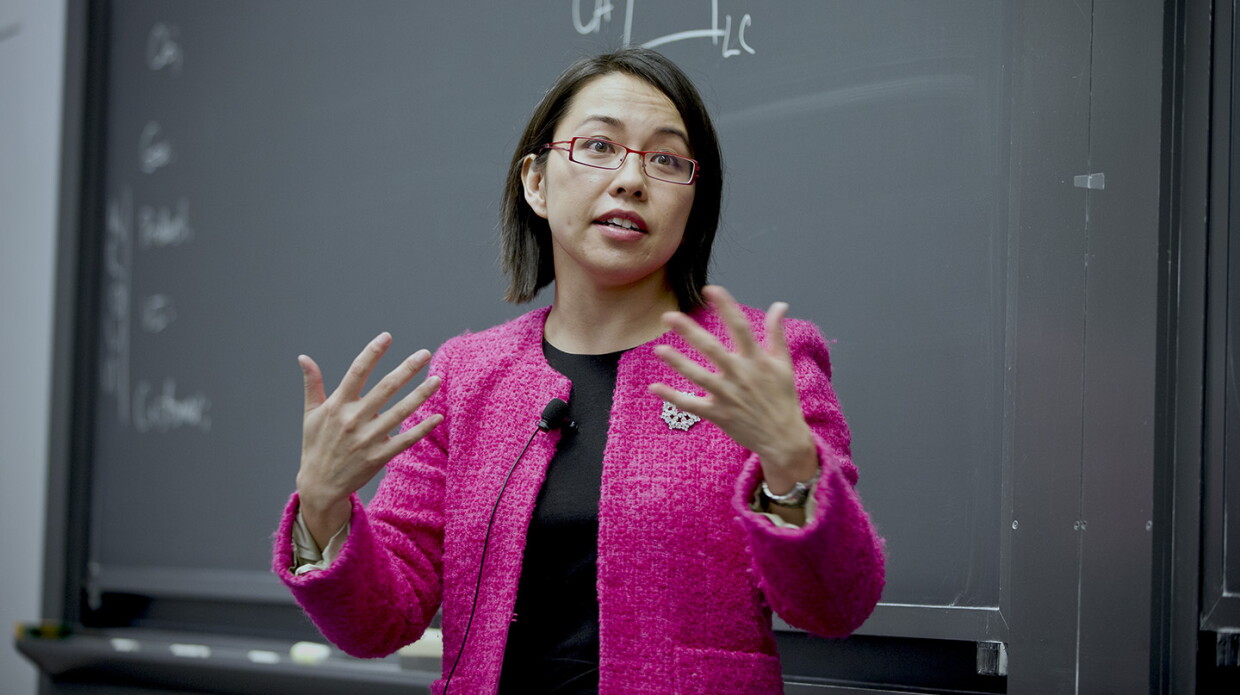
Courtesy of Pai-Ling Yin
We hire world-class academics to work on large-scale technical challenges, while they continue to teach and conduct research at their universities.