Runtime optimizations and a thorough evaluation process driven by agentic AI help ensure that models written in PyTorch will execute efficiently and reliably on Trainium systems.

With new tools that make it easier to check mathematical proofs — even as they’re being constructed — AI is becoming a valuable partner in mathematical discovery.

Expanding the mix of synthetic data used to train a tabular foundation model enables it to adapt to new tables without new models and lead the single-model field on the TabArena benchmark.

Using the Neuron Kernel Interface, a Reactor–AWS collaboration tackled the dynamic shapes, memory access patterns, and cache management that make real-time autoregressive diffusion hard—building techniques that generalize across models.


Three new papers from Amazon Bio Discovery address bottlenecks in AI-driven antibody engineering, from benchmarking binding predictors to experimentally validating de novo design.
Customer-obsessed science

Research areas


-
 November 16, 202611 min readNew open-source tool turns existing test suites into sets of formal-verification tasks, which catch buggy solutions that tests alone would miss.
-
 November 11, 20265 min read
-
-
-


Featured news

The collaboration aims to advance research while broadening participation and translating discovery into real-world solutions.

Submissions open October 1 and close on November 11, 2026

The collaboration will support research in robotics, industrial and systems engineering, and aerospace technology while fostering innovation in foundational and emerging technologies.

The Build on Trainium program is a $110 million credit initiative supporting AI research at 30 universities including Stanford, UC Berkeley, UIUC, UCLA, CMU, and MIT, with a focus on Responsible AI.

The Antibody Developability Benchmark is powered by one of the most diverse antibody datasets in public literature, enabling transparent performance evaluation for AI-guided antibody design.

Challenge pushes teams to demonstrate measurable gains in secure-coding performance while building AI agents that advance real-world utility and reliability at scale.

Initiative will fund over 100 doctoral students researching machine learning, computer vision, and natural-language processing at nine universities.
-
ICORES 20272027We study the problem of assigning customer orders to fulfillment centers in Amazon’s logistics network. We analyze this assignment problem in both offline and online settings, developing a range of algorithms for each scenario. In the offline setting, we present solver-based and heuristic approaches including mixed integer programming (MIP), best-fit algorithms, and local search methods. For the online
-
ICDE 20272027A fundamental challenge of vector search is achieving consistently high recall while minimizing computational costs. Fixed search parameters cause significant performance variance across queries, and conventional evaluation on average recall masks these per-query disparities. We introduce QASP (Query-Adaptive robust vector Search Policy), which predicts the complete recall progression curve per query via
-
IAAI 20272027Alexa+ devices with screens display animated icons during conversations to visually reinforce what is being said. The original set of these icons was hand-drawn by designers one at a time, a process that produces polished results but is time-consuming and cannot scale to the range of topics encountered in open-ended conversation. We describe an automated pipeline, deployed in production, that generates
-
2026Retrieval-augmented forecasting promises to adapt frozen Time Series Foundation Models (TSFMs) to new domains without fine-tuning, but recent methods typically rely on learned fusion modules, i.e., trained adapters that merge retrieved examples into the backbone's forecast, based on the assumption that frozen backbones cannot dynamically incorporate retrieved context on their own. We show this assumption
-
2026 Conference on Digital Experimentation @ MIT (CODE@MIT)2026Adaptive experiments are increasingly used in industry. They allow experimenters to test many more treatments than in a typical randomized experiment. A defining feature is the use of an exploration phase in which the goal is to identify a subset of the most effective treatments to test in a subsequent validation phase. There are a variety of simple algorithms that companies can use to explore a large set
Collaborations
View allWhether you're a faculty member or student, there are number of ways you can engage with Amazon.
View all

Gretchen Ertl
The program offers unrestricted funds and other resources to support research at academic institutions and non-profit organizations in areas that align with our mission.
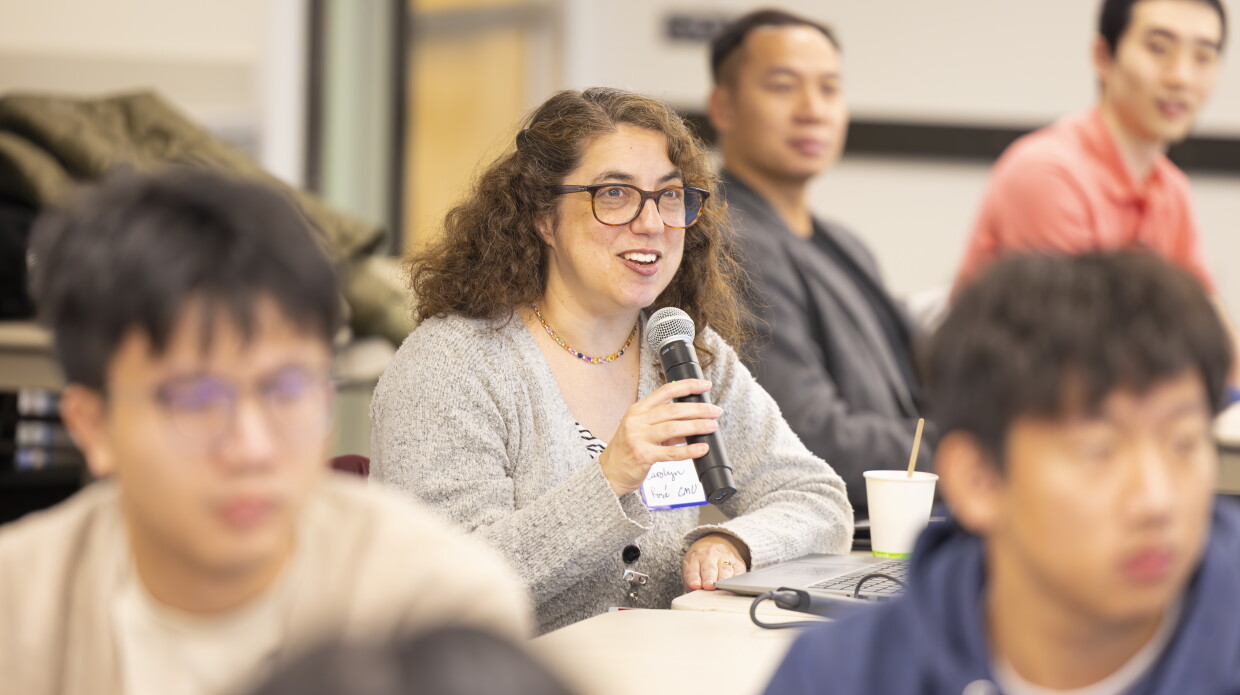
A global university competition to drive secure innovation in generative AI technology, which focuses on responsible AI and large language model coding security.

Credit: Wolfram Scheible
We partner with particular academic organizations across the world for deep and sustained collaborations in multiple research areas of mutual interest.
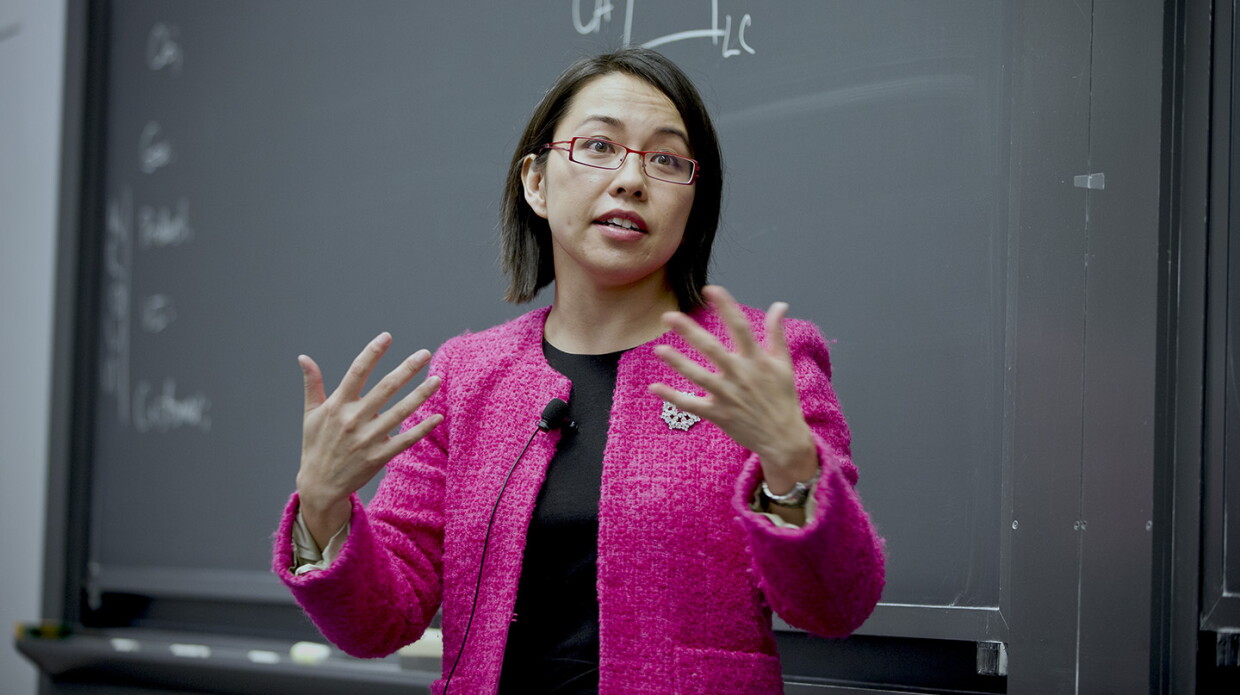
Courtesy of Pai-Ling Yin
We hire world-class academics to work on large-scale technical challenges, while they continue to teach and conduct research at their universities.