















Customer-obsessed science


Research areas













-
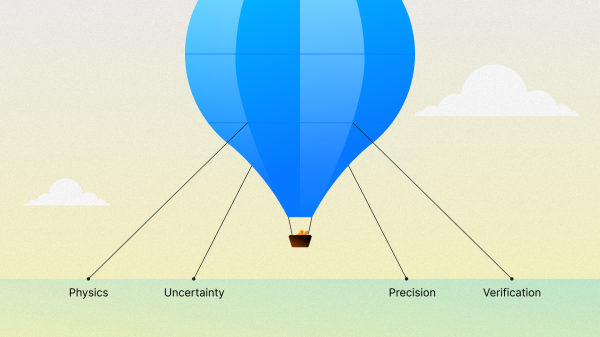
 June 8, 20267 min readFour approaches can dramatically improve the performance and trustworthiness of AI agents in operational environments.
 -

-
-
-
May 27, 20264 min readMachine learning


Featured news

Hosted by Danielle Perszyk, cognitive scientist at Amazon's AGI Lab, the podcast features researchers tackling the hardest problems in agentic AI — from building reliable perception systems to designing training environments that mirror human learning.

The Antibody Developability Benchmark is powered by one of the most diverse antibody datasets in public literature, enabling transparent performance evaluation for AI-guided antibody design.

Challenge pushes teams to demonstrate measurable gains in secure-coding performance while building AI agents that advance real-world utility and reliability at scale.

Initiative will fund over 100 doctoral students researching machine learning, computer vision, and natural-language processing at nine universities.
-
SIGIR 20262026Large Language Models (LLMs) are prone to hallucinations, producing fluent but factually incorrect statements. Recent multi-agent debate methods improve hallucination detection by jointly improving reasoning and decision-making. However, existing approaches either collaborate which amplifies shared overconfidence, or adopt adversarial preset stances, that can inject incorrect information complicating decision
-
SIGIR 20262026Entity search, i.e., finding the most similar entities to a query entity, faces unique challenges in e-commerce, where product similarity varies across categories and contexts. Traditional embedding-based approaches often struggle to capture nuanced context-specific attribute relevance. In this paper, we present a two-stage approach combining Large Language Model (LLM)-driven attribute graph construction
-
SIGIR 20262026Music search at the scale of Amazon Music presents a unique challenge: queries frequently deviate from indexed metadata due to misspellings, transpositions, and phonetic variations, yet the retrieval system must operate under strict millisecond-level latency constraints. Our existing learning-to-retrieve system, the High Confidence Index (HCI), learns query-entity associations from customer behavior, relying
-
SIGIR 20262026Selecting which recommendation algorithm variant to advance to online experimentation is a critical decision in industry practice. Manual evaluation is subjective and time-consuming, while offline metrics such as nDCG often fail to correlate with real-world customer preferences. We present SAER, a two-stage framework (pointwise filtering and pairwise comparison) that uses Large Language Models as judges
-
SIGIR 20262026Recommending visually compatible products in fashion and interior design is a significant challenge, as compatibility rules are nuanced, context-dependent, and reliant on fine-grained details that traditional models fail to capture. Existing methods often struggle with heterogeneous compatibility rules (e.g., sofa-table vs. sofa-curtain) and an over-reliance on global visual features, missing critical textual
Collaborations
View allWhether you're a faculty member or student, there are number of ways you can engage with Amazon.
View all

Gretchen Ertl
The program offers unrestricted funds and other resources to support research at academic institutions and non-profit organizations in areas that align with our mission.

A global university competition to drive secure innovation in generative AI technology, which focuses on responsible AI and large language model coding security.

Credit: Wolfram Scheible
We partner with particular academic organizations across the world for deep and sustained collaborations in multiple research areas of mutual interest.

Courtesy of Pai-Ling Yin
We hire world-class academics to work on large-scale technical challenges, while they continue to teach and conduct research at their universities.

