















Customer-obsessed science
Research areas













-
 July 30, 20268 min readInstead of compromising among parameter updates dictated by different training objectives, ControlG allocates computational capacity to objectives sequentially and dynamically.
 -

-
July 9, 202610 min read
-


Featured news

The Build on Trainium program is a $110 million credit initiative supporting AI research at 30 universities including Stanford, UC Berkeley, UIUC, UCLA, CMU, and MIT, with a focus on Responsible AI.

The Antibody Developability Benchmark is powered by one of the most diverse antibody datasets in public literature, enabling transparent performance evaluation for AI-guided antibody design.

Challenge pushes teams to demonstrate measurable gains in secure-coding performance while building AI agents that advance real-world utility and reliability at scale.

Initiative will fund over 100 doctoral students researching machine learning, computer vision, and natural-language processing at nine universities.
-
Nature2020Conversion of electrical and optical signals lies at the foundation of the global internet. Such converters are used to extend the reach of long-haul fibre-optic communication systems and within data centres for high-speed optical networking of computers. Likewise, coherent microwave-to-optical conversion of single photons would enable the exchange of quantum states between remotely connected superconducting
-
ACM SIGSPATIAL 2020 International Workshop on Geospatial Data Access and Processing APIs2020There is a large amount of public open data hosted in the AWS Open Data Registry. The datasets range from genomics to climate to transportation information. They are well structured and easily accessible. However, there are few examples of how to leverage the datasets in machine learning (ML) model development in the cloud. We create this tutorial by developing Jupyter notebooks to train and test deep learning
-
AACL 2020 Workshop on Life-long Learning for Spoken Language Systems2020Language model based pre-trained models such as BERT have provided significant gains across different NLP tasks. In this paper, we study different types of transformer based pretrained models such as auto-regressive models (GPT-2), auto-encoder models (BERT), and seq2seq models (BART) for conditional data augmentation. We show that prepending the class labels to text sequences provides a simple yet effective
-
NeurIPS 2020 Workshop on Machine Learning for Creativity and Design 4.02020The conventional approach to symbolic music generation uses the Transformer, an autoregressive model that is commonly trained by minimizing the negative log-likelihood (NLL) of the observed sequence. The quality of samples from these models tends to degrade significantly for long sequences, a phenomenon attributed to exposure bias. However, we are able to detect these failures with classifiers trained to
-
NeurIPS 20202020This paper tackles the modeling of large, complex and multivariate time series panels in a probabilistic setting. To this extent, we present a novel approach reconciling classical state space models with deep learning methods. By augmenting state space models with normalizing flows, we mitigate imprecisions stemming from idealized assumptions in state space models. The resulting model is highly flexible
Collaborations
View allWhether you're a faculty member or student, there are number of ways you can engage with Amazon.
View all

Gretchen Ertl
The program offers unrestricted funds and other resources to support research at academic institutions and non-profit organizations in areas that align with our mission.

A global university competition to drive secure innovation in generative AI technology, which focuses on responsible AI and large language model coding security.
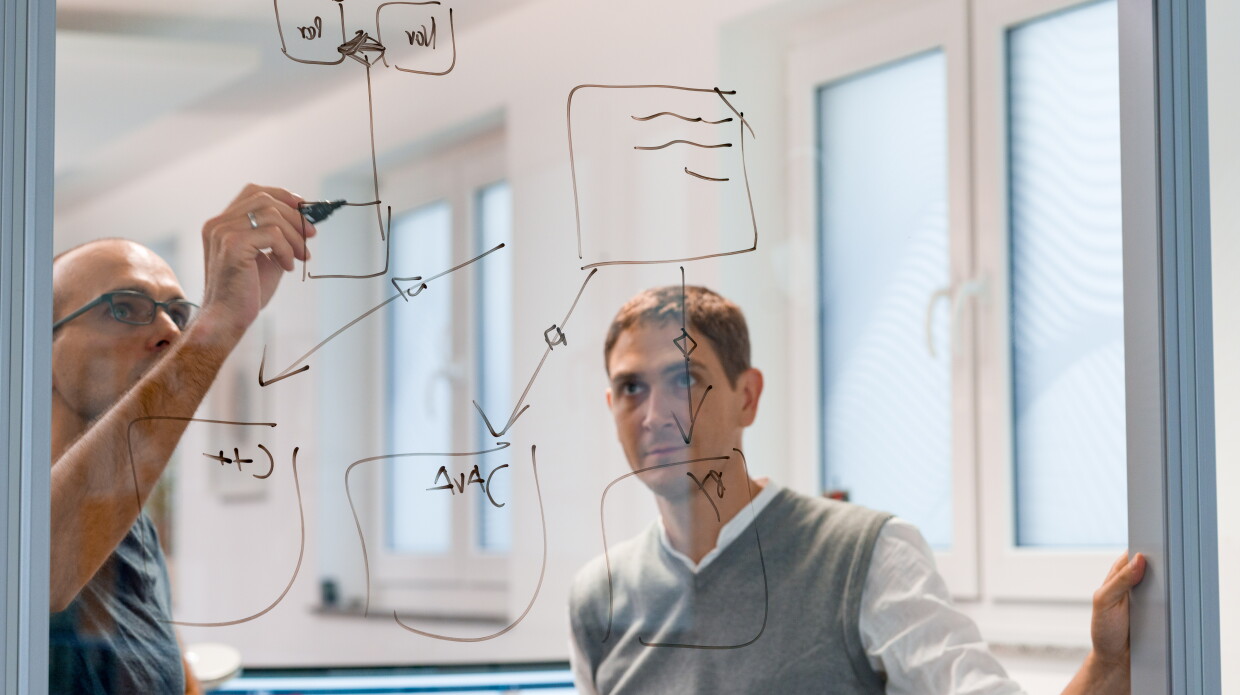
Credit: Wolfram Scheible
We partner with particular academic organizations across the world for deep and sustained collaborations in multiple research areas of mutual interest.

Courtesy of Pai-Ling Yin
We hire world-class academics to work on large-scale technical challenges, while they continue to teach and conduct research at their universities.

