















Customer-obsessed science
Research areas













-
 July 30, 20268 min readInstead of compromising among parameter updates dictated by different training objectives, ControlG allocates computational capacity to objectives sequentially and dynamically.
 -

-
July 9, 202610 min read
-


Featured news

The Build on Trainium program is a $110 million credit initiative supporting AI research at 30 universities including Stanford, UC Berkeley, UIUC, UCLA, CMU, and MIT, with a focus on Responsible AI.

The Antibody Developability Benchmark is powered by one of the most diverse antibody datasets in public literature, enabling transparent performance evaluation for AI-guided antibody design.

Challenge pushes teams to demonstrate measurable gains in secure-coding performance while building AI agents that advance real-world utility and reliability at scale.

Initiative will fund over 100 doctoral students researching machine learning, computer vision, and natural-language processing at nine universities.
-
NAACL 20212021Non-autoregressive encoder-decoder models greatly improve decoding speed over autoregressive models, at the expense of generation quality. To mitigate this, iterative decoding models repeatedly infill or refine the proposal of a non-autoregressive model. However, editing at the level of output sequences limits model flexibility. We instead propose iterative realignment, which by refining latent alignments
-
Interspeech 20212021The concept of multi-headed self attention (MHSA) introduced as a critical building block of a Transformer Encoder/Decoder Module has made a significant impact in the areas of natural language processing (NLP), automatic speech recognition (ASR) and recently in the area of sound event detection (SED). The current state-of-the-art approaches to SED employ a shared attention mechanism achieved through a stack
-
NAACL 20212021Recent advances in transfer learning have improved the performance of virtual assistants considerably. Nevertheless, creating sophisticated voice-enabled applications for new domains remains a challenge, and meager training data is often a key bottleneck. Accordingly, unsupervised learning and SSL (semisupervised learning) techniques continue to be of vital importance. While a number of such methods have
-
TSD 20212021We present results from Alexa speech teams on semi-supervised learning (SSL) of acoustic models (AM) with experiments spanning over 3000 hours of GPU time, making our study one of the largest of its kind. We discuss SSL for AMs in a small footprint setting, showing that a smaller capacity model trained with 1 million hours of unsupervised data can outperform a baseline supervised system by 14.3% word error
-
ACL-IJCNLP 20212021Integrating extracted knowledge from the Web to knowledge graphs (KGs) can facilitate tasks like question answering. We study relation integration that aims to align free-text relations in subject-relation-object extractions to relations in a target KG. To address the challenge that free-text relations are ambiguous, previous methods exploit neighbor entities and relations for additional context. However
Collaborations
View allWhether you're a faculty member or student, there are number of ways you can engage with Amazon.
View all

Gretchen Ertl
The program offers unrestricted funds and other resources to support research at academic institutions and non-profit organizations in areas that align with our mission.

A global university competition to drive secure innovation in generative AI technology, which focuses on responsible AI and large language model coding security.
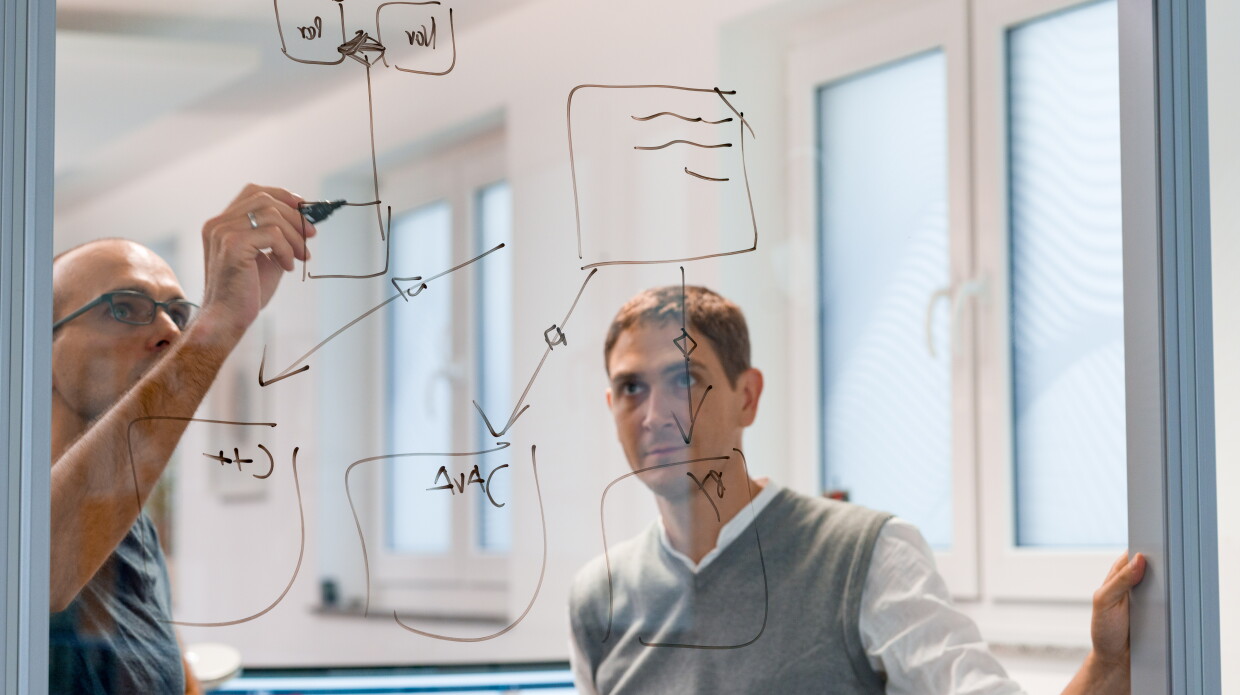
Credit: Wolfram Scheible
We partner with particular academic organizations across the world for deep and sustained collaborations in multiple research areas of mutual interest.

Courtesy of Pai-Ling Yin
We hire world-class academics to work on large-scale technical challenges, while they continue to teach and conduct research at their universities.

