















Customer-obsessed science
Research areas













-
 July 30, 20268 min readInstead of compromising among parameter updates dictated by different training objectives, ControlG allocates computational capacity to objectives sequentially and dynamically.
 -

-
July 9, 202610 min read
-


Featured news

Hosted by Danielle Perszyk, cognitive scientist at Amazon, the podcast features researchers tackling the hardest problems in agentic AI — from building reliable perception systems to designing training environments that mirror human learning.

The Antibody Developability Benchmark is powered by one of the most diverse antibody datasets in public literature, enabling transparent performance evaluation for AI-guided antibody design.

Challenge pushes teams to demonstrate measurable gains in secure-coding performance while building AI agents that advance real-world utility and reliability at scale.

Initiative will fund over 100 doctoral students researching machine learning, computer vision, and natural-language processing at nine universities.
-
ACL 20222022In conversational QA, models have to leverage information in previous turns to answer upcoming questions. Current approaches, such as Question Rewriting, struggle to extract relevant information as the conversation unwinds. We introduce the Common Ground (CG), an approach to accumulate conversational information as it emerges and select the relevant information at every turn. We show that CG offers a more
-
NAACL 20222022Even if recent Transformer-based architectures, such as BERT, achieved impressive results in semantic processing tasks, their fine-tuning stage still requires large scale training resources. Usually, Data Augmentation (DA) techniques can help to deal with low resource settings. In Text Classification tasks, the objective of DA is the generation of well-formed sentences that (i) represent the desired task
-
ACL 2022 Workshop on ECNLP2022Product question answering (PQA) aims to automatically address customer questions to improve their online shopping experience. Current research mainly focuses on finding answers from either unstructured text, like product descriptions and user reviews, or structured knowledge bases with pre-defined schemas. Apart from the above two sources, a lot of product information is represented in a semistructured
-
NAACL 20222022Large-scale conversational assistants such as Cortana, Alexa, Google Assistant and Siri process requests through a series of modules for wake word detection, speech recognition, language understanding and response generation. An error in one of these modules can cascade through the system. Given the large traffic volumes in these assistants, it is infeasible to manually analyze the data, identify requests
-
ACL 2022 Workshop on ECNLP, NAACL 20222022It is of great value to answer product questions based on heterogeneous information sources available on web product pages, e.g., semistructured attributes, text descriptions, user-provided contents, etc. However, these sources have different structures and writing styles, which poses challenges for (1) evidence ranking, (2) source selection, and (3) answer generation. In this paper, we build a benchmark
Collaborations
View allWhether you're a faculty member or student, there are number of ways you can engage with Amazon.
View all

Gretchen Ertl
The program offers unrestricted funds and other resources to support research at academic institutions and non-profit organizations in areas that align with our mission.

A global university competition to drive secure innovation in generative AI technology, which focuses on responsible AI and large language model coding security.
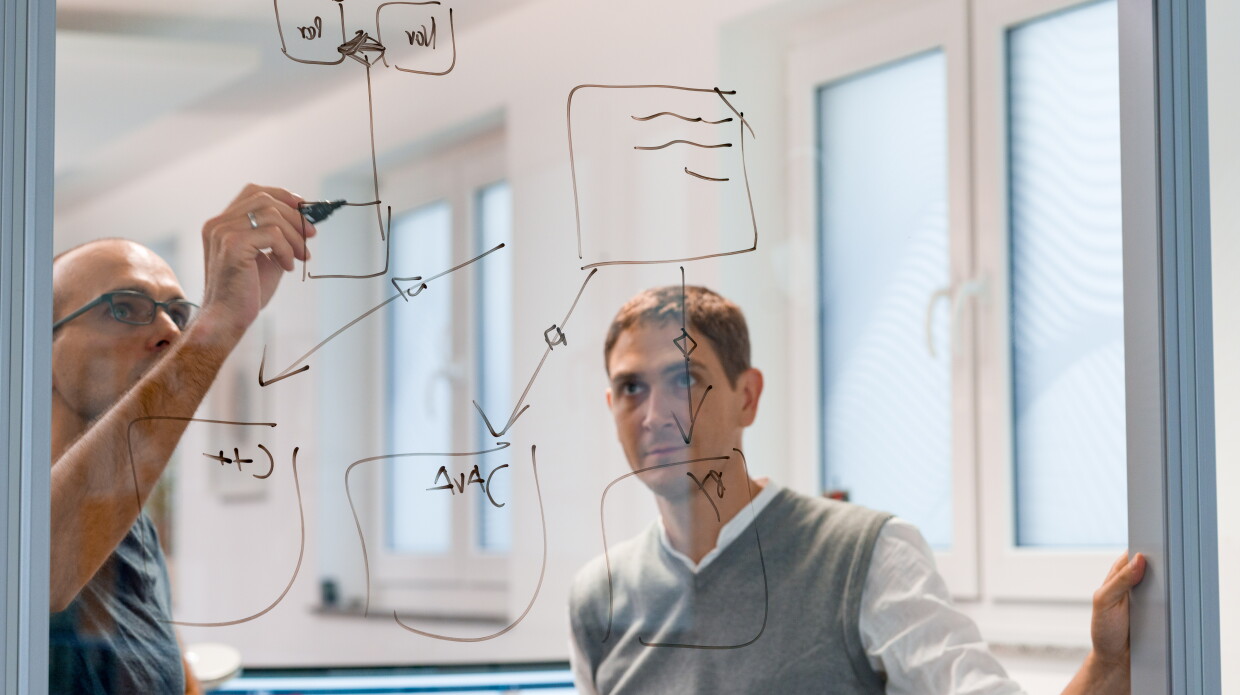
Credit: Wolfram Scheible
We partner with particular academic organizations across the world for deep and sustained collaborations in multiple research areas of mutual interest.

Courtesy of Pai-Ling Yin
We hire world-class academics to work on large-scale technical challenges, while they continue to teach and conduct research at their universities.

