















Customer-obsessed science
Research areas













-
 July 30, 20268 min readInstead of compromising among parameter updates dictated by different training objectives, ControlG allocates computational capacity to objectives sequentially and dynamically.
 -

-
July 9, 202610 min read
-


Featured news

Hosted by Danielle Perszyk, cognitive scientist at Amazon, the podcast features researchers tackling the hardest problems in agentic AI — from building reliable perception systems to designing training environments that mirror human learning.

The Antibody Developability Benchmark is powered by one of the most diverse antibody datasets in public literature, enabling transparent performance evaluation for AI-guided antibody design.

Challenge pushes teams to demonstrate measurable gains in secure-coding performance while building AI agents that advance real-world utility and reliability at scale.

Initiative will fund over 100 doctoral students researching machine learning, computer vision, and natural-language processing at nine universities.
-
ICML 20222022The idea behind object-centric representation learning is that natural scenes can better be modeled as compositions of objects and their relations as opposed to distributed representations. This inductive bias can be injected into neural networks to potentially improve systematic generalization and performance of downstream tasks in scenes with multiple objects. In this paper, we train state-of-the-art
-
EURASIP Journal on Audio, Speech, and Music Processing2022Subtitles are a crucial component of Digital Entertainment Content (DEC such as movies and TV shows) localization. With ever increasing catalog (≈ 2M titles) and localization expansion (30+ languages), automated subtitle quality checks becomes paramount. Being a manual creation process, subtitles can have errors such as missing transcriptions, out-of-sync subtitle blocks with the audio and incorrect translations
-
KDD 20222022A/B tests, also known as online controlled experiments, have been used at scale by data-driven enterprises to guide decisions and test innovative ideas. Meanwhile, non-stationarity, such as the time-of-day effect, can commonly arise in various business metrics. We show that inadequately addressing non-stationarity can cause A/B tests to be statistically inefficient or invalid, leading to wrong conclusions
-
ICML 20222022The multi-objective optimization (MOO) / multitask learning (MTL) have gained much popularity with prevalent use cases such as production model development of regression / classification / ranking models with MOO, and raining deep learning models with MTL. Despite the long history of research in MOO, its application to machine learning requires development of solution strategy, and algorithms have recently
-
KDD 20222022Graph Neural Networks (GNNs) have shown success in learning from graph-structured data, with applications to fraud detection, recommendation, and knowledge graph reasoning. However, training GNN efficiently is challenging because: 1) GPU memory capacity is limited and can be insufficient for large datasets, and 2) the graph-based data structure causes irregular data access patterns. In this work, we provide
Collaborations
View allWhether you're a faculty member or student, there are number of ways you can engage with Amazon.
View all

Gretchen Ertl
The program offers unrestricted funds and other resources to support research at academic institutions and non-profit organizations in areas that align with our mission.

A global university competition to drive secure innovation in generative AI technology, which focuses on responsible AI and large language model coding security.
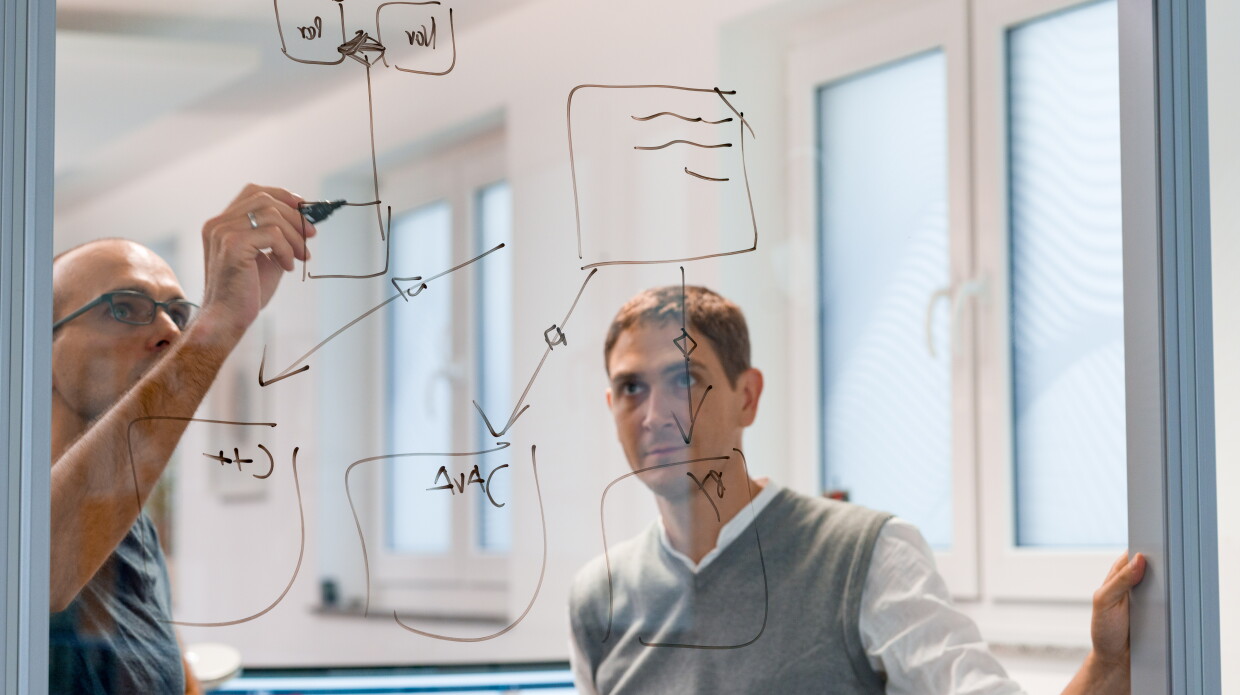
Credit: Wolfram Scheible
We partner with particular academic organizations across the world for deep and sustained collaborations in multiple research areas of mutual interest.

Courtesy of Pai-Ling Yin
We hire world-class academics to work on large-scale technical challenges, while they continue to teach and conduct research at their universities.

