














Millimeter-scale particles of nuclear-reactor fuel are encased in four layers of different materials that act as a “miniature containment system”.


Customer-obsessed science


Research areas













-
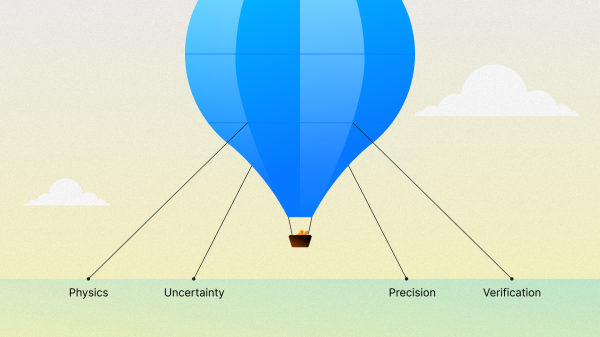
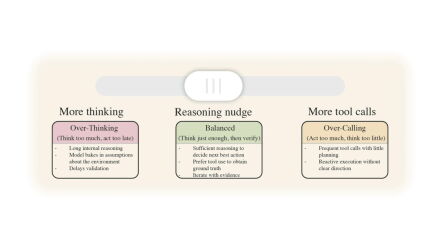
 June 8, 20267 min readFour approaches can dramatically improve the performance and trustworthiness of AI agents in operational environments.
 -

-
-
-
May 27, 20264 min readMachine learning


Featured news

Hosted by Danielle Perszyk, cognitive scientist at Amazon's AGI Lab, the podcast features researchers tackling the hardest problems in agentic AI — from building reliable perception systems to designing training environments that mirror human learning.

The Antibody Developability Benchmark is powered by one of the most diverse antibody datasets in public literature, enabling transparent performance evaluation for AI-guided antibody design.

Challenge pushes teams to demonstrate measurable gains in secure-coding performance while building AI agents that advance real-world utility and reliability at scale.

Initiative will fund over 100 doctoral students researching machine learning, computer vision, and natural-language processing at nine universities.
-
The Web Conference 2024 Workshop on Information Retrieval Meets Large Language Models2024Retrieval and ranking lie at the heart of several applications like search, question-answering, and recommendations. The use of Large language models (LLMs) such as BERT in these applications have shown promising results in recent times. Recent works on text-based retrievers and rankers show promising results by using bi-encoders (BE) architecture with BERT like LLMs for retrieval and a cross-attention
-
ICDE 20242024How can we effectively generate missing data transformations among tables in a data repository? Multiple versions of the same tables are generated from the iterative process when data scientists and machine learning engineers fine-tune their ML pipelines, making incremental improvements. This process often involves data transformation and augmentation that produces an augmented table based on its base version
-
ICRA 20242024Robotic manipulation is a key enabler for automation in the fulfillment logistics sector. Such robotic systems require perception and manipulation capabilities to handle a wide variety of objects. Existing systems either operate on a closed set of objects or perform object-agnostic manipulation which lacks the capability for deliberate and reliable manipulation at scale. Object identification (ID) unlocks
-
Krylov cubic regularized Newton: A subspace second-order method with dimension-free convergence rateAISTATS 20242024Second-order optimization methods, such as cubic regularized Newton methods, are known for their rapid convergence rates; nevertheless, they become impractical in high-dimensional problems due to their substantial memory requirements and computational costs. One promising approach is to execute second-order updates within a lower-dimensional subspace, giving rise to subspace second-order methods. However
-
Predicting customer preferences for each item is a prerequisite module for most recommender systems in e-commerce. However, the sparsity of behavioral data is often a challenge to learn accurate prediction models. Given millions of items, each customer may only be able to interact with a small subset of them over time. This sparse behavioral data is insufficient to represent item-customer and item-item
Collaborations
View allWhether you're a faculty member or student, there are number of ways you can engage with Amazon.
View all

Gretchen Ertl
The program offers unrestricted funds and other resources to support research at academic institutions and non-profit organizations in areas that align with our mission.

A global university competition to drive secure innovation in generative AI technology, which focuses on responsible AI and large language model coding security.

Credit: Wolfram Scheible
We partner with particular academic organizations across the world for deep and sustained collaborations in multiple research areas of mutual interest.

Courtesy of Pai-Ling Yin
We hire world-class academics to work on large-scale technical challenges, while they continue to teach and conduct research at their universities.

