















Customer-obsessed science
Research areas













-
 July 30, 20268 min readInstead of compromising among parameter updates dictated by different training objectives, ControlG allocates computational capacity to objectives sequentially and dynamically.
 -

-
July 9, 202610 min read
-


Featured news

Hosted by Danielle Perszyk, cognitive scientist at Amazon, the podcast features researchers tackling the hardest problems in agentic AI — from building reliable perception systems to designing training environments that mirror human learning.

The Antibody Developability Benchmark is powered by one of the most diverse antibody datasets in public literature, enabling transparent performance evaluation for AI-guided antibody design.

Challenge pushes teams to demonstrate measurable gains in secure-coding performance while building AI agents that advance real-world utility and reliability at scale.

Initiative will fund over 100 doctoral students researching machine learning, computer vision, and natural-language processing at nine universities.
-
ICASSP 20232023Conversational, multi-turn, text-to-SQL (CoSQL) tasks map natural language utterances in a dialogue to SQL queries. State-of-the-art (SOTA) systems use large, pre-trained and finetuned language models, such as the T5-family, in conjunction with constrained decoding. With multi-tasking (MT) over coherent tasks with discrete prompts during training, we improve over specialized text-to-SQL T5-family models
-
AISTATS 20232023Gradient boosting machines (GBMs) based on decision trees consistently demonstrate state-ofthe-art results on regression and classification tasks with tabular data, often outperforming deep neural networks. However, these models do not provide well-calibrated predictive uncertainties, which prevents their use for decision making in high-risk applications. The Bayesian treatment is known to improve predictive
-
The Web Conference 20232023Query AutoComplete (QAC) helps customers complete their search queries quickly by suggesting completed queries. QAC on eCommerce sites usually employ Learning to Rank (LTR) approaches based on customer behaviour signals such as clicks and conversion rates to optimize business metrics. However, they do not exclusively optimize for the quality of suggested queries which results in lack of navigational suggestions
-
EACL 20232023Prompt-based learning methods in semisupervised learning (SSL) settings have been shown to be effective on multiple natural language understanding (NLU) datasets and tasks in the literature. However, manually designing multiple prompts and verbalizers requires domain knowledge and human effort, making it difficult and expensive to scale across different datasets. In this paper, we propose two methods to
-
The Web Conference 20232023We propose a novel adaptation of graph-based active learning for customer address resolution or de-duplication, with the aim to determine if two addresses represent the same physical building or not. For delivery systems, improving address resolution positively impacts multiple downstream systems such as geocoding, route planning and delivery time estimations, leading to an efficient and reliable delivery
Collaborations
View allWhether you're a faculty member or student, there are number of ways you can engage with Amazon.
View all

Gretchen Ertl
The program offers unrestricted funds and other resources to support research at academic institutions and non-profit organizations in areas that align with our mission.

A global university competition to drive secure innovation in generative AI technology, which focuses on responsible AI and large language model coding security.
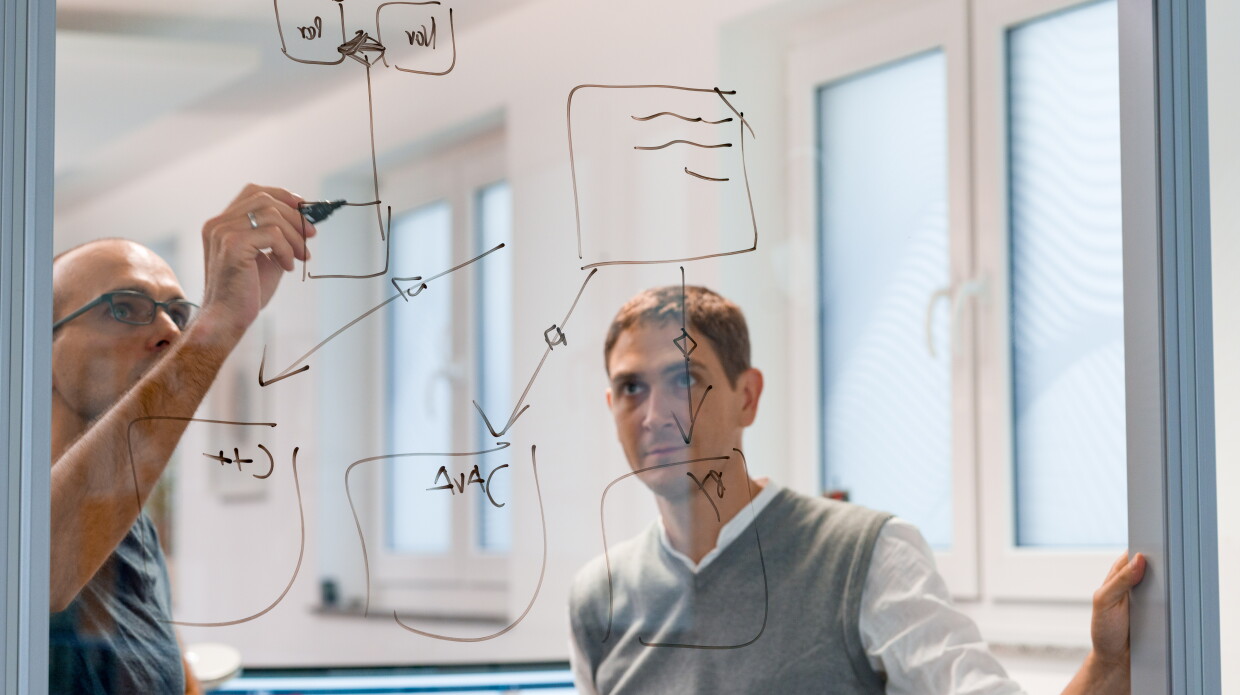
Credit: Wolfram Scheible
We partner with particular academic organizations across the world for deep and sustained collaborations in multiple research areas of mutual interest.

Courtesy of Pai-Ling Yin
We hire world-class academics to work on large-scale technical challenges, while they continue to teach and conduct research at their universities.

