


Runtime optimizations and a thorough evaluation process driven by agentic AI help ensure that models written in PyTorch will execute efficiently and reliably on Trainium systems.

Expanding the mix of synthetic data used to train a tabular foundation model enables it to adapt to new tables without new models and lead the single-model field on the TabArena benchmark.

Using the Neuron Kernel Interface, a Reactor–AWS collaboration tackled the dynamic shapes, memory access patterns, and cache management that make real-time autoregressive diffusion hard—building techniques that generalize across models.


Three new papers from Amazon Bio Discovery address bottlenecks in AI-driven antibody engineering, from benchmarking binding predictors to experimentally validating de novo design.

New research indicates that AI agents learn compressible models of data, which don’t have enough space to enable memorization.
Customer-obsessed science

Research areas


-
 November 11, 20265 min readStatic analysis of deployed networks helps reduce the risk that sensitive data leaks across partitions, supporting the security and reliability of global-scale networking.
-

-
-
-
October 20, 20263 min read


Featured news

The collaboration aims to advance research while broadening participation and translating discovery into real-world solutions.

Submissions open October 1 and close on November 11, 2026

The collaboration will support research in robotics, industrial and systems engineering, and aerospace technology while fostering innovation in foundational and emerging technologies.

The Build on Trainium program is a $110 million credit initiative supporting AI research at 30 universities including Stanford, UC Berkeley, UIUC, UCLA, CMU, and MIT, with a focus on Responsible AI.

The Antibody Developability Benchmark is powered by one of the most diverse antibody datasets in public literature, enabling transparent performance evaluation for AI-guided antibody design.

Challenge pushes teams to demonstrate measurable gains in secure-coding performance while building AI agents that advance real-world utility and reliability at scale.

Initiative will fund over 100 doctoral students researching machine learning, computer vision, and natural-language processing at nine universities.
-
IEEE Letters of the Computer Society2019Differential privacy comes equipped with multiple analytical tools for the design of private data analyses. One important tool is the so-called “privacy amplification by subsampling” principle, which ensures that a differentially private mechanism run on a random subsample of a population provides higher privacy guarantees than when run on the entire population. Several instances of this principle have
-
AISTATS 20202019Item Response Theory (IRT) aims to assess latent abilities of respondents based on the correctness of their answers in aptitude test items with different difficulty levels. In this paper, we propose the β3 -IRT model, which models continuous responses and can generate a much enriched family of Item Characteristic Curves. In experiments we applied the proposed model to data from an online exam platform,
-
ECNLP 2019, The Web Conference 20192019For a product of interest, we propose a search method to surface a set of reference products. The reference products can be used as candidates to support downstream modeling tasks and business applications. The search method consists of product representation learning and fingerprint-type vector searching. The product catalog information is transformed into a high-quality embedding of low dimensions via
-
SIGIR 20192019The Gradient Boosted Tree (GBT) algorithm is one of the most popular machine learning algorithms used in production, for tasks that include Click-Through Rate (CTR) prediction and learning-to-rank. To deal with the massive datasets available today, many distributed GBT methods have been proposed. However, they all assume a row-distributed dataset, addressing scalability only with respect to the number of
-
ICML 20192019We present a Bayesian view of counterfactual risk minimization (CRM) for offline learning from logged bandit feedback. Using PACBayesian analysis, we derive a new generalization bound for the truncated inverse propensity score estimator. We apply the bound to a class of Bayesian policies, which motivates a novel, potentially data-dependent, regularization technique for CRM. Experimental results indicate
Collaborations
View allWhether you're a faculty member or student, there are number of ways you can engage with Amazon.
View all

Gretchen Ertl
The program offers unrestricted funds and other resources to support research at academic institutions and non-profit organizations in areas that align with our mission.

A global university competition to drive secure innovation in generative AI technology, which focuses on responsible AI and large language model coding security.

Credit: Wolfram Scheible
We partner with particular academic organizations across the world for deep and sustained collaborations in multiple research areas of mutual interest.
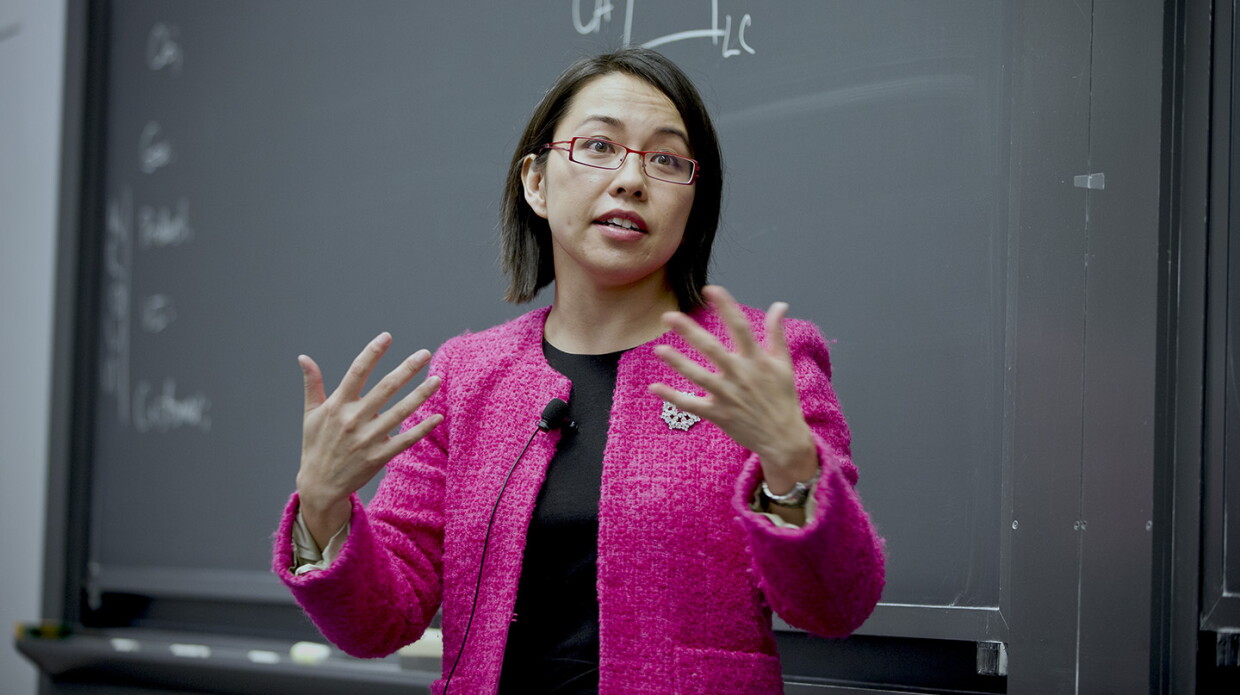
Courtesy of Pai-Ling Yin
We hire world-class academics to work on large-scale technical challenges, while they continue to teach and conduct research at their universities.

