


Runtime optimizations and a thorough evaluation process driven by agentic AI help ensure that models written in PyTorch will execute efficiently and reliably on Trainium systems.

Expanding the mix of synthetic data used to train a tabular foundation model enables it to adapt to new tables without new models and lead the single-model field on the TabArena benchmark.

Using the Neuron Kernel Interface, a Reactor–AWS collaboration tackled the dynamic shapes, memory access patterns, and cache management that make real-time autoregressive diffusion hard—building techniques that generalize across models.


Three new papers from Amazon Bio Discovery address bottlenecks in AI-driven antibody engineering, from benchmarking binding predictors to experimentally validating de novo design.
New research indicates that AI agents learn compressible models of data, which don’t have enough space to enable memorization.
Customer-obsessed science

Research areas


-
 November 11, 20265 min readStatic analysis of deployed networks helps reduce the risk that sensitive data leaks across partitions, supporting the security and reliability of global-scale networking.
-

-
-
-
October 20, 20263 min read


Featured news

The collaboration aims to advance research while broadening participation and translating discovery into real-world solutions.

Submissions open October 1 and close on November 11, 2026

The collaboration will support research in robotics, industrial and systems engineering, and aerospace technology while fostering innovation in foundational and emerging technologies.

The Build on Trainium program is a $110 million credit initiative supporting AI research at 30 universities including Stanford, UC Berkeley, UIUC, UCLA, CMU, and MIT, with a focus on Responsible AI.

The Antibody Developability Benchmark is powered by one of the most diverse antibody datasets in public literature, enabling transparent performance evaluation for AI-guided antibody design.

Challenge pushes teams to demonstrate measurable gains in secure-coding performance while building AI agents that advance real-world utility and reliability at scale.

Initiative will fund over 100 doctoral students researching machine learning, computer vision, and natural-language processing at nine universities.
-
CoNLL 20192019Hierarchical neural networks are often used to model inherent structures within dialogues. For goal-oriented dialogues, these models miss a mechanism adhering to the goals and neglect the distinct conversational patterns between two interlocutors. In this work, we propose Goal-Embedded Dual Hierarchical Attentional Encoder-Decoder (G-DuHA) able to center around goals and capture interlocutor-level disparity
-
SIGSPATIAL 2019 International Workshop on Spatial Gems2019City boundaries can be crisp or fuzzy depending on the effort that local governments put into digital mapping. The concept of a metropolitan area is even fuzzier than the concept of a city. This paper presents an unsupervised algorithm to detect metropolitan areas from geographical data that is dense in urban areas and sparse in rural areas. As an example, we detect metropolitan areas for the UK using the
-
Interspeech 20192019We present a novel deep learning model for the detection and reconstruction of dysarthric speech. We train the model with a multi-task learning technique to jointly solve dysarthria detection and speech reconstruction tasks. The model key feature is a low-dimensional latent space that is meant to encode the properties of dysarthric speech. It is commonly believed that neural networks are black boxes that
-
NAACL 20192019The task of Natural Language Inference (NLI) is widely modeled as supervised sentence pair classification. While there has been a lot of work recently on generating explanations of the predictions of classifiers on a single piece of text, there have been no attempts to generate explanations of classifiers operating on pairs of sentences. In this paper, we show that it is possible to generate token-level
-
ACL 20192019This paper proposes a novel method to inject custom terminology into neural machine translation at run time. Previous works have mainly proposed modifications to the decoding algorithm in order to constrain the output to include run-time-provided target terms. While being effective, these constrained decoding methods add, however, significant computational overhead to the inference step, and, as we show
Collaborations
View allWhether you're a faculty member or student, there are number of ways you can engage with Amazon.
View all

Gretchen Ertl
The program offers unrestricted funds and other resources to support research at academic institutions and non-profit organizations in areas that align with our mission.
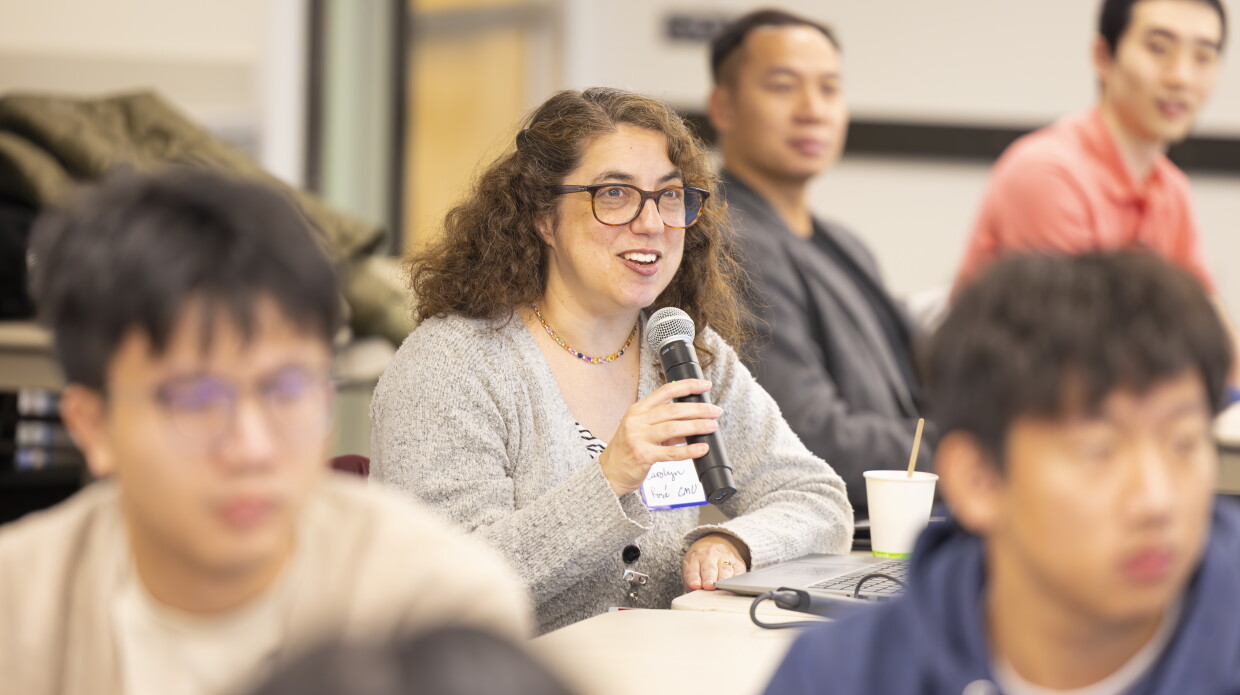
A global university competition to drive secure innovation in generative AI technology, which focuses on responsible AI and large language model coding security.

Credit: Wolfram Scheible
We partner with particular academic organizations across the world for deep and sustained collaborations in multiple research areas of mutual interest.
Courtesy of Pai-Ling Yin
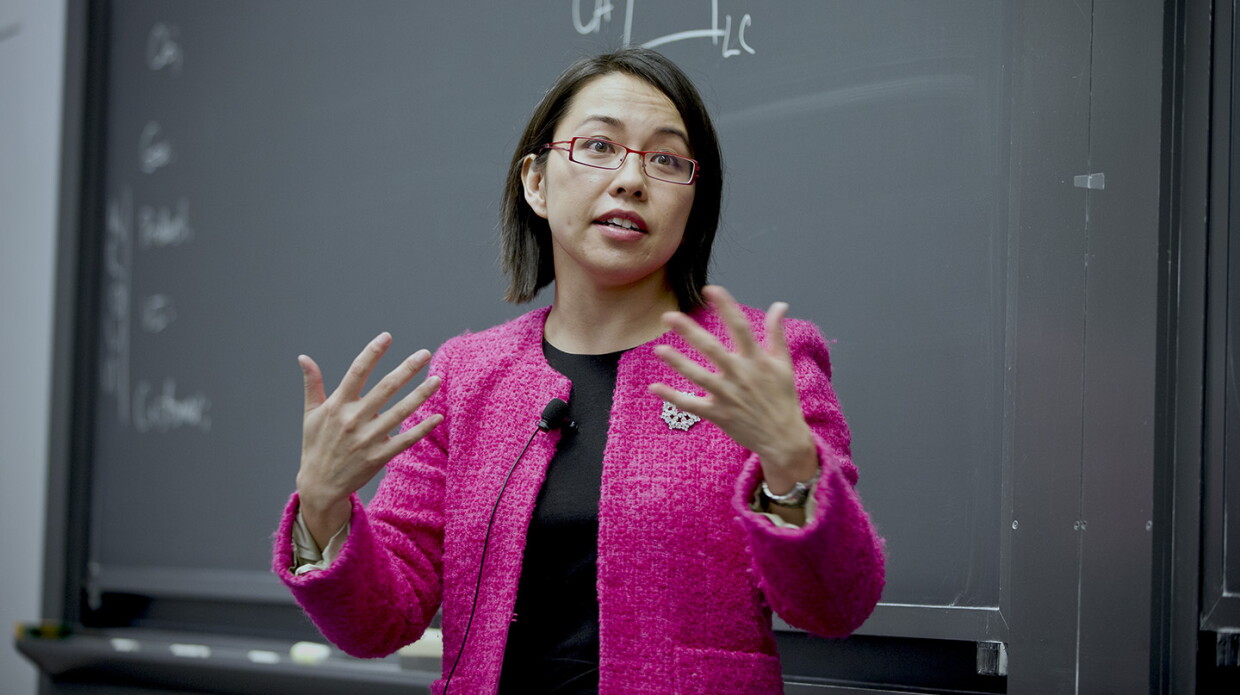
We hire world-class academics to work on large-scale technical challenges, while they continue to teach and conduct research at their universities.

