Runtime optimizations and a thorough evaluation process driven by agentic AI help ensure that models written in PyTorch will execute efficiently and reliably on Trainium systems.

Expanding the mix of synthetic data used to train a tabular foundation model enables it to adapt to new tables without new models and lead the single-model field on the TabArena benchmark.

Using the Neuron Kernel Interface, a Reactor–AWS collaboration tackled the dynamic shapes, memory access patterns, and cache management that make real-time autoregressive diffusion hard—building techniques that generalize across models.


Three new papers from Amazon Bio Discovery address bottlenecks in AI-driven antibody engineering, from benchmarking binding predictors to experimentally validating de novo design.

New research indicates that AI agents learn compressible models of data, which don’t have enough space to enable memorization.
Customer-obsessed science

Research areas


-
 November 16, 202611 min readNew open-source tool turns existing test suites into sets of formal-verification tasks, which catch buggy solutions that tests alone would miss.
-
 November 11, 20265 min read
-
-
-


Featured news

The collaboration aims to advance research while broadening participation and translating discovery into real-world solutions.

Submissions open October 1 and close on November 11, 2026

The collaboration will support research in robotics, industrial and systems engineering, and aerospace technology while fostering innovation in foundational and emerging technologies.

The Build on Trainium program is a $110 million credit initiative supporting AI research at 30 universities including Stanford, UC Berkeley, UIUC, UCLA, CMU, and MIT, with a focus on Responsible AI.

The Antibody Developability Benchmark is powered by one of the most diverse antibody datasets in public literature, enabling transparent performance evaluation for AI-guided antibody design.

Challenge pushes teams to demonstrate measurable gains in secure-coding performance while building AI agents that advance real-world utility and reliability at scale.

Initiative will fund over 100 doctoral students researching machine learning, computer vision, and natural-language processing at nine universities.
-
BMVC 20262026Instruction-guided image editing models excel at following instructions but often introduce unintended changes to source regions that should remain unchanged, a critical failure in high-precision applications like product troubleshooting. Existing reward models primarily evaluate instruction adherence and perceptual quality, but do not explicitly assess whether edits preserve the underlying source content
-
2026Within-country selection benchmarking models fall short for cross-border selection benchmarking because cross-border competitor data is typically a) multilingual (thus requiring cross-lingual comparisons) and b) sparse and noisy, thus eliminating supervised fine-tuning options. To address these challenges, this paper presents the Cross-Border E-commerce Selection Benchmarking model - a novel multi-modal
-
NeurIPS 2026 Workshop on Small Language Models for Agentic Systems (SLM-Agents)2026Small language models are usually cast as executors inside agentic systems: they call tools, follow procedures, and defer anything hard to a frontier model. We ask whether an 8B model can instead hold the planning role in a production incident-response pipeline, for a domain absent from public pretraining corpora. Our method combines continued pretraining over roughly 100,000 internal domain documents with
-
2026Many real-world questions demand not a single fact but an organized collection of them, yet existing factual knowledge benchmarks almost exclusively target single-answer retrieval. We introduce LISTQA, a benchmark of 9,045 human-curated, cross-validated questions (audited error rate of 1.7%) that require LLMs to recall multiple facts and compose them into structured lists of 3–10 elements. Questions range
-
NeurIPS 2026 Workshop on On-Device Intelligence: Foundation Models under Real-World Constraints (ODI)2026A language model on an edge device runs under tight compute and memory constraints, and its output vocabulary incurs two distinct costs. The embedding matrix can hold up to a third of the weights at sub-billion parameter scale. On top of that, every decoding step has to score the full vocabulary. Restricting inference to K tokens shrinks that layer by up to 256× in memory and 92× in the time it contributes
Collaborations
View allWhether you're a faculty member or student, there are number of ways you can engage with Amazon.
View all

Gretchen Ertl
The program offers unrestricted funds and other resources to support research at academic institutions and non-profit organizations in areas that align with our mission.
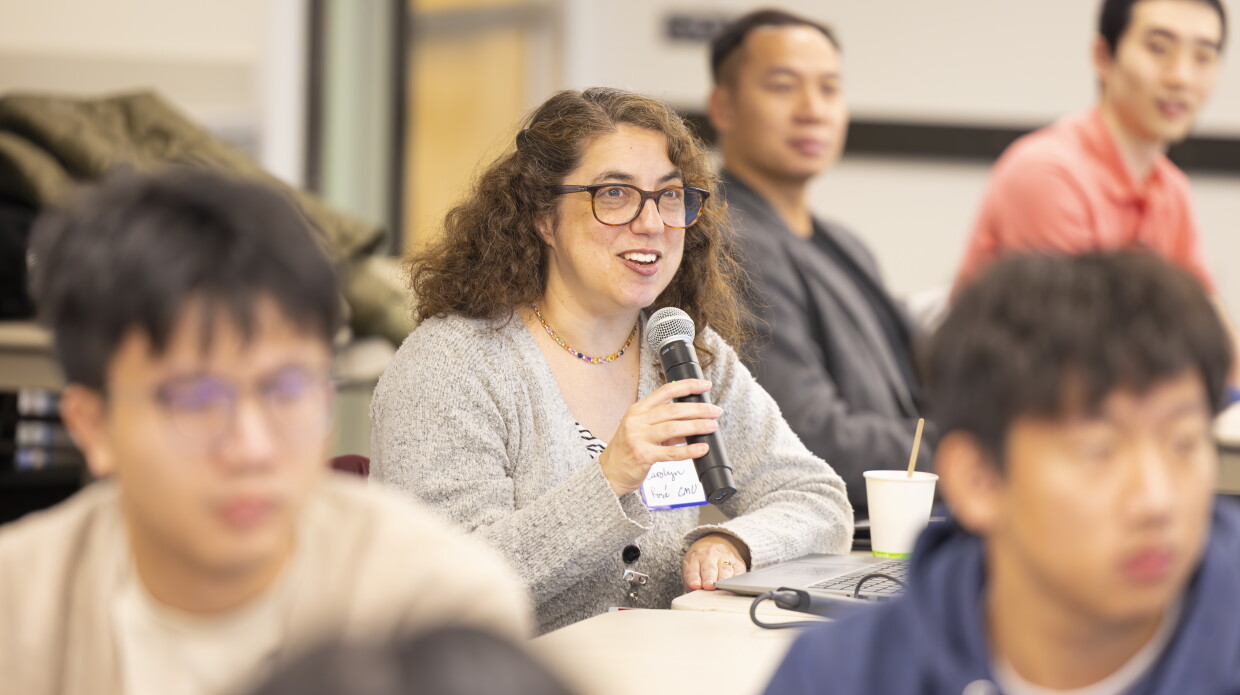
A global university competition to drive secure innovation in generative AI technology, which focuses on responsible AI and large language model coding security.

Credit: Wolfram Scheible
We partner with particular academic organizations across the world for deep and sustained collaborations in multiple research areas of mutual interest.
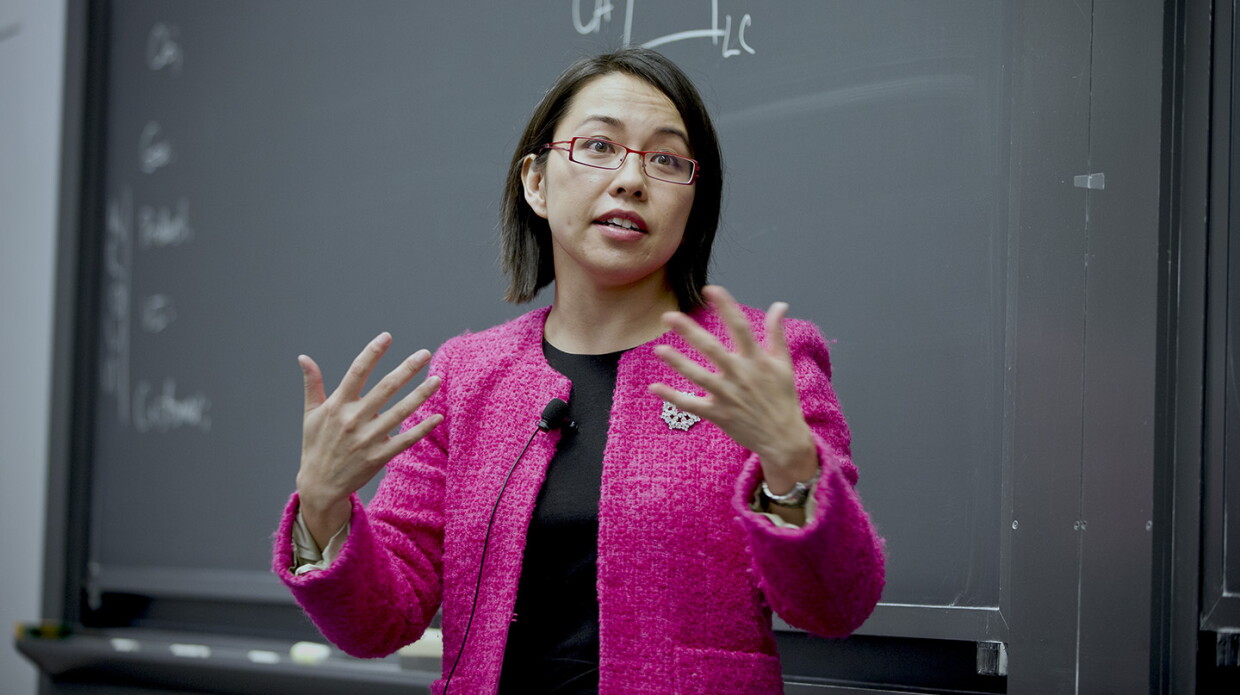
Courtesy of Pai-Ling Yin
We hire world-class academics to work on large-scale technical challenges, while they continue to teach and conduct research at their universities.