Runtime optimizations and a thorough evaluation process driven by agentic AI help ensure that models written in PyTorch will execute efficiently and reliably on Trainium systems.

Expanding the mix of synthetic data used to train a tabular foundation model enables it to adapt to new tables without new models and lead the single-model field on the TabArena benchmark.

Using the Neuron Kernel Interface, a Reactor–AWS collaboration tackled the dynamic shapes, memory access patterns, and cache management that make real-time autoregressive diffusion hard—building techniques that generalize across models.


Three new papers from Amazon Bio Discovery address bottlenecks in AI-driven antibody engineering, from benchmarking binding predictors to experimentally validating de novo design.
New research indicates that AI agents learn compressible models of data, which don’t have enough space to enable memorization.
Customer-obsessed science

Research areas


-
 November 11, 20265 min readStatic analysis of deployed networks helps reduce the risk that sensitive data leaks across partitions, supporting the security and reliability of global-scale networking.
-

-
-
-
October 20, 20263 min read


Featured news

The collaboration aims to advance research while broadening participation and translating discovery into real-world solutions.

Submissions open October 1 and close on November 11, 2026

The collaboration will support research in robotics, industrial and systems engineering, and aerospace technology while fostering innovation in foundational and emerging technologies.

The Build on Trainium program is a $110 million credit initiative supporting AI research at 30 universities including Stanford, UC Berkeley, UIUC, UCLA, CMU, and MIT, with a focus on Responsible AI.

The Antibody Developability Benchmark is powered by one of the most diverse antibody datasets in public literature, enabling transparent performance evaluation for AI-guided antibody design.

Challenge pushes teams to demonstrate measurable gains in secure-coding performance while building AI agents that advance real-world utility and reliability at scale.

Initiative will fund over 100 doctoral students researching machine learning, computer vision, and natural-language processing at nine universities.
-
2026Deploying large language models for specialized tasks requires lengthy prompts combining schema, demonstrations, and instructions creating a fundamental tension between prompt richness and inference feasibility. We identify and characterize two distinct prompt regimes: pattern-dominant tasks, where demonstrations drive performance through implicit formatting and extraction conventions, and procedure-dominant
-
2026Direct Preference Optimization (DPO) aligns language models using pairwise preference comparisons, offering a simple and effective alternative to Reinforcement Learning (RL) from human feedback. However, in many practical settings, training data consists of multiple rollouts per prompt, inducing rich preference structure that pairwise DPO fails to exploit. Collapsing such data into independent pairs discards
-
COLM 2026 Workshop on Lifelong Agents: Learning, Aligning, and Evolving2026Multi-agent architectures are typically hand-designed, generated in one shot, or evolved through unconstrained code search. None of these treats the number of agents as a searchable parameter, and none can discover that a single agent is optimal. We argue that agent count and coordination topology deserve the same optimization discipline used for neural architectures: bounded edits, held-out validation
-
2026Reinforcement learning is now central to eliciting reasoning in large language models, while in the popular algorithm Group Relative Policy Optimization (GRPO) every token in a rollout receives the same advantage. We ask how to make process supervision efficient: accelerating convergence and improving final quality without the cost of value networks. We propose Bag-of-Tokens Group Relative Policy Optimization
-
BMVC 20262026Instruction-guided image editing models excel at following instructions but often introduce unintended changes to source regions that should remain unchanged, a critical failure in high-precision applications like product troubleshooting. Existing reward models primarily evaluate instruction adherence and perceptual quality, but do not explicitly assess whether edits preserve the underlying source content
Collaborations
View allWhether you're a faculty member or student, there are number of ways you can engage with Amazon.
View all

Gretchen Ertl
The program offers unrestricted funds and other resources to support research at academic institutions and non-profit organizations in areas that align with our mission.
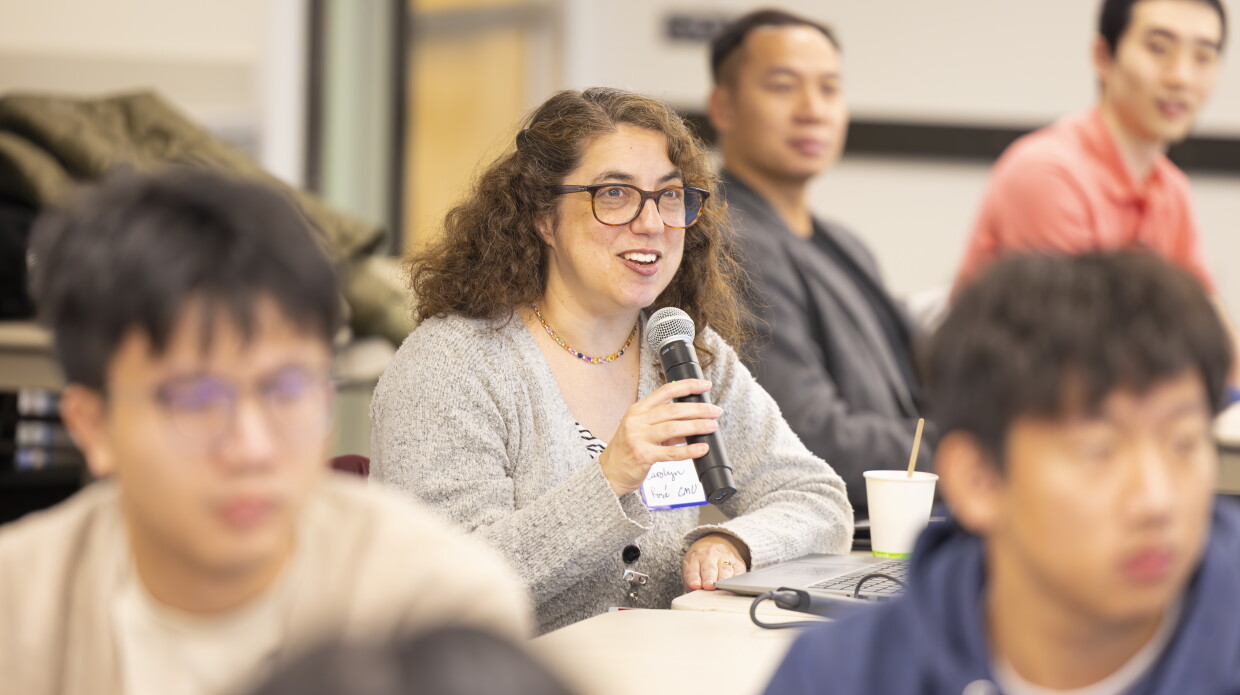
A global university competition to drive secure innovation in generative AI technology, which focuses on responsible AI and large language model coding security.

Credit: Wolfram Scheible
We partner with particular academic organizations across the world for deep and sustained collaborations in multiple research areas of mutual interest.
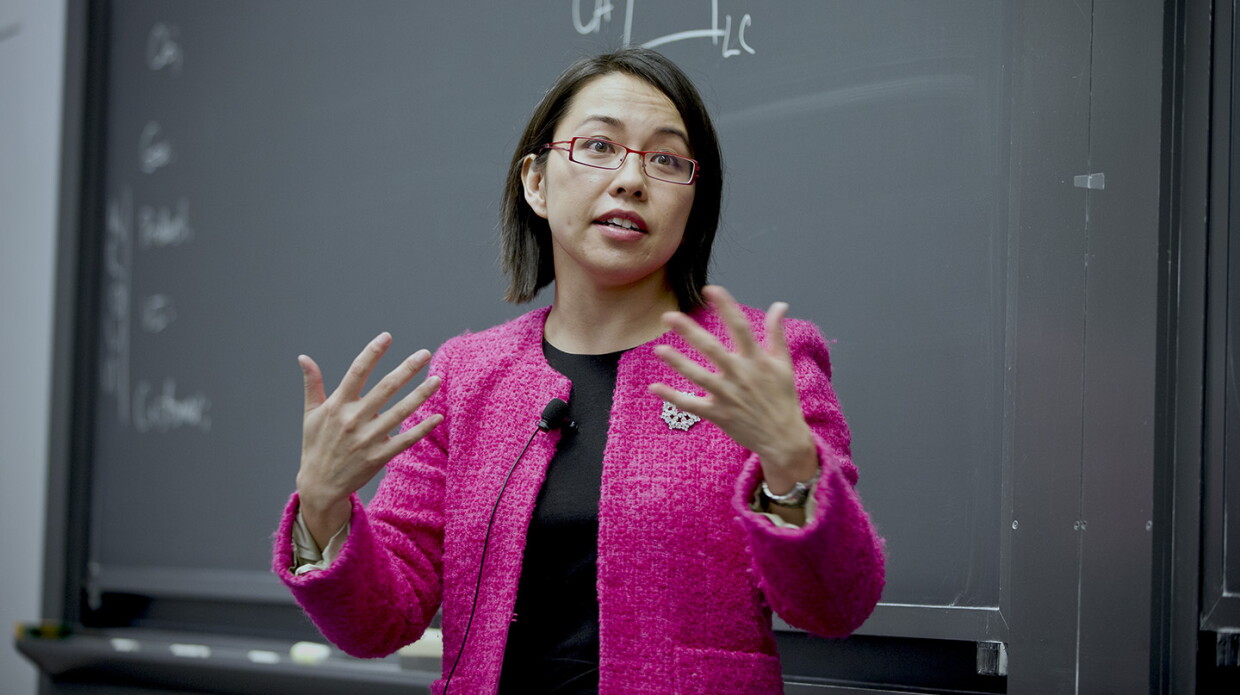
Courtesy of Pai-Ling Yin
We hire world-class academics to work on large-scale technical challenges, while they continue to teach and conduct research at their universities.