















Customer-obsessed science
Research areas













-
 July 30, 20268 min readInstead of compromising among parameter updates dictated by different training objectives, ControlG allocates computational capacity to objectives sequentially and dynamically.
 -

-
July 9, 202610 min read
-


Featured news

The Build on Trainium program is a $110 million credit initiative supporting AI research at 30 universities including Stanford, UC Berkeley, UIUC, UCLA, CMU, and MIT, with a focus on Responsible AI.

The Antibody Developability Benchmark is powered by one of the most diverse antibody datasets in public literature, enabling transparent performance evaluation for AI-guided antibody design.

Challenge pushes teams to demonstrate measurable gains in secure-coding performance while building AI agents that advance real-world utility and reliability at scale.

Initiative will fund over 100 doctoral students researching machine learning, computer vision, and natural-language processing at nine universities.
-
EMNLP 20232023Statistical significance testing is used in natural language processing (NLP) to determine whether the results of a study or experiment are likely to be due to chance or if they reflect a genuine relationship. A key step in significance testing is the estimation of confidence interval which is a function of sample variance. Sample variance calculation is straightforward when evaluating against ground truth
-
NeurIPS 2023 Workshop on Self-Supervised Learning — Theory and Practice2023Pre-training has been an important ingredient in developing strong monocular depth estimation models in recent years. For instance, self-supervised learning (SSL) is particularly effective by alleviating the need for large datasets with dense ground-truth depth maps. However, despite these improvements, our study reveals that the later layers of the SOTA SSL method are actually suboptimal. By examining
-
2023 IEEE Workshop on Automatic Speech Recognition and Understanding (ASRU)2023To boost training and adaptation of end to end (E2E) automatic speech recognition (ASR) models, several approaches to use paired speech-text input together with unpaired text input have emerged. They aim at improving the model performance on rare words, personalisation, and long tail. In this work, we present a systematic study of the impact of such training/adaptation and compare it to training with synthetic
-
EMNLP 20232023While recent studies have looked into the abilities of large language models in various benchmark tasks, few studies have looked into the controllability of large language models on generation tasks. We present a systematic and extensive analysis of the controllability of large language models on ten benchmarks, including a new simple yet challenging numerical planning benchmark with different granularities
-
2023 Conference on Digital Experimentation @ MIT (CODE@MIT)2023Network interference, where observed outcomes are influenced by interaction with nearby units, is a fundamental issue in A/B testing and experimentation in social and economic networks. Clustered randomization is a frequently-used strategy that aims to prevent confounding by limiting interaction between treated and untreated units. We study a model of least-squares estimation under network interference,
Collaborations
View allWhether you're a faculty member or student, there are number of ways you can engage with Amazon.
View all

Gretchen Ertl
The program offers unrestricted funds and other resources to support research at academic institutions and non-profit organizations in areas that align with our mission.

A global university competition to drive secure innovation in generative AI technology, which focuses on responsible AI and large language model coding security.
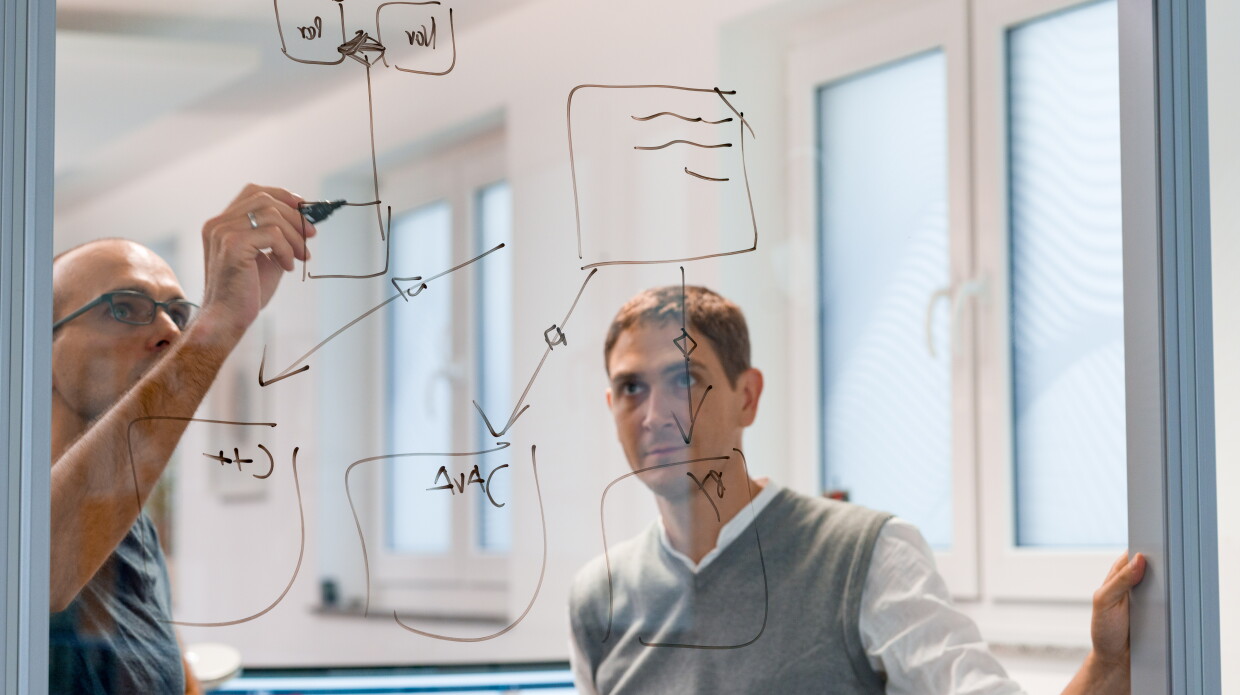
Credit: Wolfram Scheible
We partner with particular academic organizations across the world for deep and sustained collaborations in multiple research areas of mutual interest.

Courtesy of Pai-Ling Yin
We hire world-class academics to work on large-scale technical challenges, while they continue to teach and conduct research at their universities.

